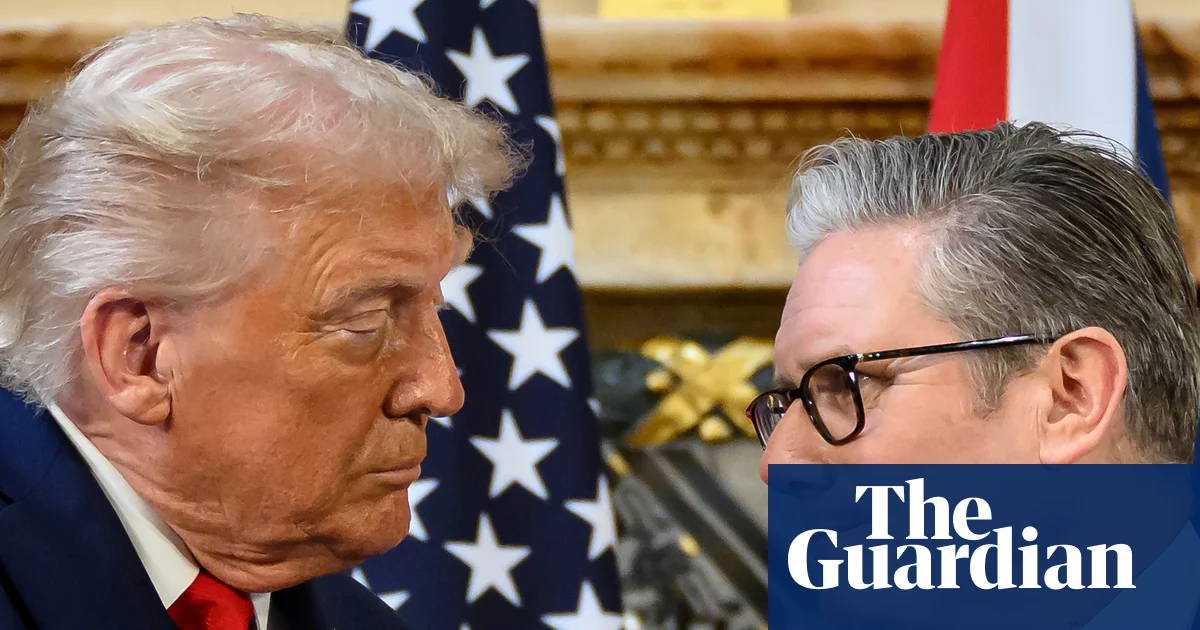
Donald Trump has threatened to row back on the trade deal the US signed with the UK last year, in his latest salvo against the British government over sharp differences about the US’s approach to the Middle East.
The US president said the economic deal struck with the UK, which cut some of his tariffs on cars, aluminium and steel, was “better than I had to” and that it could “always be changed”.
UK ministers have cited the agreement signed last May as an example of the continuing close ties with the US, which they argue persist despite Trump’s increasingly harsh criticism of Keir Starmer and his government.
However, they are furious at the economic fallout on the UK and other nations from the US decision to go to war with Iran, potentially triggering a global recession that would affect the UK more than any of the other G7 nations.
Rachel Reeves, the chancellor, has said she is “frustrated and angry” that the US launched strikes without a clear idea of its objectives, while Starmer said last week he was “fed up” with Trump’s actions causing energy bills to rise.
Trump, in his latest interview with a journalist on his personal mobile phone, told Sky News that the so-called special relationship between the US and UK was in a “sad state” and again accused Britain of being “not there when we needed them” over the Iran conflict.
“Well, it’s been better, but it’s sad. And we gave them a good trade deal, better than I had to, which can always be changed,” he said. “It’s the relationship where when we asked them for help, they were not there when we needed them, they were not there when we didn’t need them. They were not there, and they still aren’t there.”
Starmer has increasingly leaned towards the EU, arguing that the economic and security benefits of a closer relationship with the bloc are “simply too big to ignore”, particularly at a time of such global volatility and when the US has proven itself to be an unreliable partner.
In his interview, Trump suggested a permanent ceasefire could be struck with Tehran before King Charles’s state visit to the US later in April. “They’re beaten up, pretty bad. It’s very possible,” he said.
He repeated his previous criticisms – not always factually accurate – of the UK’s policies on energy and immigration and defended himself for wading into other countries’ domestic politics.
“I like Starmer but I think he’s made a tragic mistake in closing the North Sea oil. You see your energy prices are the highest in the world,” he said. “And I think he’s made a tragic mistake on immigration. I love your country, and I would love to see it succeed. But if you have bad immigration policies and bad energy policies, you have the worst of both. You can’t succeed, not possible.
“A lot of people ask me what I think about them [the policies], and I think they’re insane. They’re destroying your country.”
Reeves, in Washington for meetings at the International Monetary Fund, is set to meet her US counterpart, Scott Bessent, the US treasury secretary, after he said “a small bit of economic pain” caused by the Iran war was worth it to prevent Tehran getting a nuclear weapon.
The comments put him at odds with Reeves, who has voiced frustration at the “folly” of the US’s actions in the Middle East and its financial fallout on families.
The IMF’s spring meetings will be dominated by the crisis in the Gulf. It has cut Britain’s economic growth forecast as a result of the conflict and warned that a worldwide recession could be on the cards.
However, the Bank of England governor, Andrew Bailey, said the UK was much better placed to deal with the fallout because of its resilient banking system forged after the 2007-09 financial crisis.
About the Author