Want to bookmark your favourite articles and stories to read or reference later? Start your Independent Membership today.
Already a member?
Log in
It’s easy to tune out bad news. If you don’t like the headlines, put down the paper or stop scrolling. If you don’t like what the anchor is saying, change the channel to one more aligned with your politics. Nearly two years into Donald Trump’s second term, Americans increasingly live in bubbles of their own construction — chosen media diets, states sorted so thoroughly that one party runs most of the machinery of government.
Politicians can cherry-pick their way through the same economy: don’t want to talk about interest rates, talk about unemployment; skip the jobs report and mention that the Dow is over 50,000. But there is one number few can avoid, because it’s printed 20 feet high every few miles of interstate — the price of fuel.
With that in mind (and no, this isn’t the start of a bad joke), a White House reporter and an economist drove from Washington, D.C., to Oregon last month, filling up a 17-gallon tank as we went and asking the people we ran into along the way what they made of it.
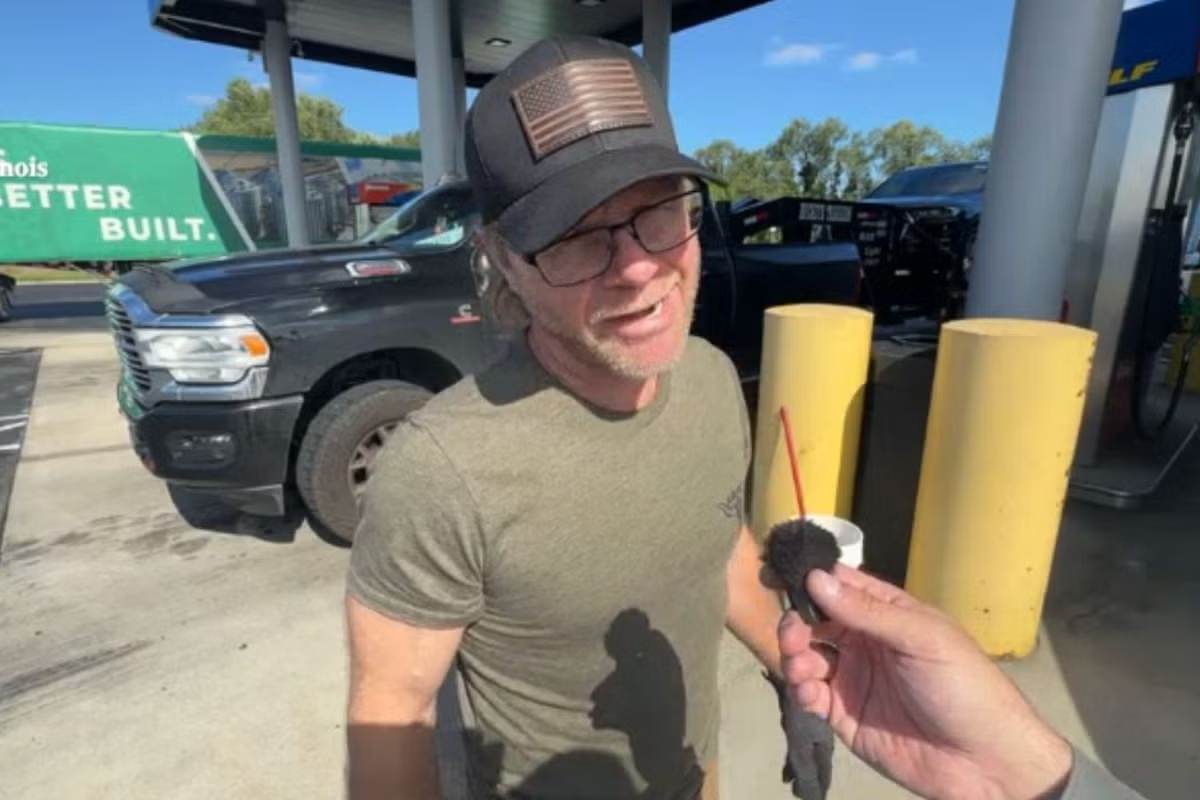
At a station in Elkhart, Indiana, a trucker named Nick White gave us the answer we’d hear in some form over and over.
“I’m willing to pay a little bit more to, uh, free the people of Iran, you know?” he said. “So if the fuel goes up a little bit, hey, it is what it is.”
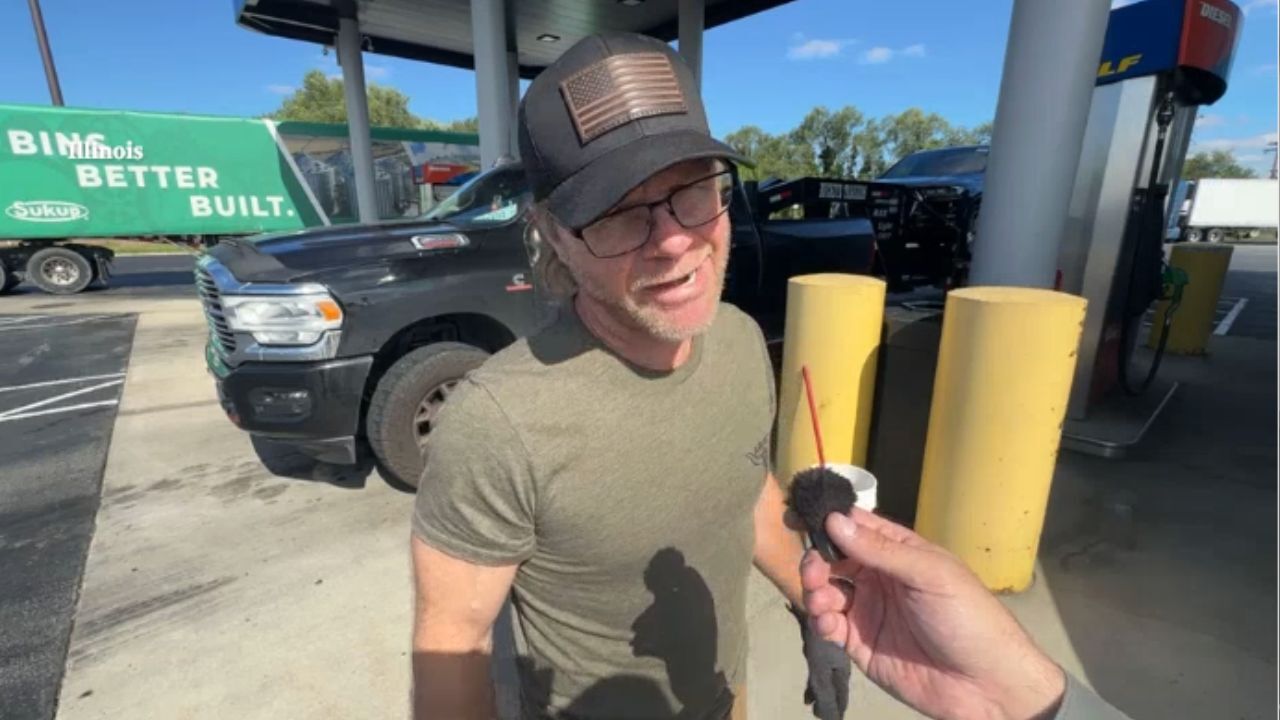
White, an independent trucking owner-operator, said he’d voted for Trump in part to lower prices and to protect what he described as “our freedoms.”
But he still seemed reticent to connect Trump’s actions with the financial hit he was taking on every gallon of diesel fuel he pumped into his truck. He instead said prices would “eventually come down,” though he did not suggest when or how.
Although White described the cost of fuel as being “a little bit more” than it was before the start of the war, the price of regular unleaded was roughly 60 percent higher than it had been in February. Diesel, the fuel his livelihood runs on, had topped $7 a gallon in much of the country.
That outrageous price for such an important commodity is no accident.
Just weeks before the first American bombs fell on Iran, drivers were paying an average of $2.94 a gallon — well below the Biden-era peak whose inflation helped return Trump to office.
Then, after Trump launched what is now a nearly eight-month-old war against Iran, the Islamic Republic responded by closing the Strait of Hormuz, choking off roughly 20 percent of the world’s petroleum.

Before the war, fuel prices were something the president bragged about. After, the resulting spike supercharged inflation to levels not seen in years and pushed the Federal Reserve into raising interest rates for the first time since 2023.
At a truck stop in Portage, Wisconsin, we waited outside the convenience store for a farmer hauling a trailer full of chickens behind a diesel pickup. He came out, declined to give his name and said he’d rather not go on camera.
His assistant Brendan, left standing at the pump, was less guarded: the prices, he said, were “killing” the business and his own finances. He drew the line straight from the $7 diesel to what the president had done in Iran, and said he regretted voting for him in 2024.
Asked how the higher fuel prices were affecting him, he was blunt.
“It affects everything — it affects every piece of life, the food, clothing, you name it, it has to get there somehow,” he said.
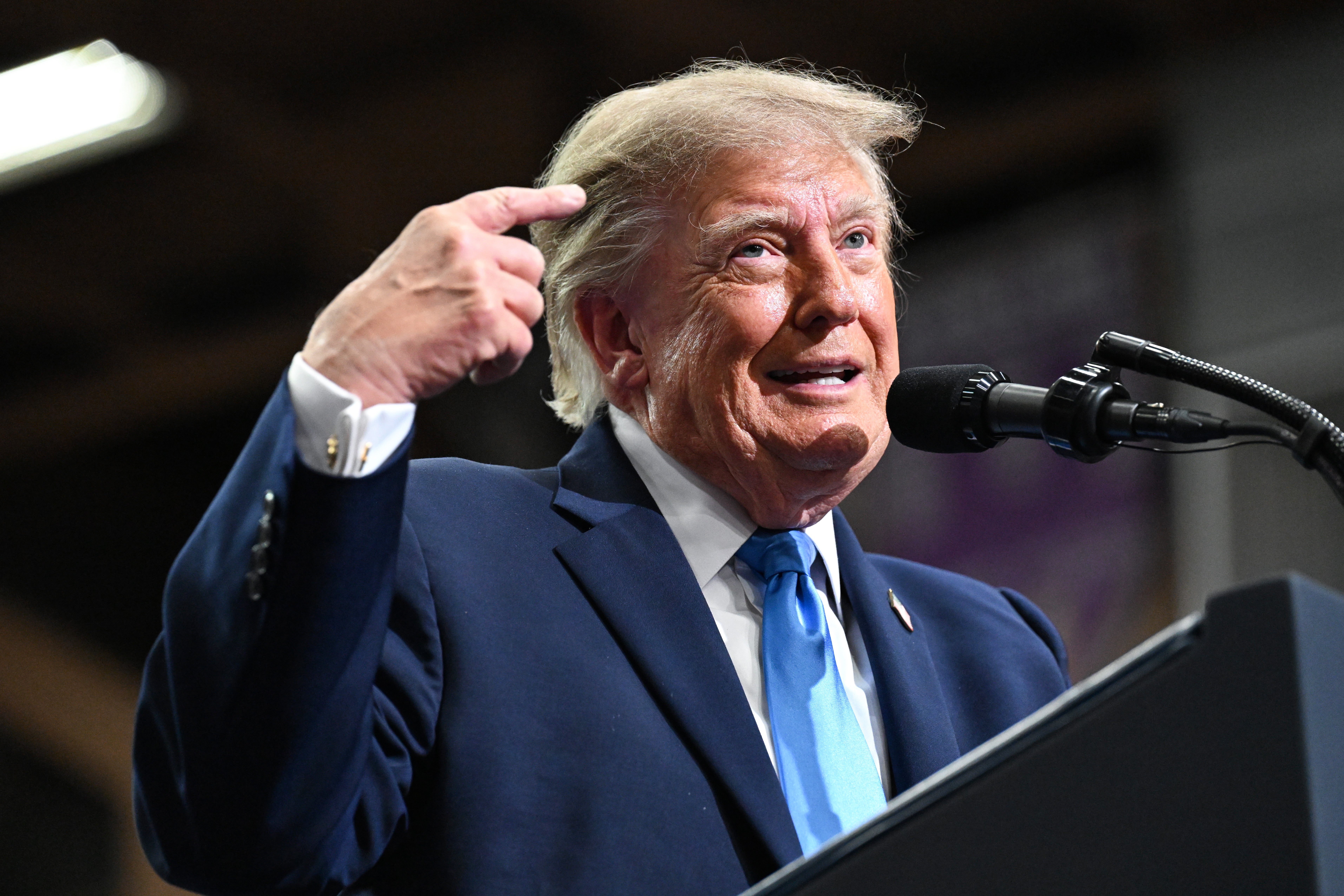
Trump’s answer to people like Brendan came Monday at a rally in Nebraska, where he signed an executive order deferring tax payments on diesel and suspending penalties on the sale of dyed diesel — fuel not legal for highway use — to relieve truckers and farmers.
The White House billed it as decisive action on affordability, but in the end it may not do much at all.
Diesel’s price is built from the global price of crude, refining costs, supply and demand, distribution and taxes, and the federal levies the president suspended are a small slice of the total. Say diesel runs $7.00 a gallon including 25 cents of federal tax. Strip the tax and the pump could theoretically read $6.75 — if nothing else moves, and if the entire savings is passed through rather than absorbed somewhere in the supply chain.
Neither of those is guaranteed, which means a bad week for crude or a refinery outage erases any small gains from the tax cut And suspending a tax does not produce a barrel of oil, build refining capacity or unknot a diesel shortage — all of which are products of the war.
But Trump’s order is also unlikely to change minds of voters who seem to be happy to either blame the president or absolve him entirely.
One man we met at a fueling stop outside Albert Lea, Minnesota, who called himself David, fell into the second category.
David, who said he’d just finished gassing up his vintage Chevrolet El Camino, told us the president was keeping his promise to bring prices down, and that the real culprit was his predecessor, who had raised them “for no reason whatsoever.”
“Trump had brought them up, but then, you know, brought it down and then brought it back up,” he said. “It’s still lower than when Biden wasn’t president, and there was no reason for Biden to raise them besides Bidenomics.”
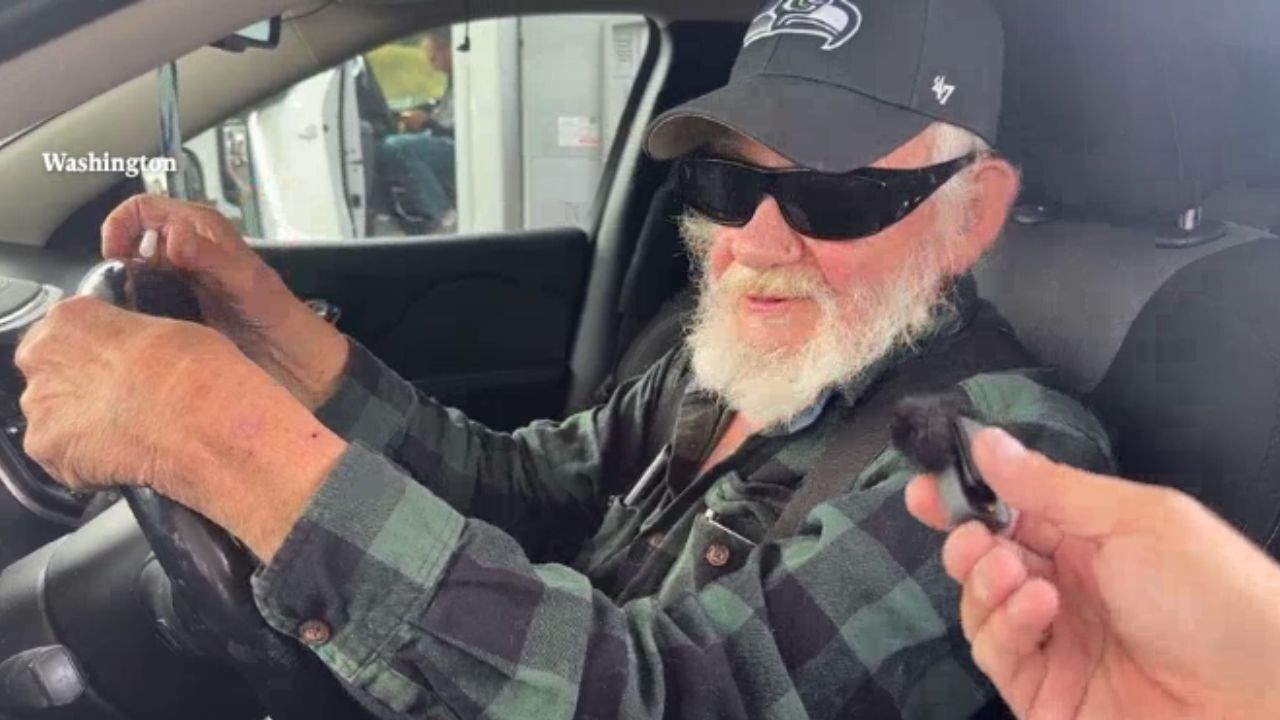
Then he offered an explanation that gave the president both the credit and the alibi: “Trump is raising it due to the fact of the wars going on and stuff like that, and him trying to protect and serve all of us.”
Another self-described Trump voter, Bill, did seem to acknowledge the lack of progress on lowering fuel costs during Trump’s term.
As he prepared to light a cigarette after gassing up his vehicle in Saint Regis, Idaho, Bill claimed Trump has managed to lower costs “on some things” — but when asked if the president had done so for gas prices, he replied “not yet.”
Others resolved the contradiction by removing the president from the story entirely. At the same Indiana station where the trucker volunteered to subsidize Iranian liberation, a long-haul driver declined to assign Trump any blame at all, and instead described a politics in which neither side had anything to do with him.
“There’s two parties,” he said — Republican and Democratic — “and we’re not invited to either one of them.”
In Iowa, a woman filling up told us she thought it “sounds like things are going down a little bit,” which they were not, and that the price had nothing to do with anything the president had done.
“Actually, I think that it’s just a big, a big ring of people,” she said. “Not just one specific person.”
Nationally, the mood is not so forgiving. Just 17 percent of Americans approve of Trump’s handling of the cost of living, according to AP-NORC, and more than three-quarters told CNN’s pollsters the war has not been worth what it has cost.
About the Author