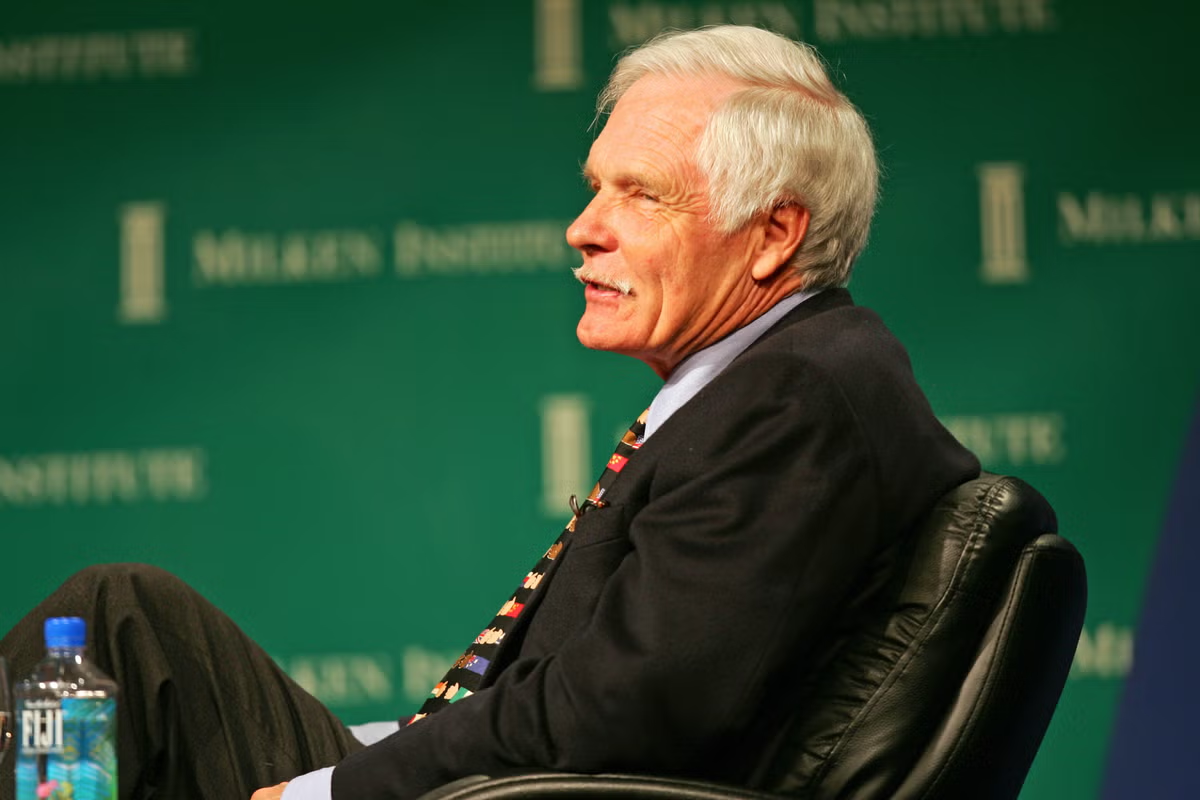
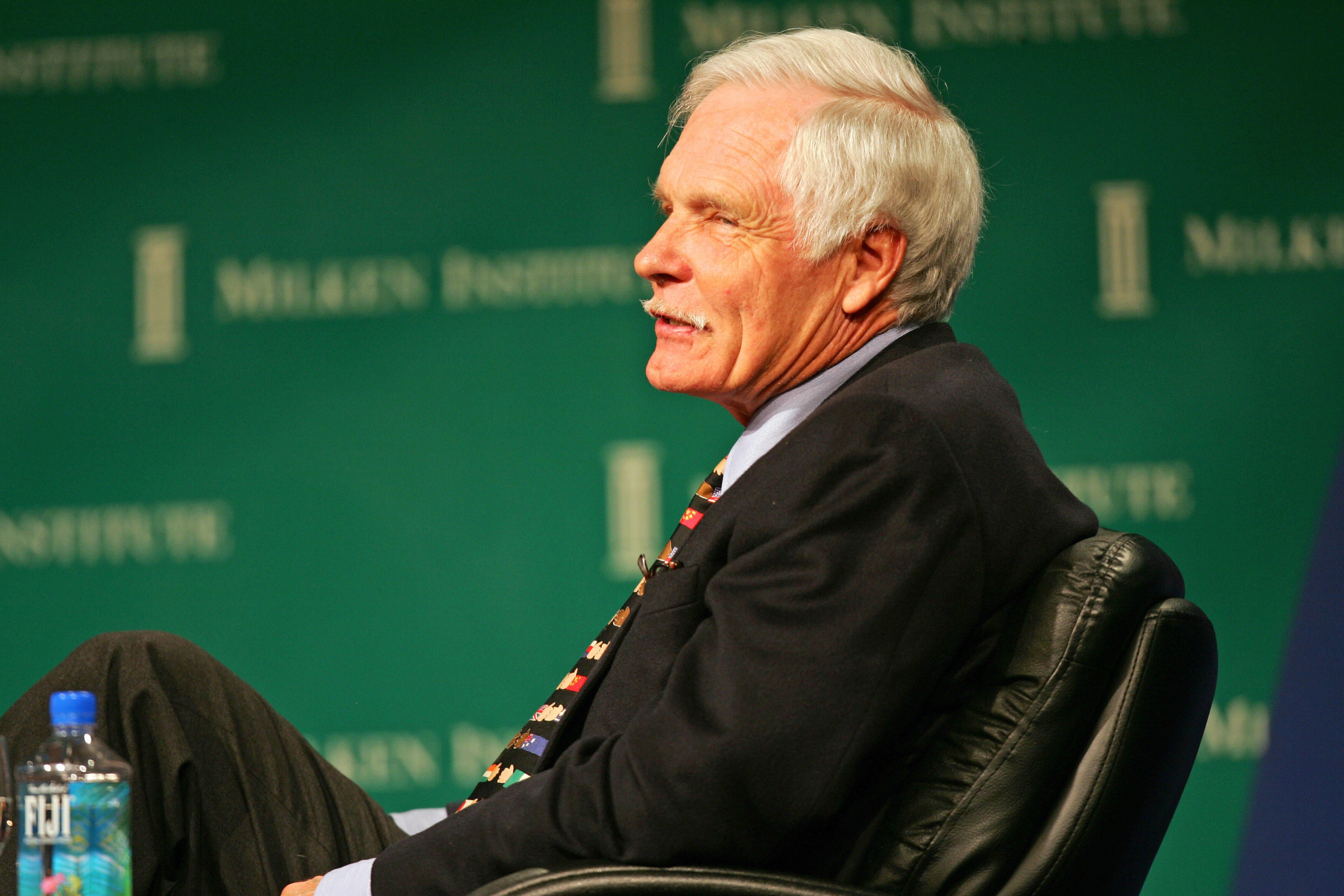
Ted Turner, the media mogul who made billions pioneering modern cable television and later devoted his assets to environmentalism and reviving interest in professional sports, died Wednesday at 87 years old, CNN reported first.
Turner was most well-known for founding CNN, the cable network that altered news forever in 1980 when it established the 24-hour news channel.
But his impact on television extends far beyond CNN – Turner established the concept of “superstation” which allowed local cable television to access a national audience, created the Turner Broadcasting System and launched channels such as TNT, Cartoon Network, TBS and more.
His ambition led him to own the Atlanta Braves and turn it into a national franchise, renewing interest in professional wrestling with the creation of World Championship Wrestling, winning the America’s Cup in yachting and amassing millions of acres of land across several states for preservation.
Married three times, once to actress Jane Fonda, Turner was well-known for making no-filter statements that earned him the nickname “Mouth of the South.” Turner’s outspoken nature sometimes overshadowed his risk-taking business acumen.
He once bragged, “If only I had a little humility, I’d be perfect.”
“Ted was an intensely involved and committed leader, intrepid, fearless and always willing to back a hunch and trust his own judgement,” Mark Thompson, the CEO and chairman of CNN, said in a statement.
“He was and always will be the presiding spirit of CNN. Ted is the giant on whose shoulders we stand, and we will all take a moment today to recognize him and his impact on our lives and the world,” Thompson said.
Turner died after a long battle with Lewy body dementia, a progressive brain disease, Turner Enterprises said in a statement.
The creation of CNN
Turner’s signature achievement was creating CNN, the first 24-hour, all-news television network in 1980. At a time news is instantly available at anyone’s fingertips, it’s hard to recall that the idea of letting consumers decide when they choose to learn what’s going on in the world was once revolutionary.
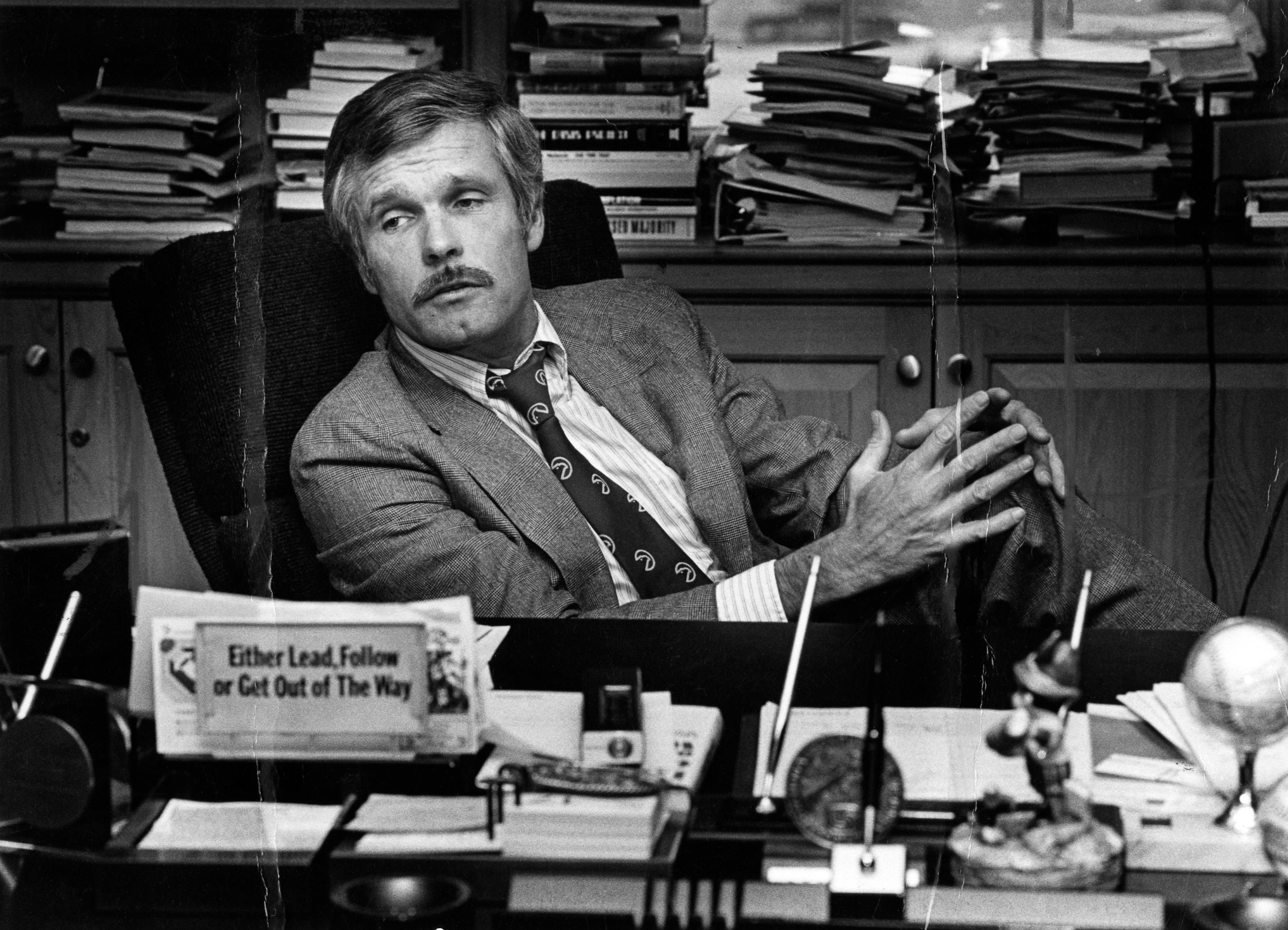
In part, Turner’s own frustration with television news was the instigator. He often worked past 8 p.m., after the ABC, CBS and NBC nightly newscasts had already gone off the air, and was in bed by the time his local stations did their own newscasts at 11 p.m.
He took a chance by starting the operation sometimes derided as the “chicken noodle network” in the early days of cable television, living in an apartment above its Atlanta office.
“I was going to have to hit hard and move incredibly fast and that’s what we did — move so fast that the (broadcast) networks wouldn’t have the time to respond, because they should have done this, not me,” Turner recalled in a 2016 interview with the Academy of Achievement. “But they didn’t have the imagination.”
CNN’s breakthrough moment came during the Gulf War with Iraq in 1991. Most television journalists had fled Baghdad, warned of an imminent American attack. CNN stayed, capturing arresting images of a war’s outbreak, with anti-aircraft tracers streaking across the sky and correspondents flinching from the concussion of bombs.
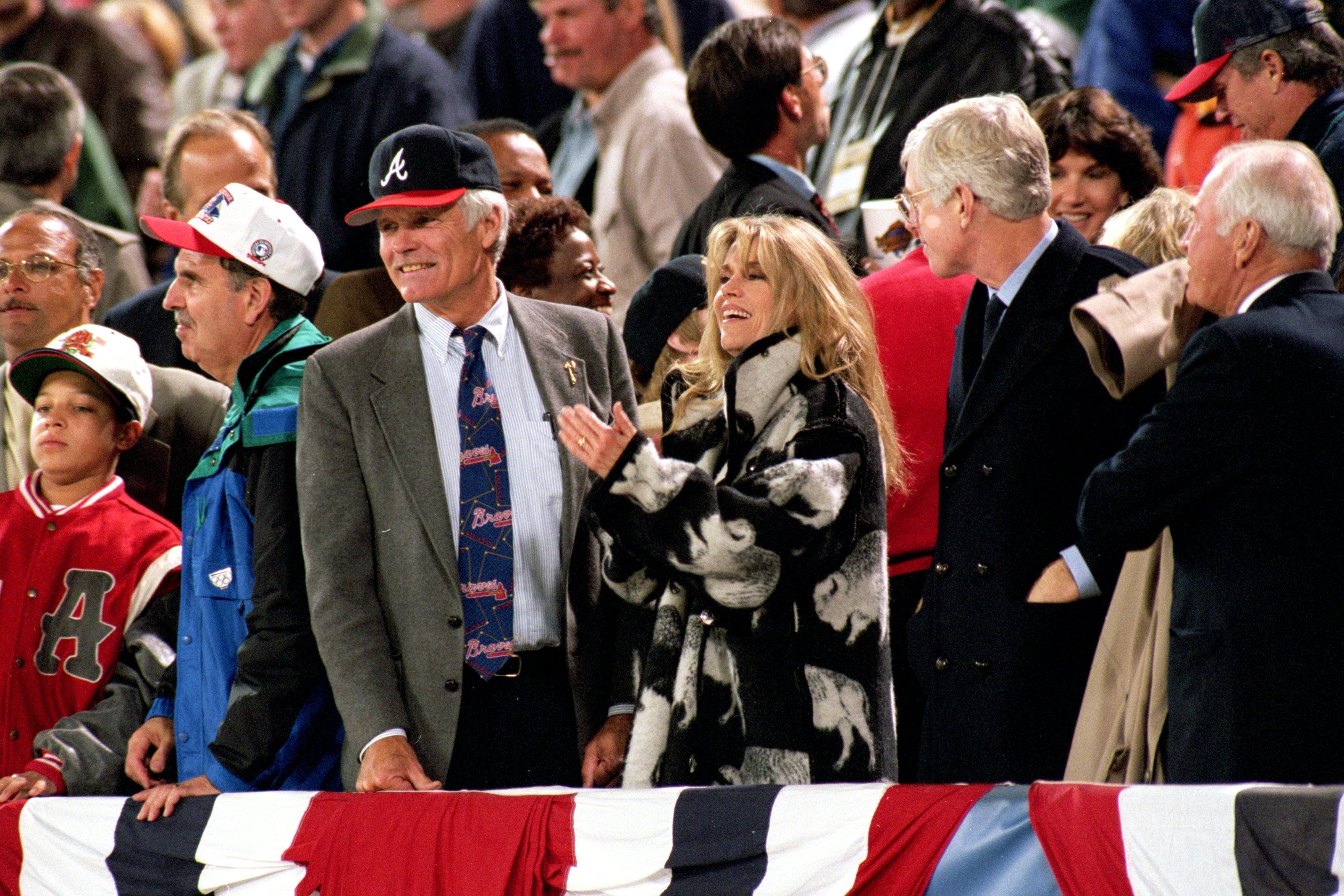
Turner was promised a continued role in CNN after his company’s sale to Time Warner for $7.3 billion in stock, but was gradually pushed out, much to his regret.
“I made a mistake,” he later said. “The mistake I made was losing control of the company.”
That same year — 1996 — saw the birth of Fox News Channel and arrival of a new dominant mogul in cable news, Rupert Murdoch. Political opinion became the stock in trade of networks like Fox News and MSNBC. Even though CNN built a worldwide news organizations particularly strong online, it struggles to this day with a diminished desire for straighter TV newscasts.
‘The Mouth of the South’
Through the years, Turner’s antics occasionally overshadowed his business activities.
Fresh from skippering his boat “Courageous” to the America’s Cup title in 1977, a very inebriated Turner was captured by TV cameras stretched out on the floor at the victory celebration.
Turner managed to insult many with his shoot-from-the-lip style. An atheist since his only sister died of lupus at age 17, he called Christians “losers” and “Jesus-freaks,” later apologizing for both remarks.
He once suggested in a speech that unemployed Black people be used to haul mobile missiles with ropes “like the Egyptians building the pyramids.” After civil rights leaders demanded an apology, he said he was just joking.
Other times, his humor saved him from potentially awkward situations, like when he talked to an audience in Berlin in 1999. “You know, you Germans had a bad century,” Turner said, according to The New Yorker. “You were on the wrong side of two wars. You were the losers. I know what that’s like. When I bought the Atlanta Braves, we couldn’t win, either. You guys can turn it around. You can start making the right choices. If the Atlanta Braves could do it, then Germany can do it.”
Turner, father of five children, grabbed a leadership role in American philanthropy with his Sept. 18, 1997, pledge to give $1 billion, or $100 million a year for 10 years, to United Nations charities. Even as Turner’s fortune shrank after the AOL Time Warner merger, he continued giving money to the U.N., calling it the best hope for peace.
Turner is survived by his five children, 14 grandchildren and two great-grandchildren.
About the Author