Why has nothing been done to reopen the Strait of Hormuz?
The answer is simple – as his advisers will have told Donald Trump before he attacked Iran, it is almost impossible to clear a passage through a minefield when the shoreline is held by the enemy, without being prepared to take significant casualties. And this, it seems, the US is not prepared to do.
It is one thing to bomb a less technologically sophisticated enemy from the air, but quite another to get involved in a real fight at sea level with an opponent who has been planning this form of asymmetric warfare for a very long time.
History gives a stark lesson on why America needs to tread warily – a page from the First World War.
It was March 1915. The “straits” concerned were the Dardanelles – the narrow passage linking the Mediterranean to the Black Sea and giving access to Istanbul. The Turks were the defenders, the British and the French the attackers.
They were in the middle of a shooting war. A vital waterway, which would normally be open for the world’s commerce, was closed because of the actions of Turkey, the bordering power. The coastline was heavily defended, and there was a high probability that mines had been laid to block the channel.
A decision was made by the British and French that the straits were to be reopened by force – and a very considerable force was assembled for that purpose.
It comprised no fewer than 14 “capital” ships (in those days “battleships” and “battlecruisers”) supported by escorts and a large force of minesweepers.
The plan was a good one. The capital ships would stand off in clear water and bombard the shore defences. When these had been silenced, the minesweepers would go ahead and sweep another clear area.
The capital ships would then move forward again into swept water and recommence their bombardment – successive waves of big ships moving up, but always into water which had been swept for mines. In this way, the whole channel would be cleared, and the straits reopened.
The big push commenced on 18 March 1915. To start with, it all went well. Four capital ships – HM ships Queen Elizabeth, Agamemnon, Lord Nelson and Inflexible – formed the first attacking line.
The second line was composed of four French ships, Gaulois, Charlemagne, Bouvet and Suffren. They, in turn, were to be supported by six more British ships – HM ships Ocean, Irresistible, Albion, Vengeance, Swiftsure and Majestic – which would form a third line to pass through and relieve the French in line two.
The bombardment was started by the RN ships in line one at 11am. By 12.20pm, the French ships of line two had steamed through the first line to take up their advanced positions.
By 1.45pm, the fire from the shore batteries had slackened under the onslaught of the guns of the eight capital ships, and it was deemed safe enough to send in the minesweepers for the next phase. The third line of six ships was also called up to move the force forward.
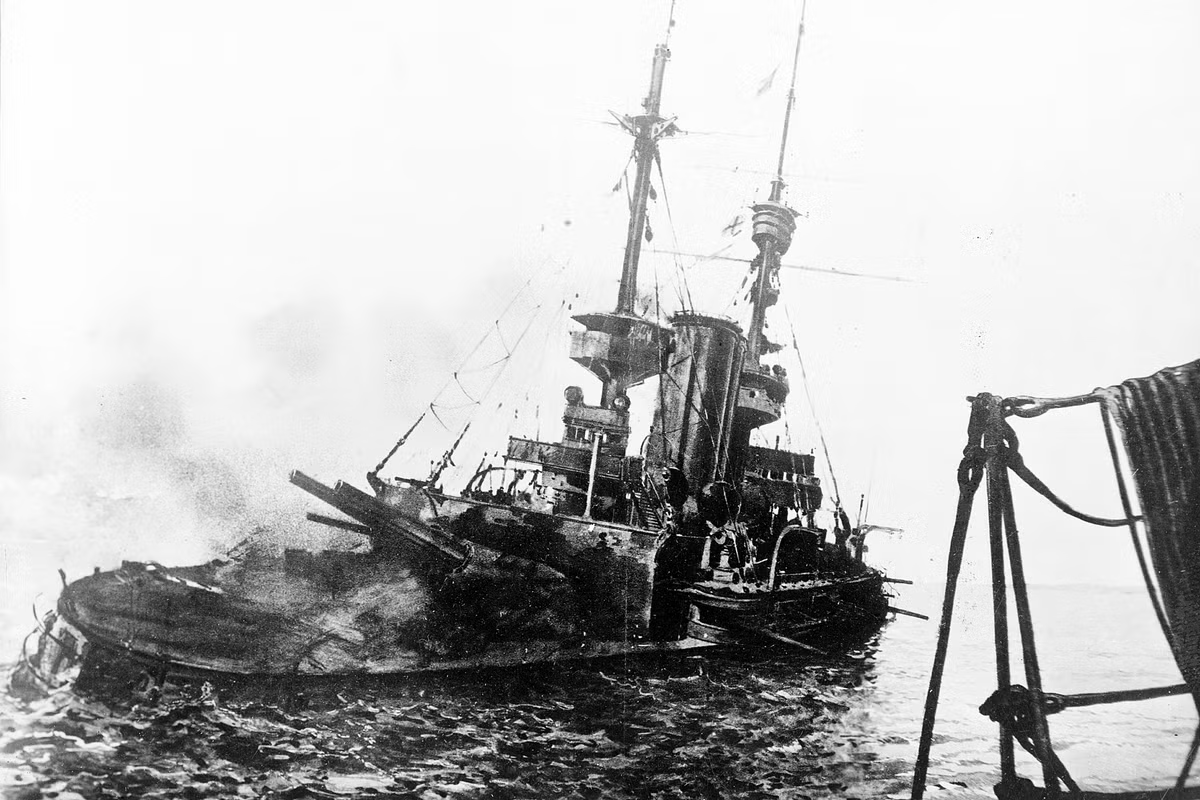
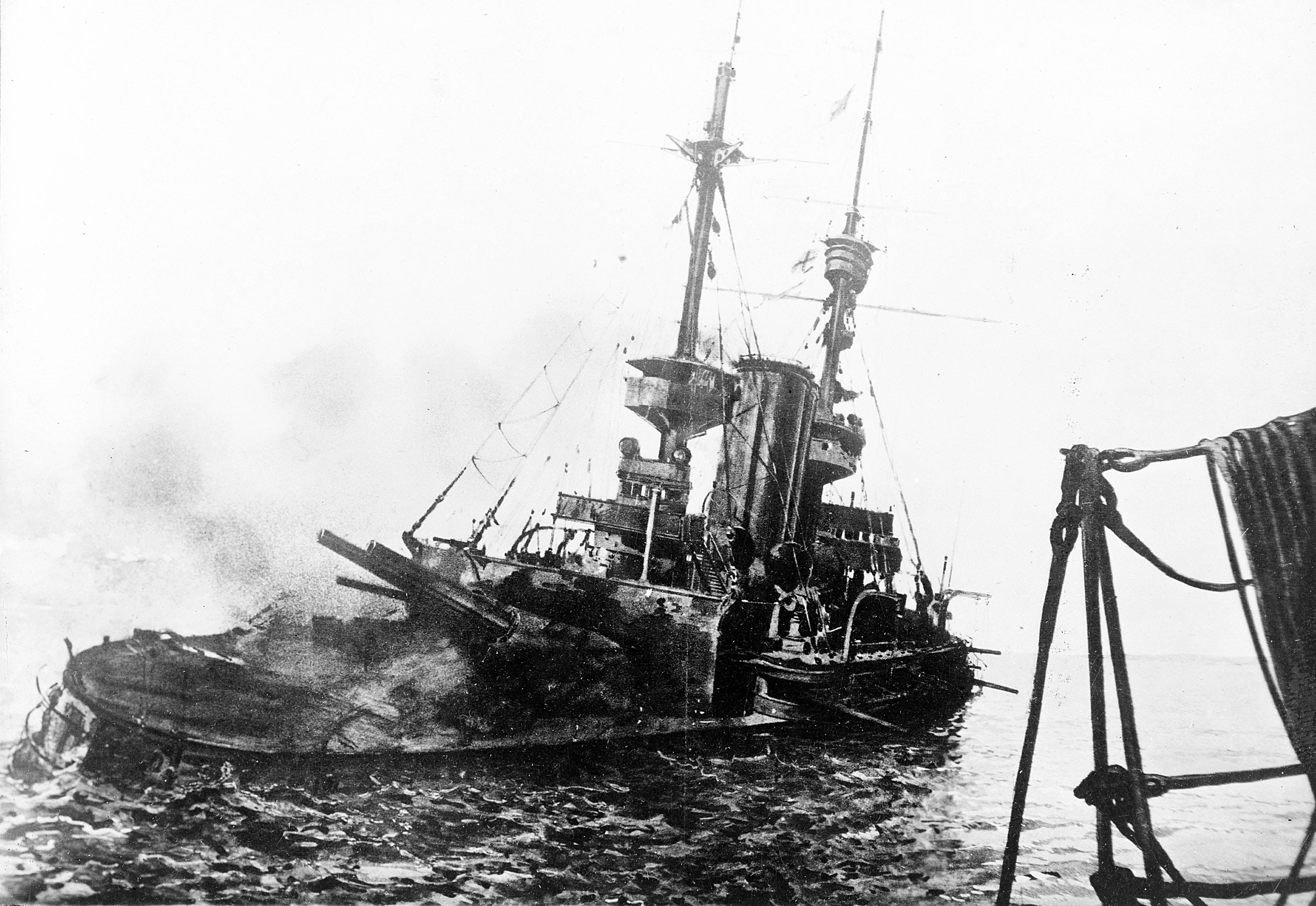
However, 15 minutes later, everything started to go wrong. FS Bouvet hit a mine, and in a matter of minutes, she capsized and sank. There were only 75 survivors out of a ship’s company of 718.
The action continued. HMS Irresistible of the third wave was bombarding the forts when she, in turn, struck a mine at 3.14pm. She developed a severe list but continued with the action until she hit another mine, and her main engines were put out of action completely.
An attempt was made to take her in tow, but the situation was hopeless, and the order was given to abandon ship. More than 600 men were taken to safety.
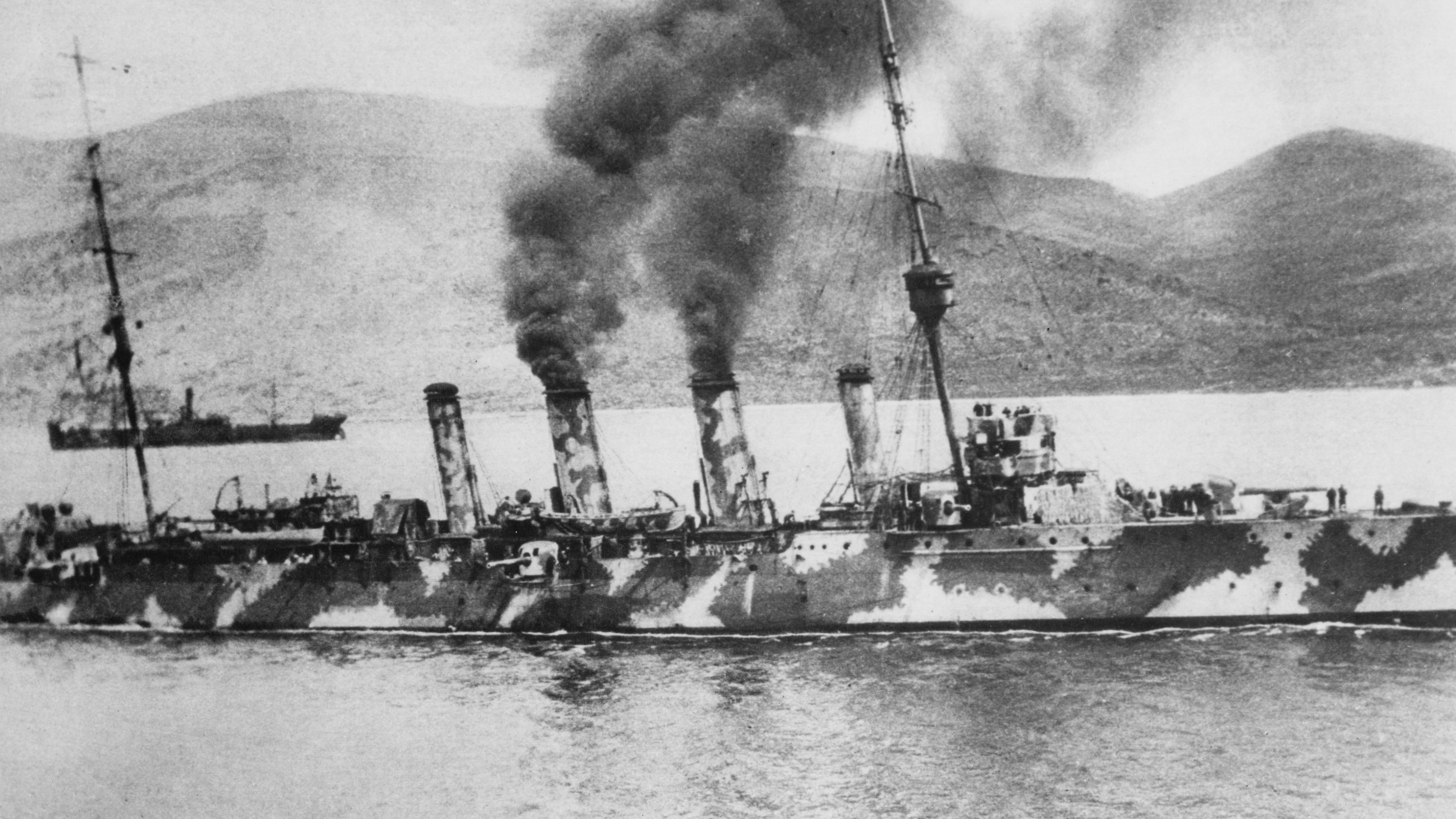
Meanwhile, shortly after 4pm, HMS Inflexible struck a mine. She remained capable of steaming slowly and was ordered to withdraw. However, she had a 30ft x 26ft hole below the waterline and had to be beached to save her from sinking. She was later towed to Malta for repairs and was out of action for three months.
After these disasters, Vice-Admiral John de Robeck, the British admiral in charge of the Allied naval forces during the crucial stages of the campaign, finally decided that the waters which had been considered to be safe and swept of mines were anything but.
Accordingly, at 5.50pm, less than seven hours into the operation, he signalled a “General Recall” to withdraw the ships and return to the safe waters outside the straits.
Fifteen minutes later, at 6.05pm, HMS Ocean struck another mine, developed a major list and was deemed not to be capable of being saved. The ship’s company were taken off and she was left to her fate. Both Irresistible and Ocean later sank.
Fourteen major warships had attempted to force the straits. Within four hours, three of them had been sunk and one had been so badly damaged that she was out of action.
This one day of disaster was the end of trying to take the Dardanelles passage by solely naval means. The attempt was never repeated.
From that day on, the focus shifted to “boots on the ground” to conquer the Turks on land – but as is well known, this likewise failed.
A relatively weak opponent had defeated the combined forces of the two largest navies in the world by its use of asymmetric warfare and, most importantly, by the deployment of mines.
A lesson for our times, Mr President.
John Clark is a former Royal Naval Reserve officer who commanded various minesweepers and minehunters during his service
About the Author