
This article was produced by National Geographic Traveller (UK).
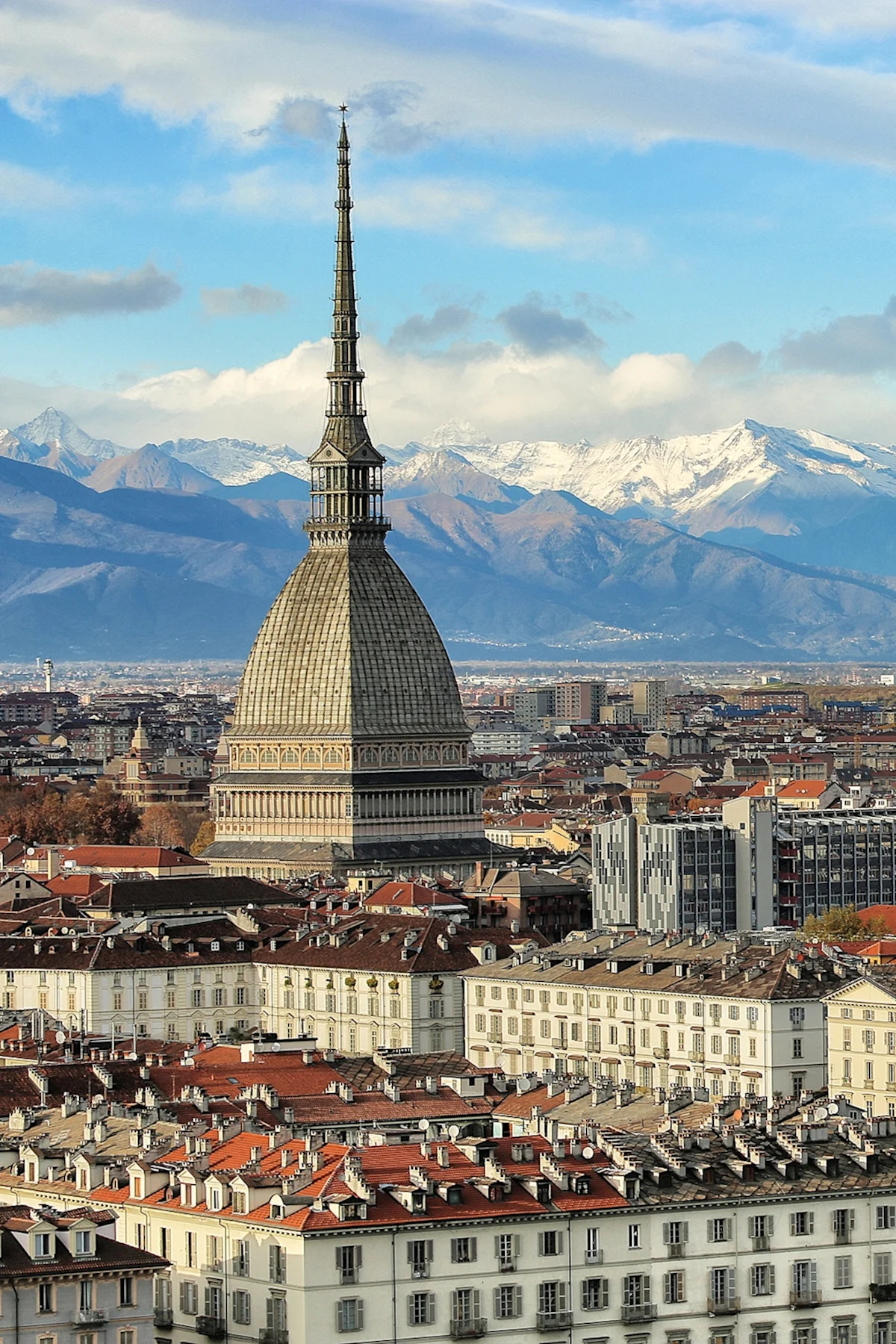
The historic seat of the royal House of Savoy and Italy’s first capital, Turin is undeniably regal — a place of porticoes, stately architecture and historic cafes. Delve deeper, however, and you’ll find a progressive university city and a hub of design and technology that builds on a gritty industrial past. Turin thrives on contradiction — and no more so than when it comes to its spiritual identity.
The city is home to the Holy Shroud, one of Christianity’s most venerated relics — and is also know as the Italian capital of the occult. Its location on the 45th parallel — midway between the Equator and North Pole, in mystical terms an intersection of opposites — has given rise to a belief that it’s a nexus for both black and white magic. Alchemy was of great interest to its former Savoy rulers, and mystics like Nostradamus passed through here. While many sights can be broadly categorised as sacred or occult, light and darkness coexist in many of Turin’s attractions, and this only adds to their intrigue.
Beato Angelico’s Madonna and Child hangs in Turin’s Galleria Sabauda. Davide Bozzalla
The Chapel of the Holy Shroud was built in the 17th century. Massimo Borchi
The sacred
Come face to face with a relic
It’s Turin’s biggest draw: the Holy Shroud, a linen cloth bearing the faint image of a man who was crucified, thought by some to have been Christ. Rarely on display, it’s guarded behind bulletproof glass in the Chapel of the Holy Shroud, just off Piazza Castello. You can see a reproduction, as well as learn about the techniques scientists have used to try and determine its authenticity, in the nearby Holy Shroud Museum.
Admire devotional art
The bright rooms of Galleria Sabauda, overlooking the Giardini Reali in Piazza Castello, are home to a collection of art by Italian, Flemish and Dutch masters dating from the 14th to 20th century, much of it amassed by Turin’s former Savoy rulers. Botticelli’s Venus and Beato Angelico’s Madonna and Child are among the collection’s highlights.
Visit a miraculous site
In 1104, it’s said a blind man divined an icon of the Virgin Mary beneath the ruins of a sanctuary in today’s Quadrilatero Romano, one of Turin’s oldest districts. Upon the item’s discovery, his sight was restored. Rebuilt over time, La Consolata, as the church is now known, is arguably the city’s most beautiful. Inside are a number of folksy, votive paintings depicting the miraculous healing of victims of accidents, illnesses and mishaps, all attributed to Mary.
Enjoy a heavenly view
The Po River divides Turin’s centre from leafier neighbourhoods on its west bank. Cross a bridge and climb a woodland path to the Chiesa di Santa Maria del Monte dei Cappuccini, set on a hill by the water. The church has a glittering high altar, but the panorama from its viewpoint is equally moving, taking in city landmarks and the Alps beyond.
Set within Parco del Valentino, the medieval-style castle Castello del Valentino can be explored on foot. Catherina Unger, AWL
The occult
Visit a bewitching museum
Located behind heavy wooden doors minutes from Piazza Statuto, the Witchcraft Museum is owned by two esotericists eager to share their craft. On a tour, wander through rooms brimming with divinatory tools, grimoires (spell books), mummified animals, herbal potions and drawings channelled by medium and artist Nicolò Mulè. Those inclined can also book divinations, aura cleansings and even past life regressions.
Cycle a sunlit trail
Legend has it that Phaeton, son of the Greek sun god Helios, crashed his chariot into the Po. It’s given rise to a belief that the river holds solar energy. Hire a bike or take an organised cycle tour around the 123-acre Parco del Valentino on its west bank, looking out for Fontana dei Dodici Mesi, a fountain adorned with statues representing the months of the year. There’s also a Unesco-listed medieval castle.
Explore Turin’s twin souls
Nighttime bus and walking tours of Turin explore how geography, tradition and social history have forged the city’s mystic character. Inspect the sinister Devil’s Door, featuring a knocker with two coiled snakes emerging from Satan’s mouth; learn about the ‘alchemical’ caves beneath the Piazza Castello and Giardini Reali, said to have been meeting points for esotericists; and stand in front of the Winged Genius, a statue in Piazza Statuto believed to be a gate to Hell.
The coffin of Kha is a highlight for the visitors of the Museo Egizio. Museo Egizio Torino
Advertisement
Advertisement
Glimpse immortality
Twenty-two statues of Sekhmet, goddess of destruction and healing, dramatically line the first hall in the Museo Egizio. The centre is wholly dedicated to ancient Egyptian culture; continue the tour for the glittering coffin of Kha; the Book of the Dead, a papyrus roll of spells offering guidance on the afterlife journey; and a collection of amulets symbolising stability and resurrection.
Published in the June 2026 issue by National Geographic Traveller (UK).
To subscribe to National Geographic Traveller (UK) magazine click here (available in select countries only).
About the Author