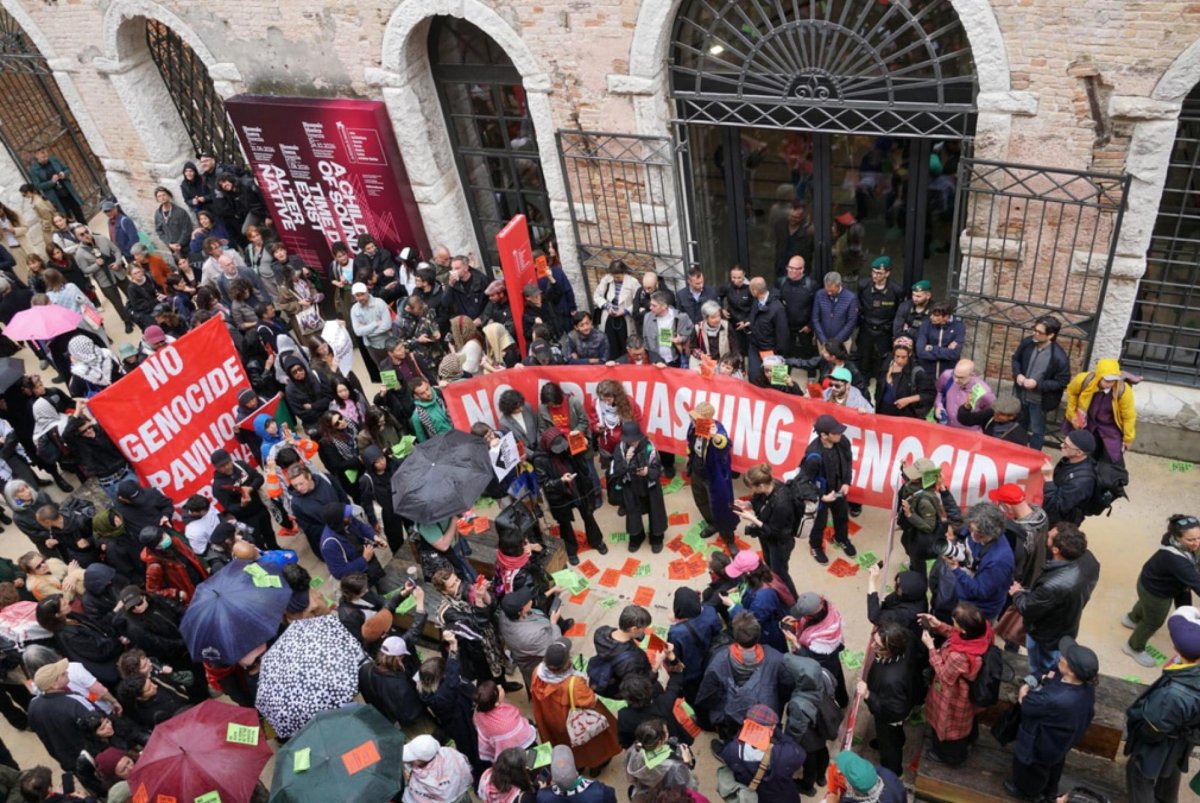
1 of 2 | People protest during the opening of the 61st International Art Exhibition against the presence of the Israeli pavilion at the event in Venice, Italy, on Wednesday. Around 200 people took part in a protest organized by the Art Not Genocide Alliance during the opening of the 61st Venice Art Biennale. Photo by Andrea Merola/EPA
May 6 (UPI) — Various activist groups protested outside the Russian and Israeli pavilions at the Venice Biennale, challenging the countries’ presence at the international art exhibition.
Members of the Pussy Riot and Femen activist groups, many in bright pink masks, ran toward the Russian pavilion Tuesday, where they played punk music and chanted slogans including “Curated by Putin, dead bodies included” and “Blood is Russia’s art,” The Guardian reported. Some lit flares and draped statues around the area with Ukrainian flags. Police kept the protestors from going inside the building, and no one was arrested.
A joint press release by the Russian and Ukrainian feminist groups said it was the first time they’d joined forces in a protest, The Kyiv Independent reported. Pussy Riot cofounder Nadya Tolokonnikova, who led the protest, asked Biennale President Pietrangelo Buttafuoco to “stop taking Russian money,” The Guardian said.
“It’s weird to me that Europe keeps saying that Ukraine is a shield for the entire European continent, but it opens its doors time and time again to Russian propaganda,” Tolokonnikova said. “It’s heartbreaking to me.”
Organizers temporarily shut down the pavilion on the second day of the event’s preview. Russia’s inclusion in the art exhibition set off a political firestorm. The Financial Times reported that the European Commission told organizers and the Italian government that Russia’s participation breaches EU sanctions. The event’s jury also resigned before the event, saying that they would not award prizes to entries from countries with leaders facing charges of crimes against humanity, which includes Russia and Israel.
Inna Shevchenko of Femen said that the Russian pavilion stands on “the invisible pedestal of Ukrainian blood,” The Kyiv Independent reported.
“You won’t find it in the catalogue,” she said, “but it is the only material that truly holds this pavilion together.”
Not long after the protest at the Russian pavilion, the Art Not Genocide Alliance also held a demonstration outside the Israeli pavilion. More than 200 participants in the exhibition have signed a letter asking for that pavilion to be closed, calling it “a collective refusal to allow you to platform the Israeli state as it commits genocide,” The Guardian reported.
About the Author