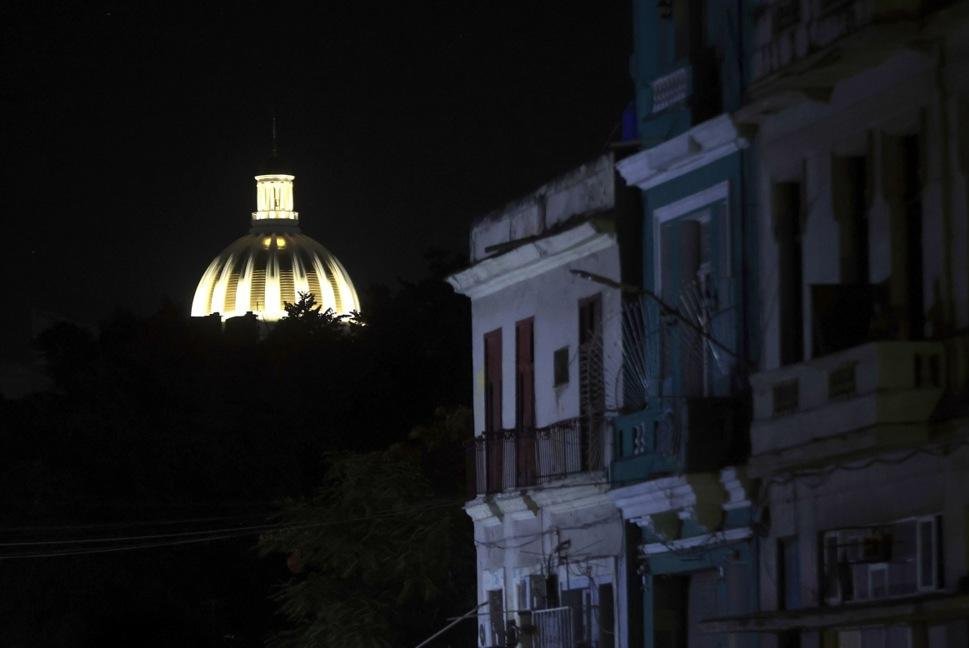
The Capitol dome lit up during a power outage in Havana on Thursday. Six months of a U.S. “maximum pressure” campaign have left Cuba facing a surge in power outages amid equipment breakdowns and fuel shortages. Photo by Ernesto Mastrascusa/EPA
July 7 (UPI) — Cuba is slowly restoring electricity after the country’s third nationwide power grid collapse of 2026 on Monday, but severe fuel shortages and aging infrastructure left much of the island without service Tuesday.
According to the latest update from Havana’s Electric Co., authorities had restored 131 distribution circuits, reconnecting service to 396,447 customers, or about 46% of the Cuban capital.
Cuban authorities have not disclosed the cause of the outage, which left about 9 million people without electricity. However, Lázaro Guerra, director of electricity at the Ministry of Energy and Mines, said on state television that fuel shortages are “undeniably making the restoration process more complex.”
Guerra said crews are rebuilding the system by connecting “micro-islands,” or isolated power networks that rely on solar energy, hydroelectric generation and small engine-powered plants to restore electricity to limited areas before reconnecting them to restart the country’s thermoelectric plants, according to Diario de Cuba.
In central Cuba, crews were working to restore power to the Energás Varadero natural gas power plant and the Carlos Manuel de Céspedes thermoelectric plant, but “weather conditions in Matanzas” had prevented them from “moving as quickly as we wanted,” Guerra said.
He described the situation in the rest of the island as “more complex” because “we do not have fuel for the distributed generation system that would allow us, as on previous occasions, to establish the microgrids.”
Restarting a collapsed grid requires auxiliary power plants and distributed generators, many of which currently lack diesel and fuel oil. At the same time, 11 of Cuba’s 16 thermoelectric generating units remain offline because of breakdowns or emergency maintenance at facilities that are more than 40 years old.
The island’s previous nationwide grid failures, on March 16 and March 21, were triggered by the shutdown of the Antonio Guiteras thermoelectric plant in Matanzas, Cuba’s largest power station.
Local news outlet 14ymedio reported that Monday’s collapse had been anticipated after the Antonio Guiteras plant suffered another failure Friday while several other generating units were already out of service.
According to the news outlet, many Cubans did not immediately notice the nationwide grid failure because prolonged rolling blackouts already had left several municipalities, including parts of Havana, without electricity for more than 20 hours.
Recurring power outages have become one of the country’s most pressing problems, disrupting economic activity, public services and daily life across the island.
The Cuban government, led by President Miguel Díaz-Canel, has blamed what it calls the U.S. “energy blockade,” describing it as a “genocidal” policy.
U.S. restrictions imposed since March have halted Cuba’s traditional oil supplies from Venezuela, Mexico and Russia, leaving the island operating with critically low fuel reserves and relying on alternative sources that have proved insufficient.
About the Author