
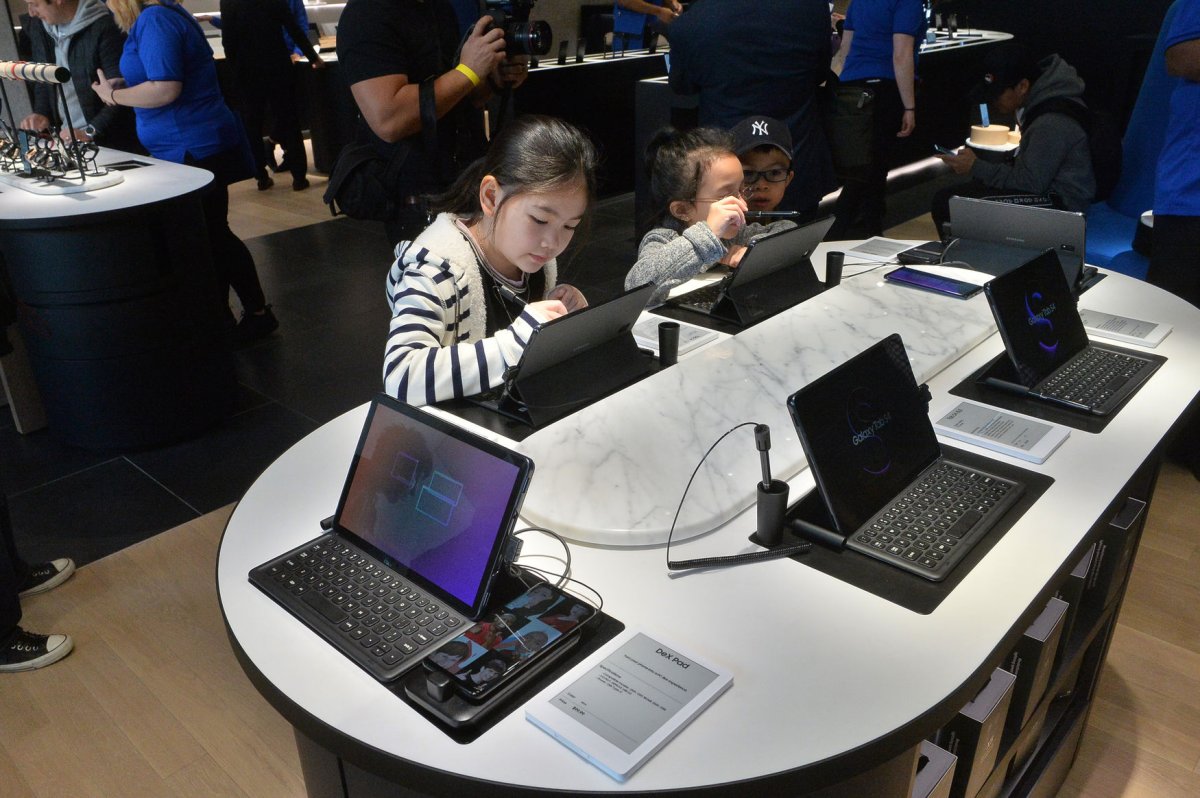
May 20 (UPI) — The U.S. Department of Health and Human Services on Wednesday issued a new surgeon general’s advisory on screen time for children and teenagers, warning of “negative outcomes” from overuse of technology.
“While screen use can have some benefits, the evidence of a range of risks to children’s overall mental and physical health is mounting,” said a letter from Robert F. Kennedy Jr., secretary of the department.
The second Trump administration does not have a confirmed surgeon general. Kennedy’s letter said the advisory and related toolkit on screen time had input from a wide range of experts, including psychologists, pediatricians and health communicators.
The advisory said that officials have connected screen use with poor sleep, worsened school performance, less physical activity and weaker interpersonal relationships.
“There are children, adolescents, families, schools and communities who have found a different path and have built healthy relationships with — and without — technology,” Kennedy wrote. “They gather for game nights, read books, sing and play sports. They volunteer in their communities and participate in faith groups.”
The toolkit offered with the advisory noted warning signs around too much screen time and gave some recommendations on limits, such as no screens for children younger than 18 months, less than 1 hour a day for children younger than 6 years old and 2 hours a day for those 7 to 18.
Among the “calls to action” in the advisory are that schools restrict cell phone use and prioritize assigning work in books or on paper, healthcare providers ask questions about screen use during annual visits and policymakers seek laws that give parents more power to control their children’s screen use and demand safety and privacy protections.
In January, the American Academy of Pediatrics released new media recommendations around screen time that acknowledged its pervasiveness in today’s world. The new advisory hits similar notes, including a family media plan.
The authors of the AAP recommendations noted that digital media designed for young people can have benefits such as learning and social connection.
“But many platforms are guided by an underlying business model to keep users engaged for as long as possible, which can disrupt child sleep, learning, physical health, and mood,” said Dr. Tiffany Munzer, lead author of the policy. “Our focus should be on designing high-quality digital media while supporting families at multiple levels to address their digital media concerns and set kids up for success.”
Dr. Courtney Blackwell, an associate professor of medical social sciences at Northwestern University Feinberg School of Medicine, told CNN that the relationship between children and screen time is not necessarily a “one size fits all” one.
“That’s not to say on an individual level, some children in some contexts with some pre-existing conditions may experience some kinds of challenges when it comes to screen use and mental health or physical health,” she said. “But at the population level, the research is not definitive, I would say, to suggest screen time causes harm in and of itself.”
Children can find social support with peers with similar identities online, Blackwell said, and some media, such as Sesame Street, can help learning.
“So it’s just not how long kids are spending on screens but really how they’re using it and the context of that use,” she said.
About the Author


