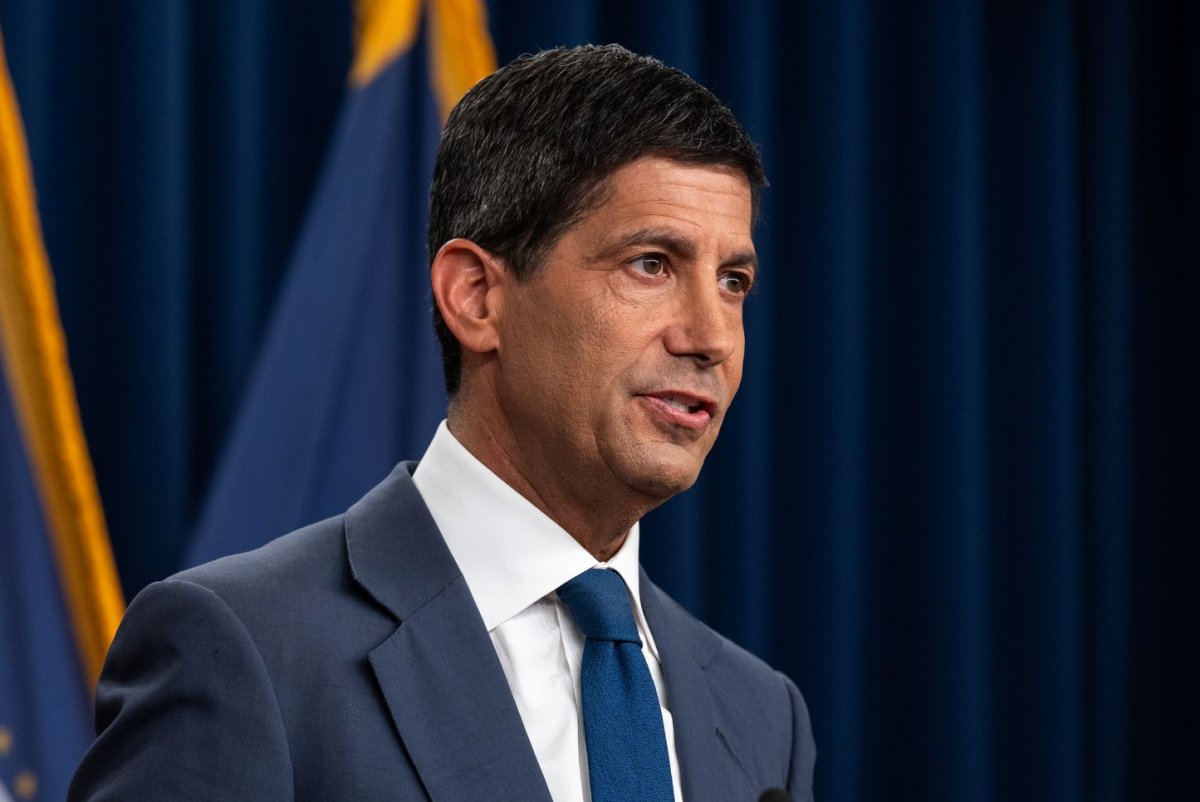
Aug. 28 (UPI) — Federal Reserve Chairman Kevin Warsh said the country’s focus should be on lowering prices as inflation continues to stay elevated Friday at the Fed’s annual symposium at Jackson Hole, Wyo.
Federal Reserve chairs often use the speech to discuss monetary policy initiatives on a broad level, including offering insight into future interest rate plans.
Warsh also hinted that interest rates could go higher if prices aren’t eased, which would put him in conflict with President Donald Trump, who has advocated for lower interest rates since he took office in 2025. Lowering interest rates fueled Trump’s ire for previous Fed Chairman Jerome Powell.
“While this summer’s [inflation] readings were better than expected, they do not tell me that underlying trends have meaningfully improved,” Warsh said in his keynote speech at the event.
“We must be confident that underlying inflation is moving to our objective, clearly and at sufficient speed. Otherwise, we have work to do. That’s our job, our mandate and our charge to keep,” he added.
The U.S. economy continues to face inflation pressures with rates well above the Federal Reserve’s 2% annual target. Under Warsh, inflation markers have moved higher while the Federal Open Market Committee has maintained its benchmark interest rates at 3.5% to 3.75%.
Some members in the central bank are calling for another hike in interest rates, which would be a first since July 2023.
Stock market indexes rose after the speech, with treasury yields also rising, CNBC reported. The policy-sensitive 2-year note soared nearly 8 basis points, or 0.08 percentage point, to 4.31%, its highest since late July.
The CME group’s FedWatch tool reported that the probability of a September policy meeting will result in a rate hike up to 55.7%, which is about 20 percentage points higher than Thursday.
Warsh “opened the door to a Fed rate hike. A hike probably won’t come in September, but it will by October or December,” CNBC reported Heather Long, chief economist at Navy Federal Credit Union, said. “Warsh explicitly said this summer’s encouraging inflation readings don’t indicate ‘meaningful’ improvement on inflation. Bond markets reacted swiftly by pricing in a hike.”
Warsh said “market prices show confidence that we will deliver price stability. And I can assure you they’re right.”
Warsh outlined his philosophy on policy while carefully avoiding discussing any future moves.
“I stand here today committed to a discipline, not to a decision,” Warsh said in prepared remarks.
He said he wants a “quieter Fed, more purposeful in its communications” to get away from having markets respond to everything that comes from policymakers.
“We should not indulge a regime in which market participants are looking primarily to the Fed for their next trade,” he said.
He said moves based purely on policy hurt regular Americans.
“If markets rely materially on the Fed’s guidance, and the Fed relies on market prices, we’re more likely to be blinded to new developments,” Warsh said. “If the Fed gets inflation wrong and judges the economy wrong, who gets the worst of it? Not the financial high-fliers. Hardworking Americans are the ones left to deal with inflation that is too high or jobs that suddenly appear less secure.”
Warsh has established five task forces that are reviewing how the Federal Reserve approaches its policy decisions, including its use of data, technology including artificial intelligence, and its balance sheet.
The Federal Open Market Committee did not meet in August. Its next meeting is on Sept. 15 and 16, during which it will decide whether to hold interest rates firm or make adjustments.
After Warsh’s address following last month’s FOMC meeting, yields for long-term bonds rose. This happens when bond traders are skeptical that the central bank will cool inflation.
Warsh didn’t mention Treasury Secretary Scott Bessent’s recent announcement that the government would do accelerated buybacks of government debt.
About the Author