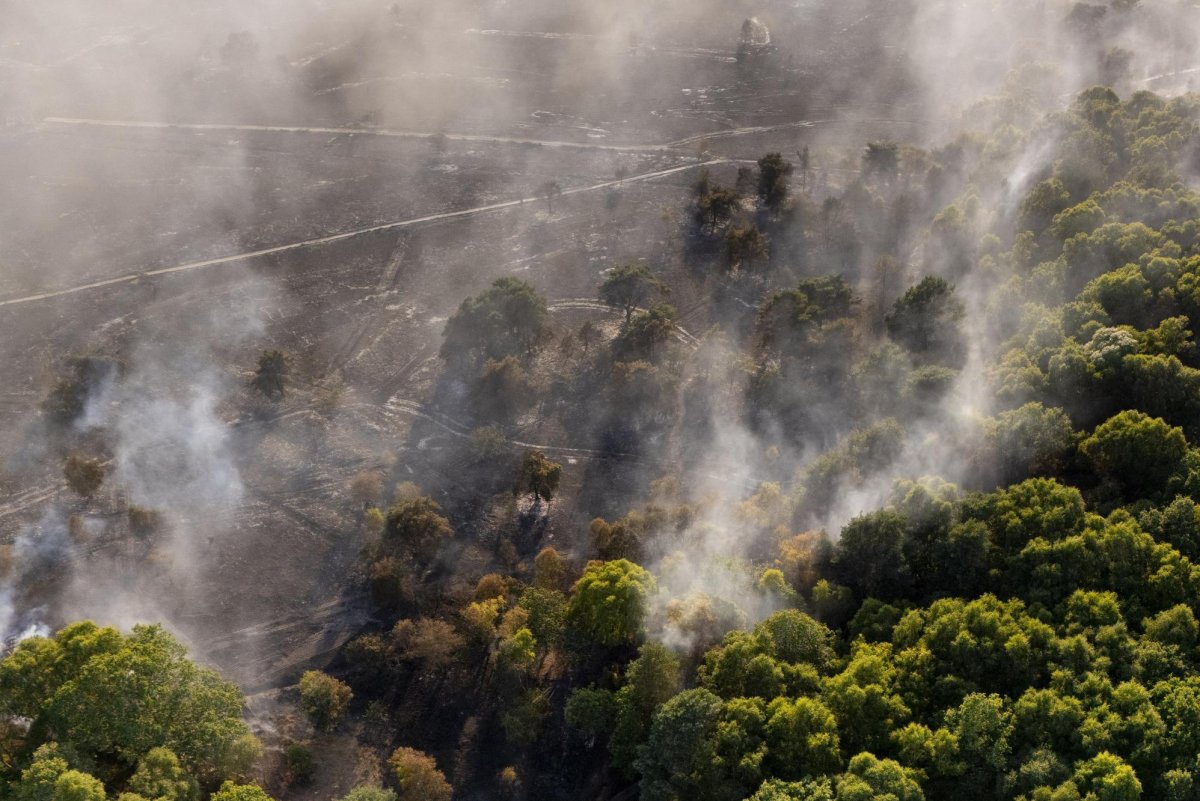
An aerial view taken with a drone shows smoke rising from wildfires near Dunwich Heath in Suffolk, Britain, on July 31. British Prime Minister Andy Burnham on Friday banned the sale of disposable barbeques and took other emergency measures to combat wildfires triggered by heatwaves and a lack of rain. File Photo by Tolga Akmen/EPA
Aug. 14 (UPI) — British Prime Minister Andy Burnham imposed a temporary ban on the sale of disposable barbecues and deployed military personnel on Friday in a battle against widespread wildfires across the country.
Speaking from the hard-hit West Midlands of England, Burnham said the measures were made necessary by continuing waves of hot weather and extreme drought.
“We cannot accept this as the new normal,” he said in a video address while recounting how fires the region “have destroyed homes, forced people to evacuate and left firefighters injured while protecting others.”
Much of England and Wales remains in a deep drought and is facing another period of extreme heat a day after the Met Office reported temperatures reaching 100.6 degrees in London for the fifth-hottest day on record in the nation’s history, the British leader noted.
“Farmers are watching crops fail and firefighters have faced hundreds of wildfires in a matter of weeks,” he said. “This is what climate change looks like here and now.”
The prime minister said the barbeque ban, emergency funding for fire and rescue services and deploying military support were decided during a meeting of COBRA, the government’s emergency response committee, earlier this week.
But, he added, “we also have to tackle the causes of climate change and make Britain more resilient to the extreme weather we’re already experiencing. We shouldn’t just accept this as inevitable and I don’t.”
The British government has already announced plans to support the development of nine new water reservoirs and improve resilience to future droughts, floods and extreme weather, as well as a investment of nearly $135 million million “to strengthen the country’s response to wildfires and extreme weather.”
Thursday’s extreme temperatures meant Britain this year has already seen the most number of days reaching or exceeding 97 degrees (four days) and 98 degrees (three days), as well as equaling 2022 for seeing two days of 100 degrees.
As the weekend began, forecasters predicted a gradual cooling from north to south across the country but with much-needed rainfall remaining scarce.
“A front moving south eastwards across the U.K. on Monday and Tuesday could bring northern areas some rain but amounts of rain in the south will be small at most and the majority will fall over Northern Ireland and Scotland,” Steven Keates of the Met Office said in a release.
“The next meaningful rain forecast for these very dry areas could be towards the end of next week as an area of low pressure influences our weather from the southwest.”
About the Author