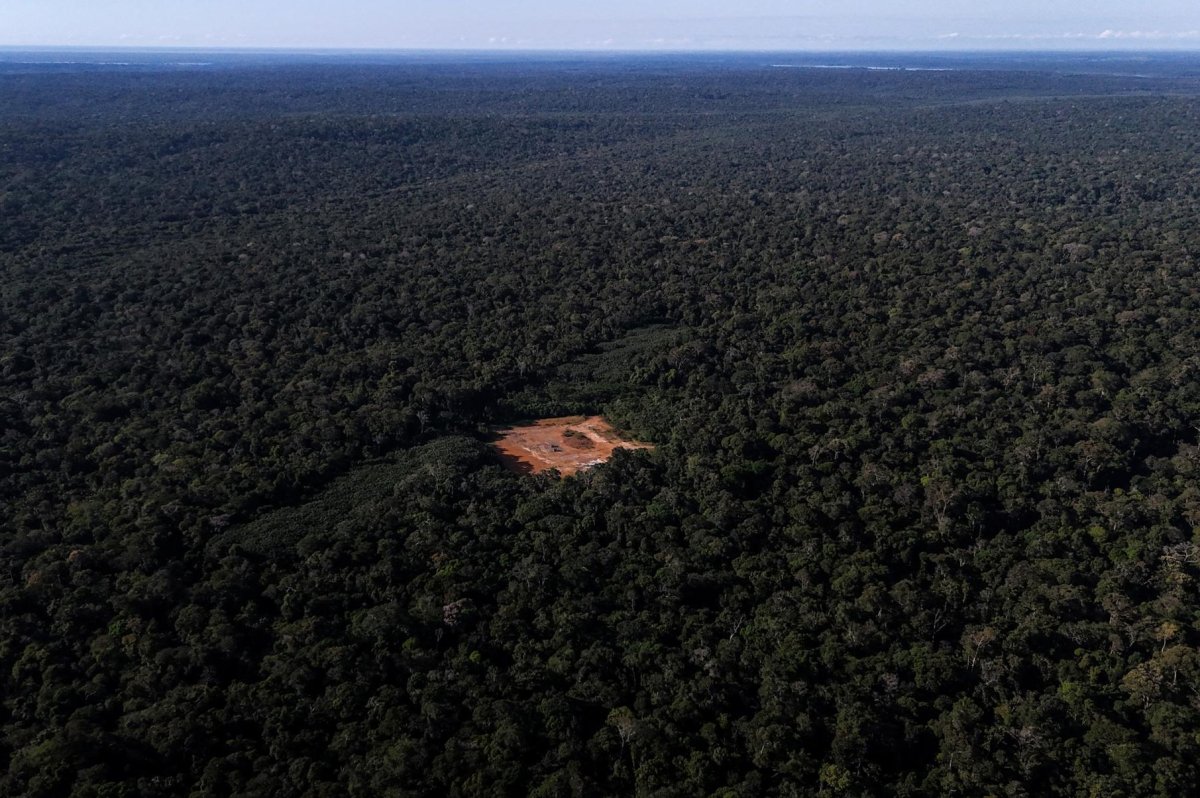
Deforestation in parts of the Amazon rainforest in Brazil declined to its lowest levels in more than a decade, a good sign for what scientists call one of the world’s most important climate regulators. File Photo by Antonio Lacerda/EPA
July 11 (UPI) — Deforestation of Brazil’s Amazon rainforest has fallen to its lowest levels in more than a decade, officials said this week.
Satellite surveys show a 37% decrease in the number of trees felled in the world’s largest rainforest in the past year compared to the previous one, according to the National Space Research Institute (INPE).
This is the lowest level of Amazon deforestation since 2014, data published on Friday shows.
“It’s a solid result, stemming from government actions to protect the forest and combat environmental crime,” said executive secretary Márcio Astrini, of the Brazilian environmental collective Observatório do Clima.
“The figures are excellent and deserve to be celebrated,” Astrini told G1.
The Amazon rainforest is one of the world’s most important climate regulators, scientists and experts have said.
Deforestation of the Amazon in Brazil reached a 15-year high in 2021 under former President Jair Bolsonaro, whose government cut environmental protections and enforcement of conservation laws.
Brazil’s current president, Luiz Inácio Lula da Silva, has vowed to eradicate illegal deforestation by 2030.
“It is a commitment — otherwise, I will have failed,” Lula told reporters during an event in Belém do Pará, a city known as the metropolis of the Amazon.
About the Author