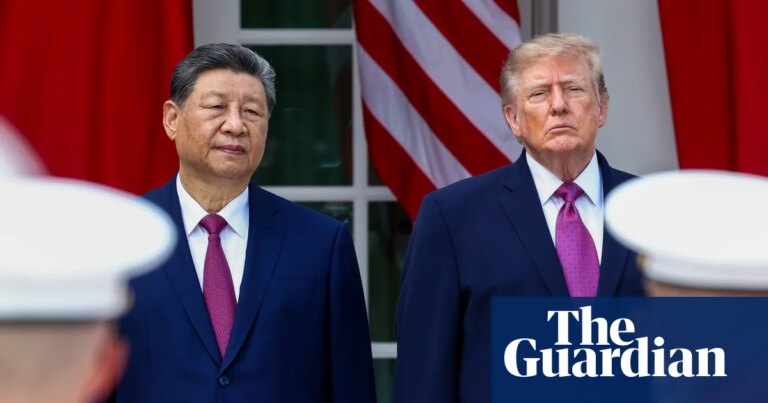
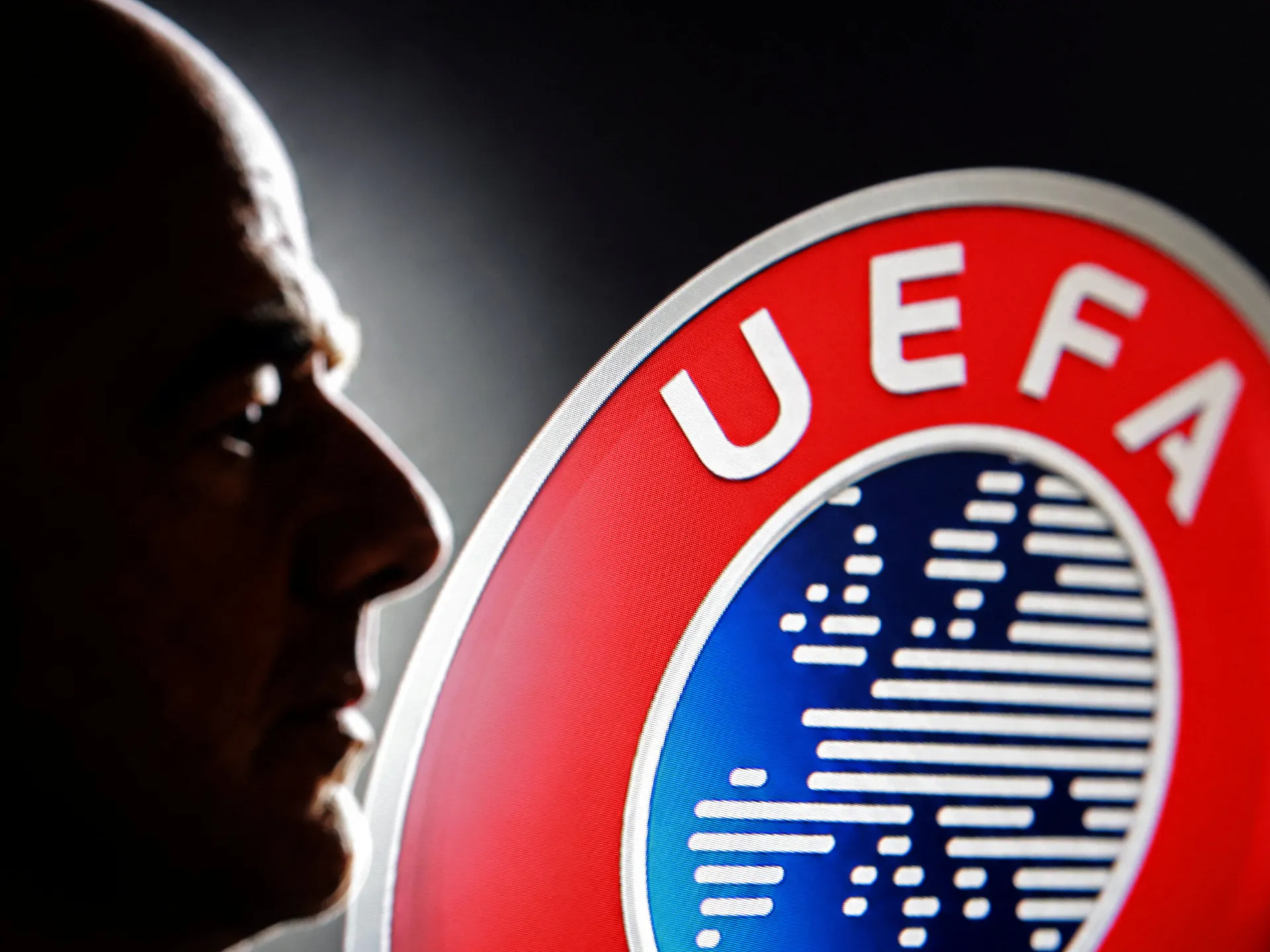
Gianni Infantino truly looked the “King of Football,” as US President Donald Trump likes to call him, as the two allies sat together watching the World Cup final less than two weeks ago.
Sure, there were some boos inside MetLife Stadium near New York, when the two men walked across the turf to present the trophy and medals to Spain and Argentina players on July 19.
Recommended Stories
list of 4 itemsend of list
Still, that 104th and final game capped a biggest-ever tournament seen as a vindication for the FIFA president – a consensus success on the field and a financial bonanza for global football. Infantino could look ahead to his likely re-election coronation next March.
The sunny scene must now feel an age ago since Infantino caused a seismic rift in global football.
The intensifying fallout has threatened the 56-year-old Infantino’s job after he seemed untouchable until this week.
Did Infantino have any choice but to abandon FIFA World Cup investment plan?
Infantino’s misstep was inviting private investors, led by Joshua Kushner, to buy a stake in future profits from World Cups and all FIFA events. The ensuing backlash – which included vows by European nations to boycott FIFA events and claims from senior staff that Infantino deceived everyone – led Infantino to announce Friday that he was abandoning the plan.
“Having listened carefully to all the views, it has become clear that the project has created divisions of a nature that, regardless of the level of support, are no longer in the interest of the objective set out in the first place,” he said in a statement.
Infantino left New York City last week with letters pledging election support from about 200 of FIFA’s 211 national member federations who vote for their leader every four years.
Now, even after scrapping his divisive investment project, his support remains unclear at best.
What would the private investment plan have done to for FIFA?
Infantino’s proposal would have created a subsidiary – known as FIFA Forward Enterprise (FFE) – for the money-making parts of the not-for-profit football body’s work: Running tournaments like the World Cup, selling broadcasting and sponsorship, tickets and hospitality.
Private equity and petrostate sovereign wealth money has been normalized in European club football, yet they still seem unthinkable for many observers in the World Cup – football’s ultimate prize is about glory, not money, and fans have long believed the World Cup belongs to them.
FIFA proposed raising $4.2bn from investors buying stakes amounting to about 20% in FFE, based on an equity valuation of $20bn. The “anchor investor” would have been Thrive Eternal, launched by Joshua Kushner, whose brother Jared Kushner is a son-in-law of Trump.
FIFA’s 211 member federations – already effective owners of the governing body as a nonprofit association under Swiss law – were offered $20m each. The deadline to accept was September 19.
The members already are due $10m each from FIFA over the next four years, funded largely by its record $15bn revenue over 2023-26 tied to the World Cup just ended.
FIFA says under FFE, that would have doubled to $20m each, then rise to $22m each through 2034, and $24m to 2038.
That’s a huge sum for tiny football federations in places like Andorra, Montserrat and Papua New Guinea. Deep-pocketed soccer powers like England, Spain or France have other priorities.
Who were the main opponents of Infantino’s plan for FIFA and World Cups?
Some FIFA vice presidents, some of FIFA’s top executives, all the European football federations, the football bodies of Asia and North America, Britain’s Prime Minister, the global group of national leagues, a lot of fans worldwide.
Essentially, everyone.
Infantino was looking increasingly friendless on Friday. His senior adviser, former Goldman Sachs banker Carlos Cordeiro, resigned and called it a bad deal. FIFA chief operating officer Kevin Lamour gave a stinging statement to The Associated Press in defence of colleagues that all but invited his boss to fire him.
A key move Thursday was European football body UEFA vowing to boycott all FIFA competitions until Infantino dropped the plan.
Europe’s teams routinely dominate and win FIFA trophies like the men’s World Cup and Club World Cup that are its biggest revenue earners.
They collectively feared that private investors would seek – and demand – value from more games and bigger competitions that threaten the balance of global football.
That could jeopardize attention and revenues for club football, including the UEFA Champions League.
Fixture calendars are already congested, elite players are at their limits, broadcast and sponsor money is not unlimited.
All are angry that Infantino seems not to have consulted anyone while planning the project over the last year, when he was so focused with spending time in Trump’s orbit. Even Trump said Friday he had not spoken with the FIFA chief on his plan to sell stakes in the tournament.
Did Infantino have any support for his plans for FIFA and World Cups?
Infantino’s traditional support base in Africa, which has 54 of the 211 voting members, had been neutral about the offers of game-changing money for many of them.
The 10-nation South American group CONMEBOL said on Friday it had received the proposal and would evaluate the issue “with the rigor it demands.” CONMEBOL is led by FIFA vice president Alejandro Dominguez of Paraguay, who is relying on Infantino expanding the 2030 World Cup to 64 teams.
That would give more games to minority co-hosts Argentina, Paraguay and inaugural 1930 World Cup host Uruguay, who currently are set to get just one game each of the 104. The rest are in Spain, Portugal and Morocco.
What happens now Infantino in his role as FIFA President?
The UEFA-led resistance succeeded in stopping the sell-off plan. Will that satisfy Infantino’s opponents to leave him in office?
Does Infantino have the credibility to stay in office after interventions Friday by Lamour and Cordeiro that surely would make most presidencies untenable?
November 18 is the deadline for candidates to enter the next presidential contest, exactly four months ahead of the vote in Rabat, Morocco, where FIFA has its African headquarters.
Infantino was re-elected unopposed in 2019 in Paris and 2023 in Kigali, Rwanda. FIFA statutes allow him one more four-year term in office.
The FFE spinoff seemed a way to create a commissioner-like role for Infantino beyond 2031, likely paying much more than his current annual salary and bonus deal of more than $6m.
It would take 106 votes to ensure a majority in a contested election. Continents surely do not vote uniformly en bloc, but most of Europe’s 55, plus CONCACAF’s 35 and Asia’s 46 would be a solid base.
Speculation on a likely direct challenger typically lands on Paris Saint-Germain’s Qatari president Nasser al-Khelaïfi and the Canadian FIFA vice president Victor Montagliani.
Sheikh Salman bin Ebrahim Al Khalifa, the AFC’s longtime president from Bahrain, narrowly lost the FIFA presidential election to Infantino in 2016, so may decide to run again.
North American football chief Victor Montagliani has also emerged as a potential challenger to Infantino in only the last few days.
All such talk seemed fanciful until this week, despite long-term unease with Infantino’s style and previous attempts to force through unpopular projects.
The talk has never seemed more likely to become action.
About the Author