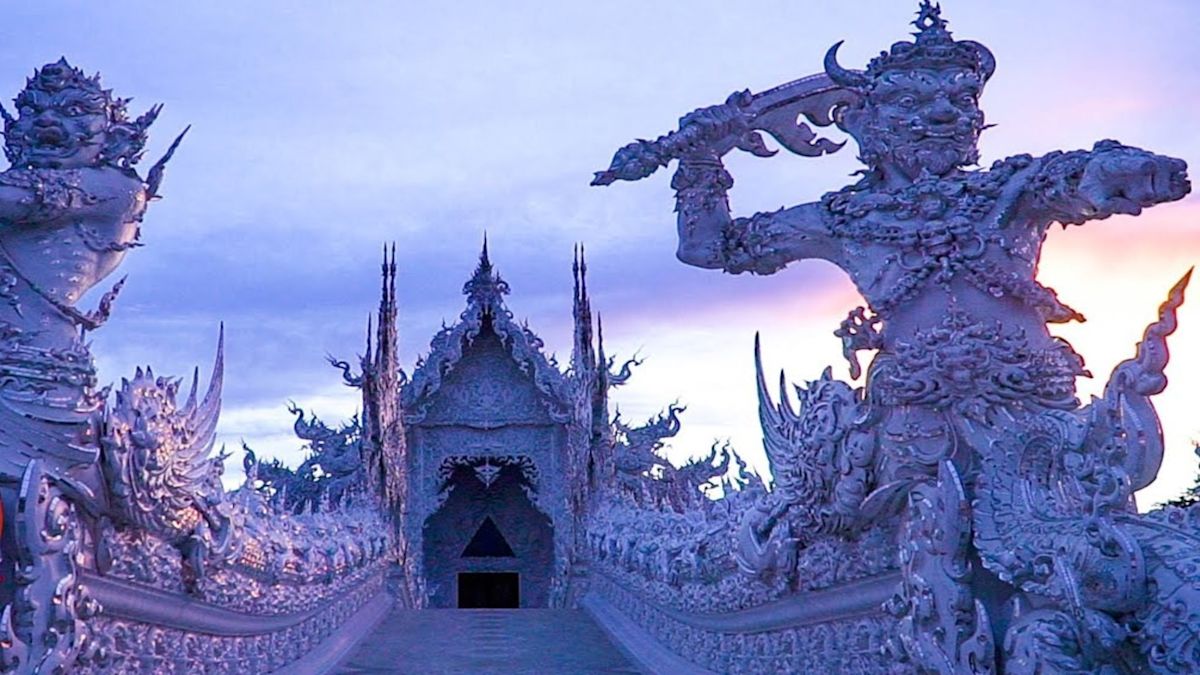
Thailand is home to thousands of traditional temples, each carrying centuries of history and spiritual meaning.
Among them, Wat Rong Khun stands apart with its dazzling white appearance and unusual artistic details.
Located in Chiang Rai, this temple challenges traditional ideas of what a place of worship can look like.
With symbolic sculptures, modern influences, and unique architecture, it has become one of Thailand’s most fascinating landmarks.
Advertisement
Advertisement
Unlike the colourful and gold-covered temples commonly associated with Thailand, Wat Rong Khun is completely white. The artist chose this colour to represent purity, creating a striking appearance that makes the temple look almost unreal.
Every part of the temple has been carefully designed with symbolic meaning. Visitors approaching the entrance encounter unusual features, including ghostly heads hanging from trees, strange sculptures, and hands reaching upward as they cross the bridge toward the main structure.
The bridge itself represents a spiritual journey, leading visitors toward enlightenment. The unusual artwork surrounding the temple creates a powerful contrast between traditional religious themes and modern artistic ideas.
One of Wat Rong Khun’s most recognizable features is its use of glass mosaics. These small reflective pieces represent enlightenment, while the mirrors throughout the temple symbolize Buddha’s wisdom spreading throughout the universe.
Advertisement
Advertisement
The temple also includes a striking gold building that contrasts with the white structure. This ornate restroom building is covered in gold leaf and carries its own message. Unlike the white temple, which represents purity, the gold building symbolizes the human focus on wealth and material possessions.
The design choices at Wat Rong Khun were created to encourage visitors to think about deeper ideas, including spirituality, desire, and the relationship between material life and inner growth.
Although the temple attracts thousands of visitors from around the world today, its unique style was not always welcomed. When it was first completed, the building received criticism from some members of Thailand’s artistic and religious communities.
Some government officials, monks, and artists argued that the temple moved too far away from traditional Thai art. They questioned the use of unusual symbols and references influenced by modern popular culture throughout the grounds.
Advertisement
Advertisement
Despite these criticisms, Wat Rong Khun continued to gain recognition as a bold example of modern Thai creativity. Its unusual design helped establish it as a symbol of artistic freedom and innovation.
The temple demonstrates how cultural traditions can evolve while still maintaining connections to history and spirituality. Rather than simply copying older architectural styles, Wat Rong Khun creates a new visual language that reflects the ideas of the modern world.
Today, the White Temple remains a remarkable example of how architecture can inspire curiosity and conversation. Its combination of religious symbolism, imaginative design, and contemporary influences makes it unlike any other temple in Thailand.
Wat Rong Khun stands as a reminder that art does not always have to follow tradition. Sometimes, the most memorable creations come from challenging expectations and creating something completely new.
About the Author