For a few hours last week, the volcanic island of Iturup became the stage for a confrontation that had been decades in the making.
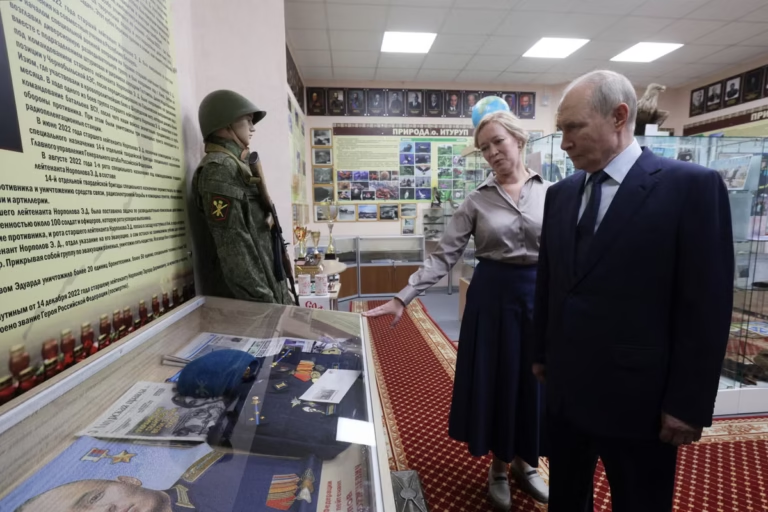
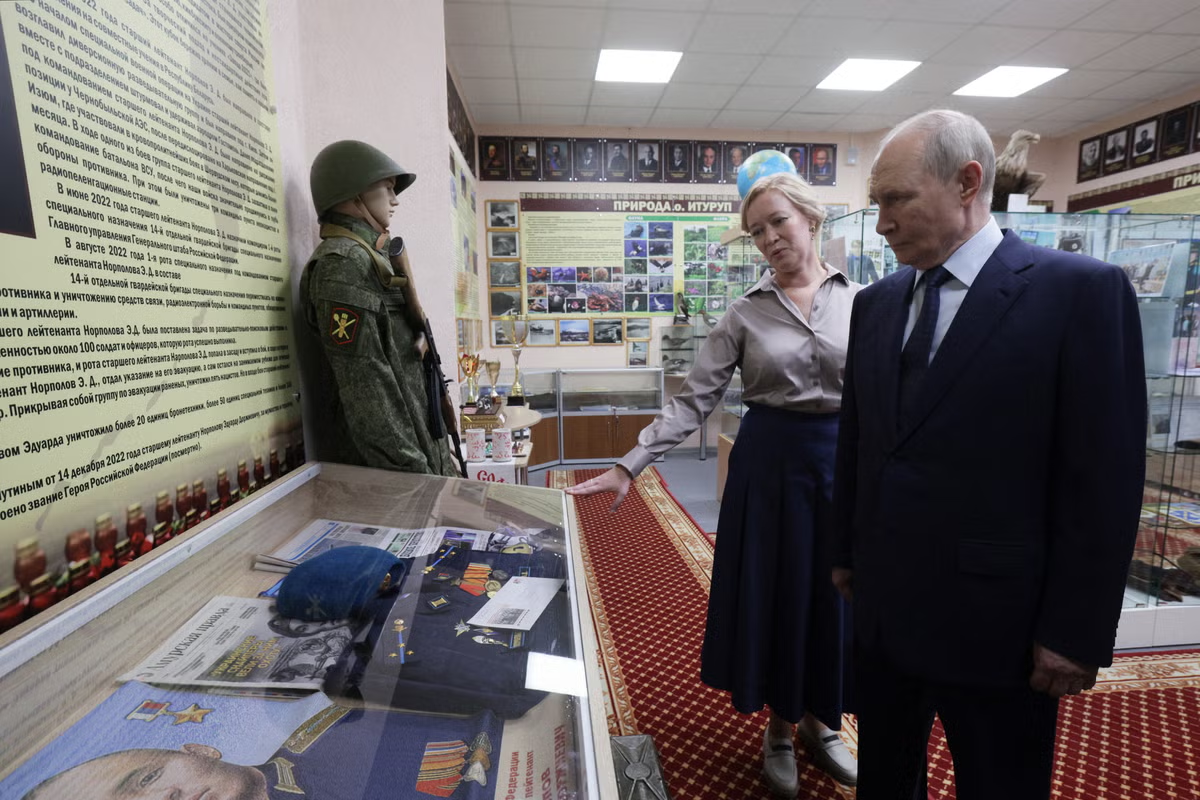
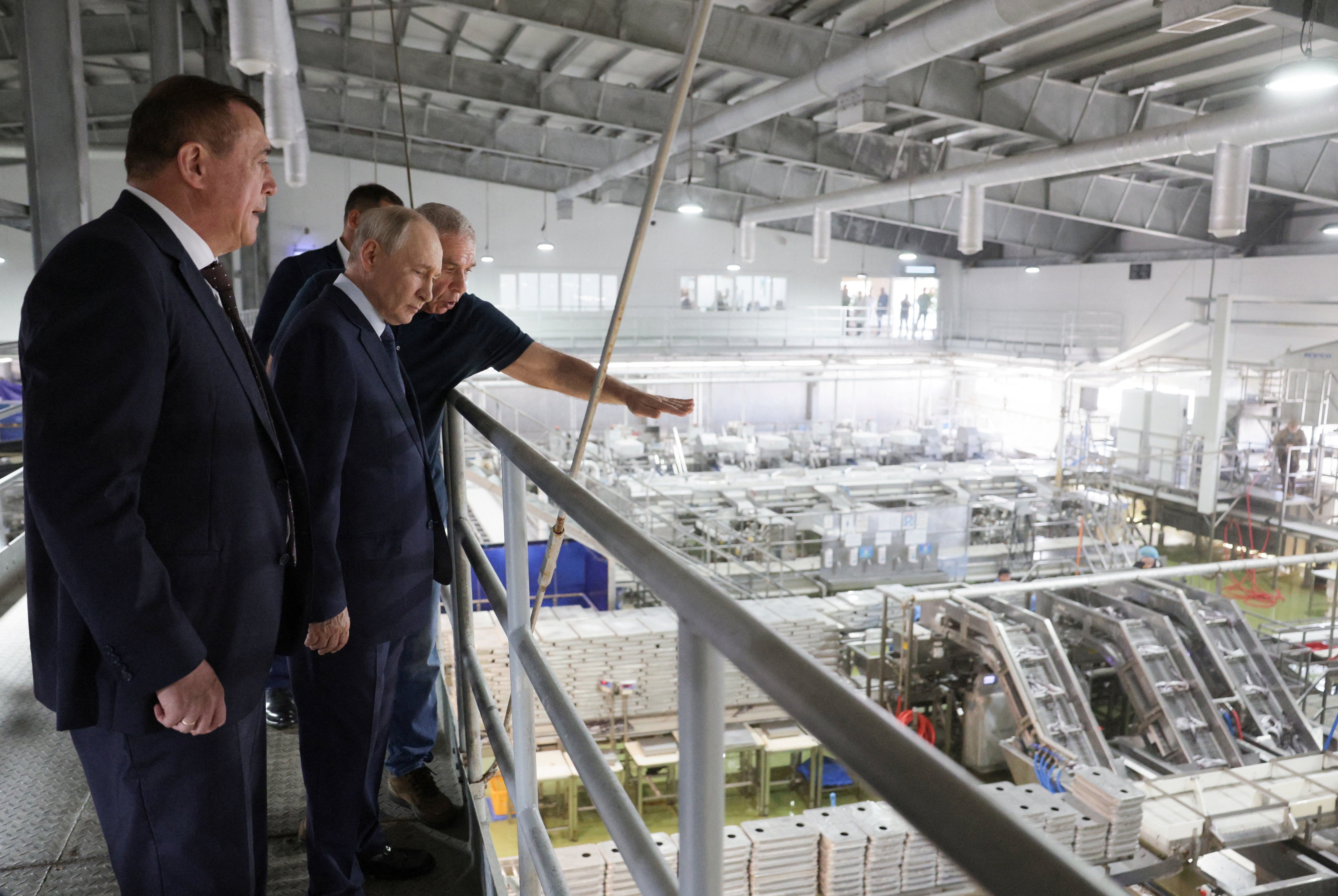
Vladimir Putin, accompanied by the governor of the Sakhalin region, toured a fish-processing complex, a hospital and a school on the island. For Russia, it was a routine presidential visit to a remote territory. For neighbouring Japan, its symbolism was hard to miss.
Japan, after all, claims the island, which it calls Etorofu, as part of its “Northern Territories”.
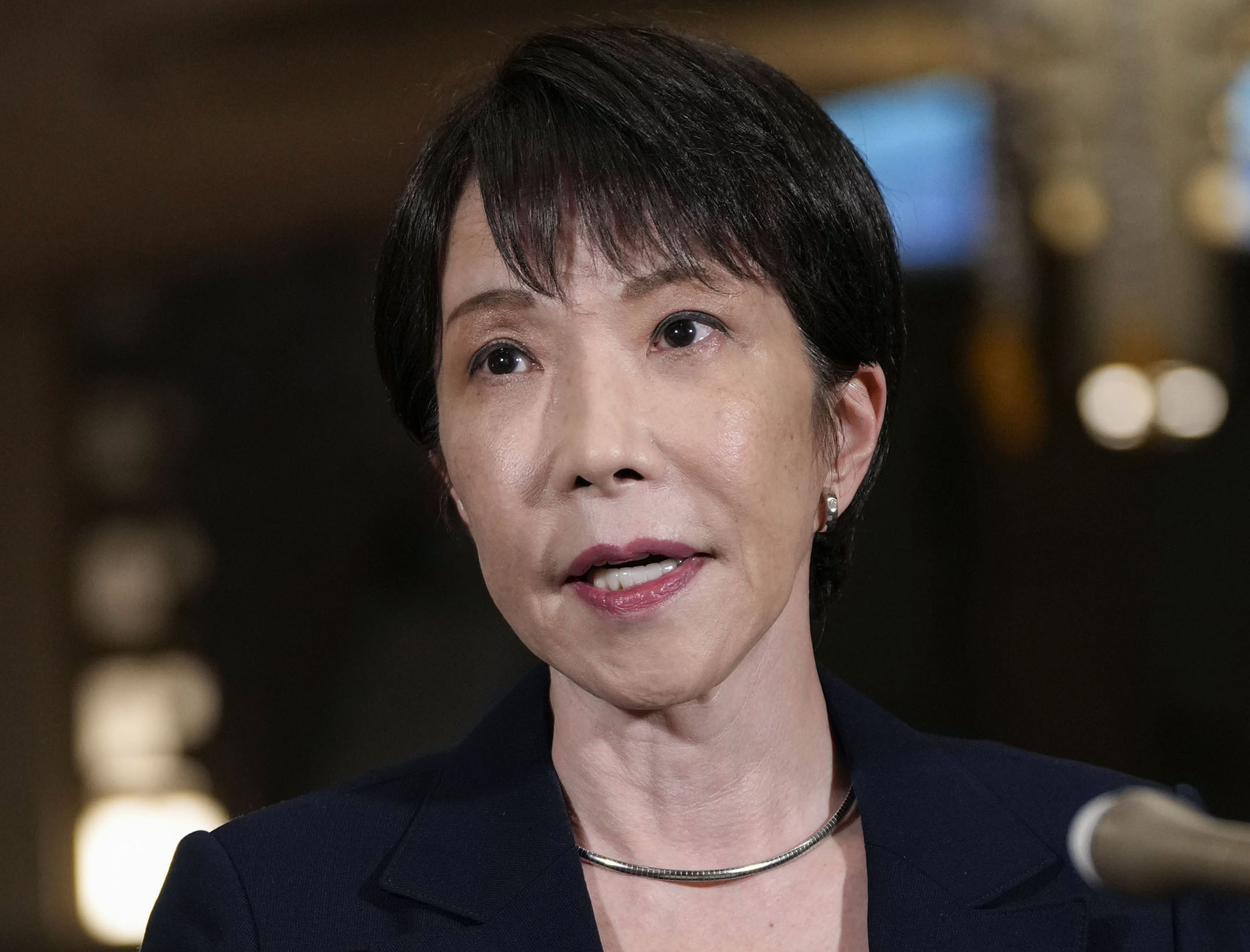
Prime minister Sanae Takaichi described Putin’s visit to the island as “absolutely unacceptable” while foreign minister Toshimitsu Motegi summoned Russia’s ambassador to protest.
Putin’s visit wasn’t simply a territorial dispute being replayed. It was a statement about the changing security order around Japan.
“This is a structural shift that’s happening,” Manoj Kewalramani, head of the Geostrategy Programme at the Takshashila Institution, an Indian think tank, tells The Independent. “The visit is just one part of it.”
The four southernmost Kuril islands – Iturup, Kunashir, Shikotan, and Habomai – were seized by the Soviet Union in 1945, but Japan never gave up its claim to them.
The dispute has prevented Tokyo and Moscow from signing a formal peace treaty since World War II.
But their competing sovereignty claims have increasingly become entangled in a much wider contest.
The dispute intensified about a decade ago when Russia announced coastal missile deployments in 2016. The situation worsened after Russia invaded Ukraine in 2022 and Japan joined G7 sanctions against Moscow.
Most recently, Tokyo’s annual defence white paper took a harder line on Russia, including its military activities around the Northern Territories and growing cooperation with China and North Korea.
“Russia is continuing active military activities in the Northern Territories, which are inherent territories of Japan, under illegal occupation,” the paper said.
Russia is also increasingly conducting military activities with China and North Korea, including joint bomber flights and naval drills.
Japan, on its part, is strengthening defence cooperation with European nations, arguing that their security is increasingly connected. The defence ministry has emphasised the connection between security developments in distant regions, arguing that instability in Europe can have consequences in the Indo-Pacific.
Kewalramani notes that Japan sees this convergence particularly sharply.
“Japan says it is Russia-China cooperation which is looking to constrain Japan’s security environment by extending force deployments, extending joint exercises in its near region,” he says.
For Tokyo, he adds, the two theatres are beginning to look like one problem. European countries may focus on Chinese support for Russia’s war against Ukraine while Japan worries that Russian-Chinese cooperation will directly reshape the military balance around it.
Professor Rajan Kumar of Jawaharlal Nehru University in Delhi sees three overlapping calculations behind Putin’s visit to the island: putting pressure on Japan; consolidating Russia’s Pacific presence; reinforcing ties with its partners, particularly China and North Korea.
“Moscow is seeking to strengthen its presence in the Pacific by forging partnerships with China and North Korea,” he says.
The Kurils give Moscow a strategic foothold in the Pacific.
The islands also have a practical value. They sit astride important maritime routes, while nearby Sakhalin has substantial oil and gas resources.
Kumar believes the Pacific will become increasingly significant for Russian trade as disruptions to more established routes alter the economics of global shipping.
“The Pacific region assumes importance for navigation,” he says, adding that Russia may also see greater future opportunities through the Northern Sea Route.
The message of Putin’s visit, in Kumar’s assessment, is straightforward: “That Russia is a significant player in the Pacific region and it must be taken seriously by all other actors.”
Kewalramani similarly cautions against reducing the dispute to Russia’s retaliation over Japan’s support for Ukraine.
The deeper story, he argues, is the gradual alignment of Russian and Chinese strategic interests. The partnership predates the Ukraine war but has been accelerated by it.
Russia’s deepening relationship with North Korea adds another layer.
This matters because Japan is no longer dealing with each challenge in isolation.
The pressure is contributing to a profound change in Japanese security thinking.
Kewalramani identifies several factors that are driving Tokyo’s ongoing expansion of its military capabilities, like concerns over China’s rapidly growing strength and the possibility that Beijing’s potential invasion of Taiwan may directly affect Japan.
Russia is a critical part of this equation.
“Russia is the third thing,” Kewalramani says. “Not a direct threat you may end up in a conflict with but a threat that complicates your security environment because it links different theatres which can impact you.”
He says Russia and China may be watching how the US responds when its allies come under pressure. On the other hand, Japan’s increasingly assertive posture comes as uncertainty looms over the future of American engagements abroad. “So, it’s sort of testing the waters also,” he says.
Kumar puts it more starkly. Japan “can no longer rely solely on the US”, he says, and the Asian country will need to build its own military capabilities and seek additional partnerships.
This makes Putin’s visit more than a message about four islands. It tests how much pressure Japan will absorb, how far Tokyo will push its military build-up and, crucially, what the US will do if that pressure increases.
There is little sign that the old diplomatic relationship can easily be revived. The late prime minister Shinzo Abe and Putin met repeatedly between 2013 and 2020 – at least 15 times, according to the Japanese government – but even then the territorial dispute was never resolved. Now, there’s little bilateral diplomatic activity.
Kewalramani believes the relationship has been on a “downward trajectory” since 2022. He sees no immediate recovery.
Kumar agrees. “There is no possibility of restoring normal ties between the two states in the immediate future,” he says.
About the Author