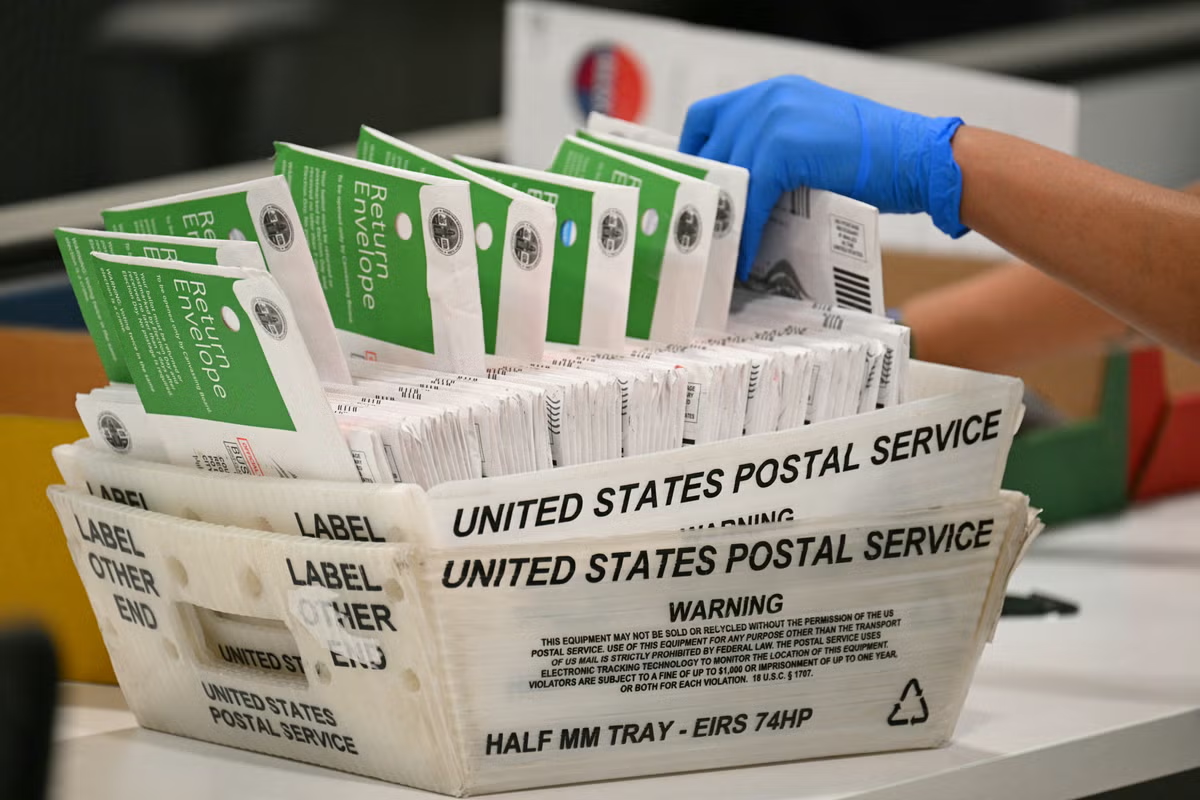
New requirements regarding mail ballots have been introduced by the U.S. Postal Service barely two weeks before some states begin sending them out. However, these updated guidelines will take effect only if the Supreme Court permits President Donald Trump’s order restricting mail voting to proceed.
Released on Friday night, the finalized regulation could ultimately become a minor detail in the broader legal fight surrounding Trump’s directive, which has been blocked by a federal judge in Boston ahead of November’s elections.
Although the administration asked the high court to overturn that injunction, a second order issued by the same judge prevents the Postal Service from implementing procedural changes prior to this year’s midterms and would likely need to be nullified as well.
.jpg)
Time is running out for the administration to make any changes in the nation’s voting procedures. The first mail ballots are required to be sent to military and overseas voters from North Carolina on Sept. 4. At that point, it would be virtually impossible for all states to alter the formatting of their mail ballots to comply with Trump’s directive. The Postal Service rule also requires states to submit voter lists in order to get their mail ballots delivered.
The Postal Service said it could not comment on its rule given the litigation.
Lawyers from Democratic-run states and civil rights groups who sued to block the order argued that Trump doesn’t have the authority to change election regulations in states. The U.S. Constitution vests that power in the states or Congress, which has been unable to pass Trump’s desired election changes.
The Trump administration appealed to the Supreme Court last month to let it move forward with the executive order, which calls for the federal government to compile a list of eligible voters and send mail ballots only to those on the list. The high court has not yet taken action.
The Justice Department is also preparing to deploy its largest-ever contingent of election monitors for the upcoming midterm elections, a plan announced last week as Trump continues to promote false claims of widespread election fraud.
Last week, Harmeet Dhillon, the department’s top Civil Rights Division official, said officials plan to send about 1,000 DOJ monitors across the country for the November 3 midterms.
Dhillon did not specify which locations would receive monitors but said officials were considering areas with language barriers, disability-access concerns or potential “voter fraud issues.”
About the Author