Russian drone attack kills three children and a woman in Kyiv region, Ukraine says
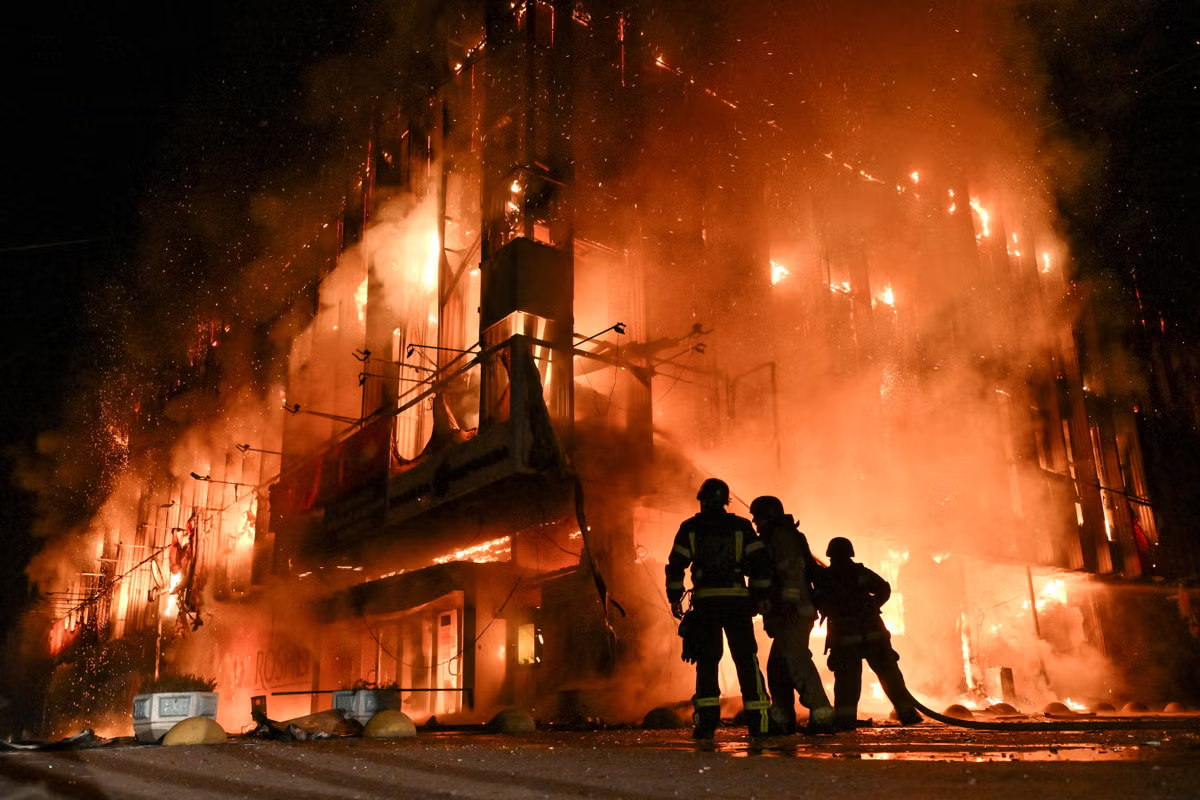
An overnight Russian attack on the Kyiv region killed four people, including three children, Kyiv regional authorities said on Sunday.
Drone attacks persisted in Kyiv and the surrounding region throughout the day, with drone fragments falling on various districts in the capital. Kyiv mayor Vitali Klitschko reported one injured.
Outside the capital, a mother and her two 3-year-old children were killed in Kyiv region when a Russian drone strike hit a private home, the emergency service said. Governor Tymur Tkachenko said a girl died in hospital after a separate drone strike in another district.
Tkachenko said the region endured more than a day of hostile attacks over several areas. The southwestern Fastiv district sustained the most damage, with more than 24 sites hit, including homes, industrial and utility buildings, the grounds of an agricultural enterprise and vehicles, he added.
Namita Singh21 September 2026 06:25
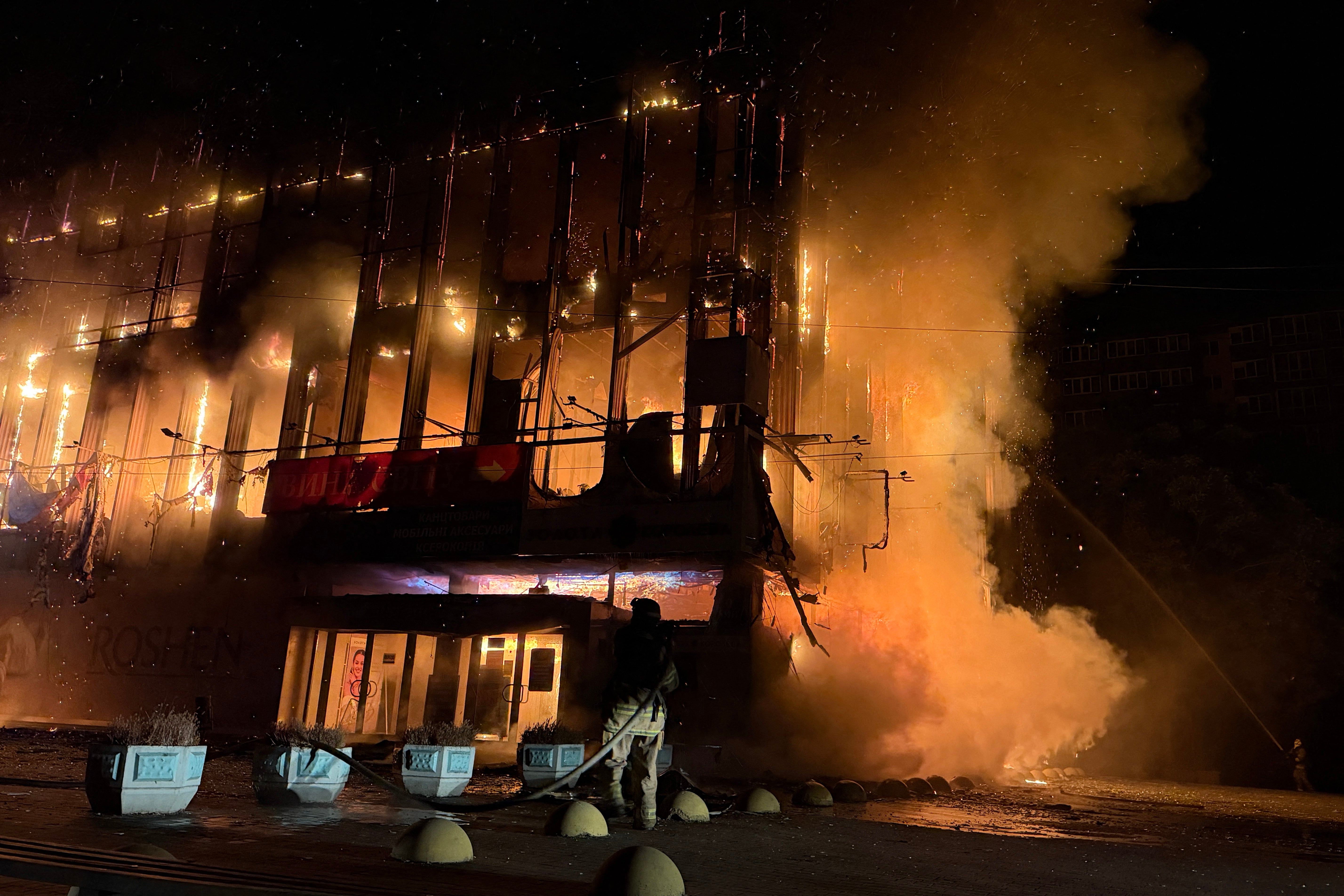
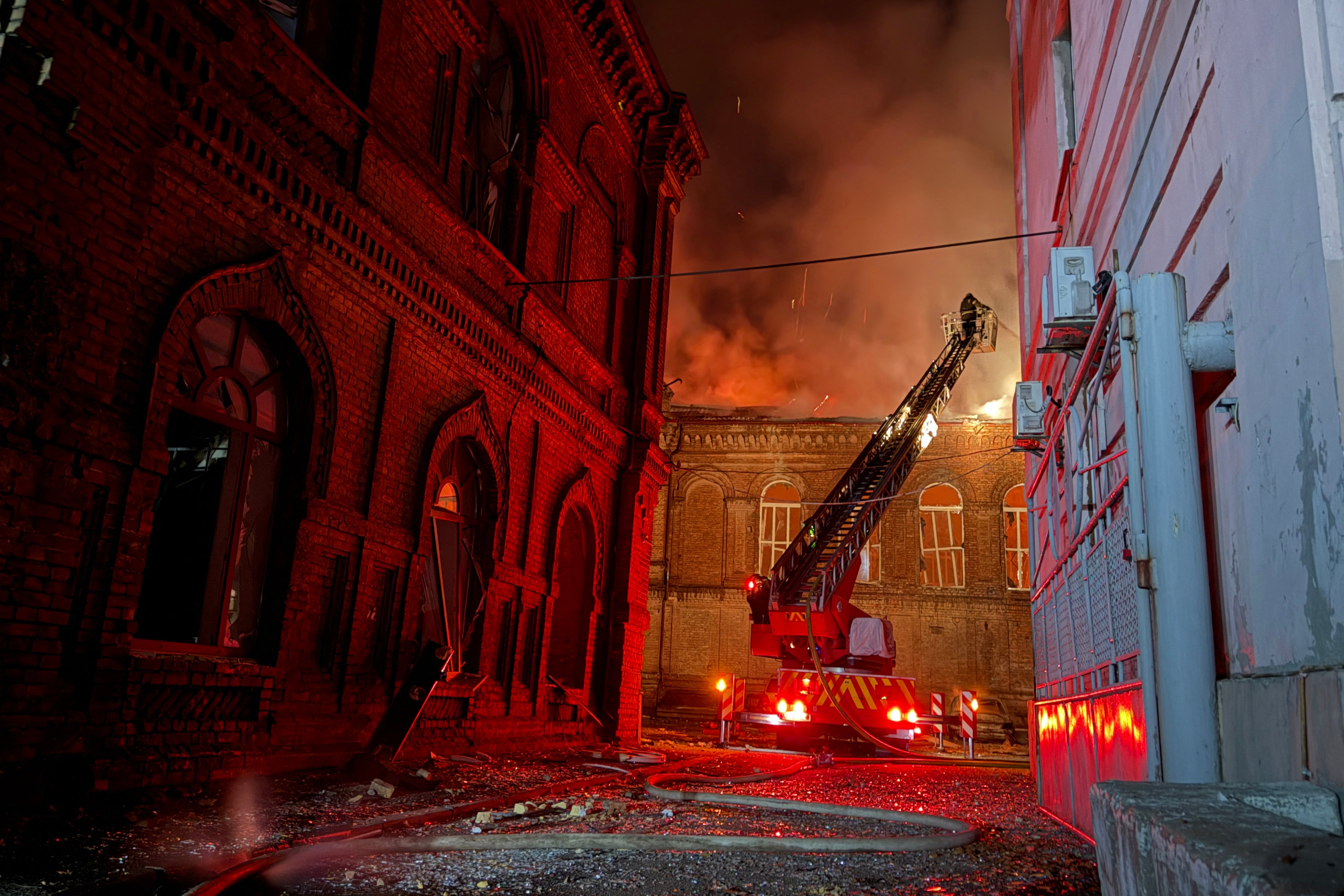
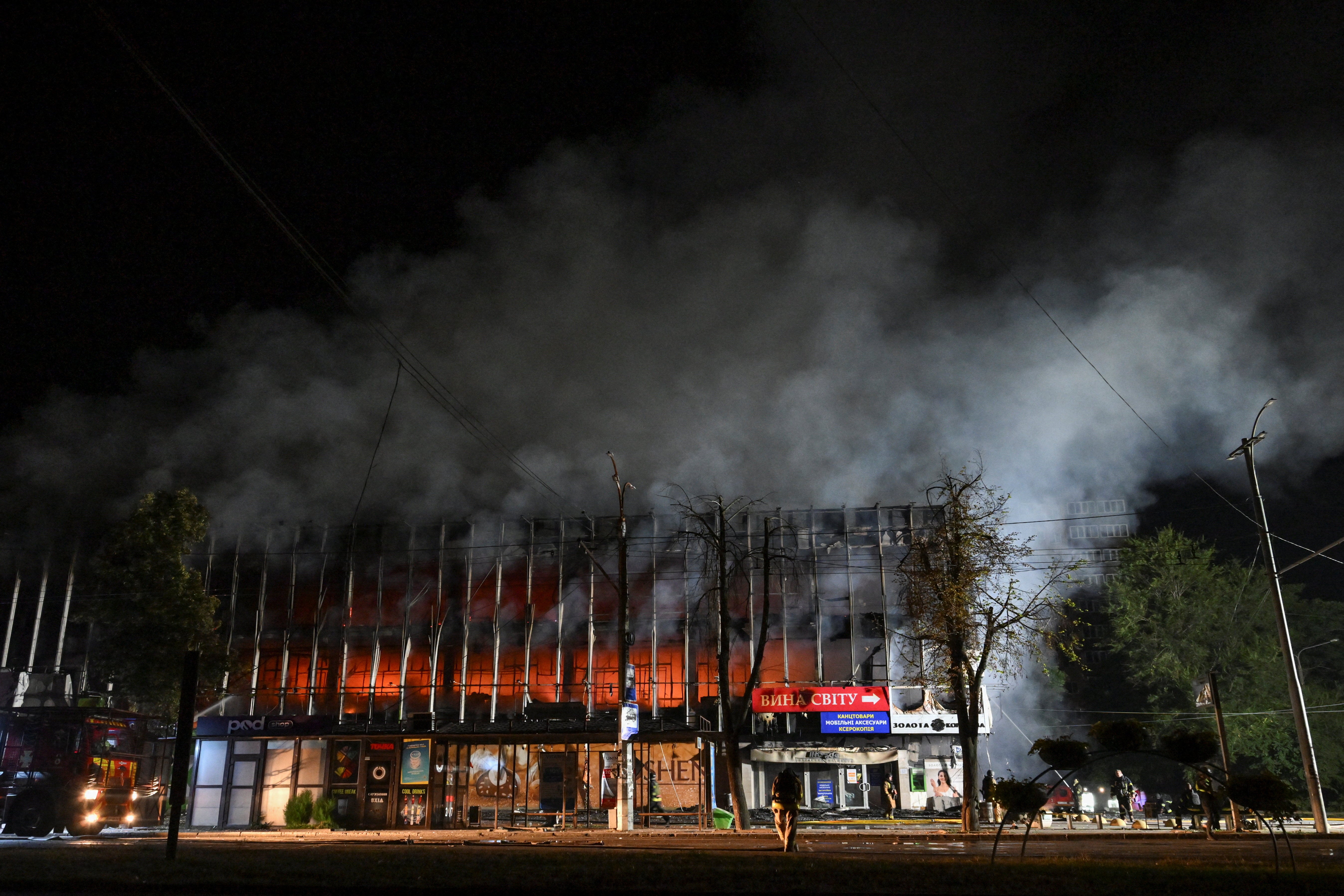
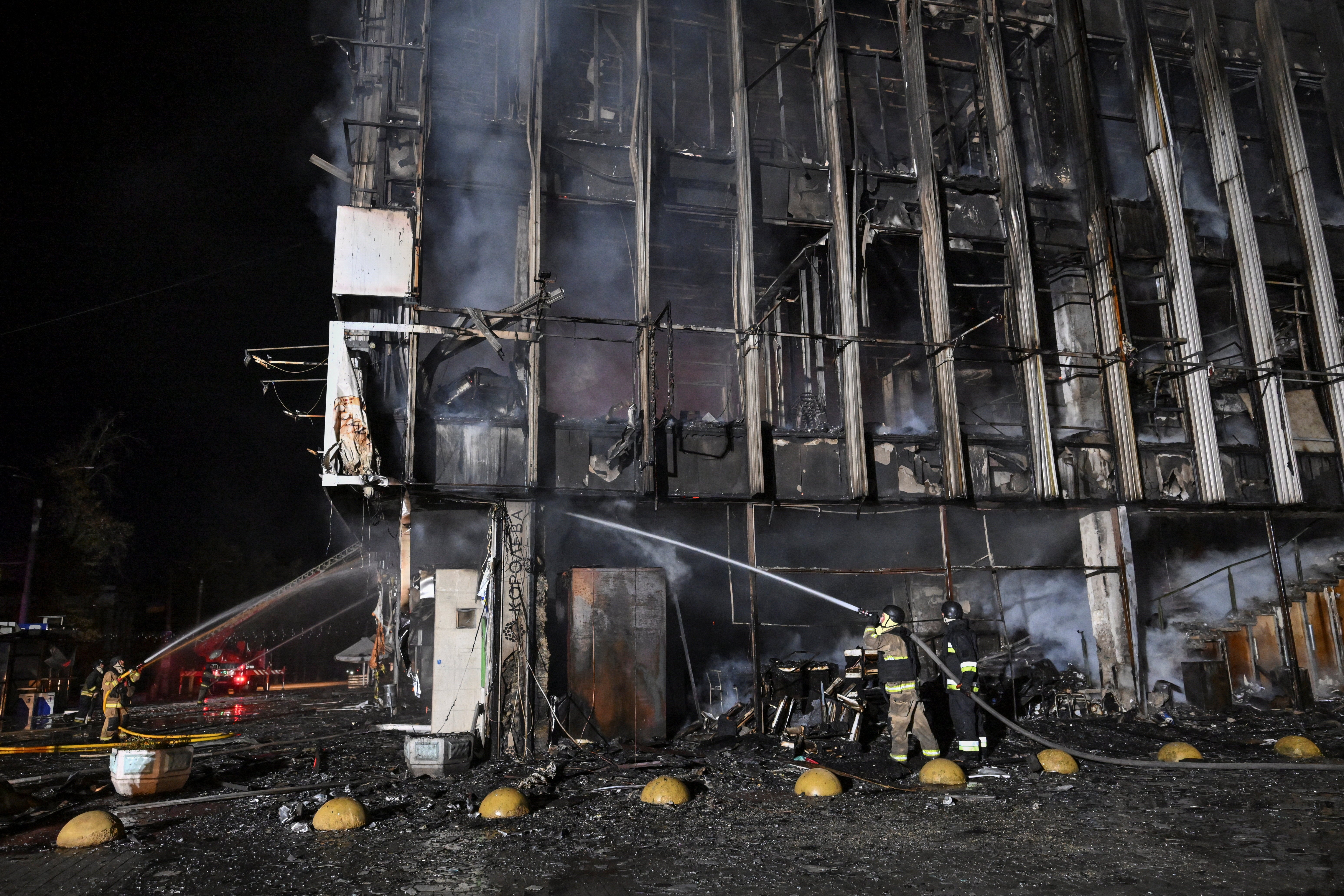
In pictures: Russian drones strike Zaporizhzhia overnight
Namita Singh21 September 2026 06:05
At least five injured in Russian attack on Zaporizhzhia
At least five people were injured in an overnight Russian attack on Zaporizhzhia. This includes three men and two women, said Mykhailo Semikin, acting head of the Zaporizhzhia Regional Military Administration, reported Ukraine National News.
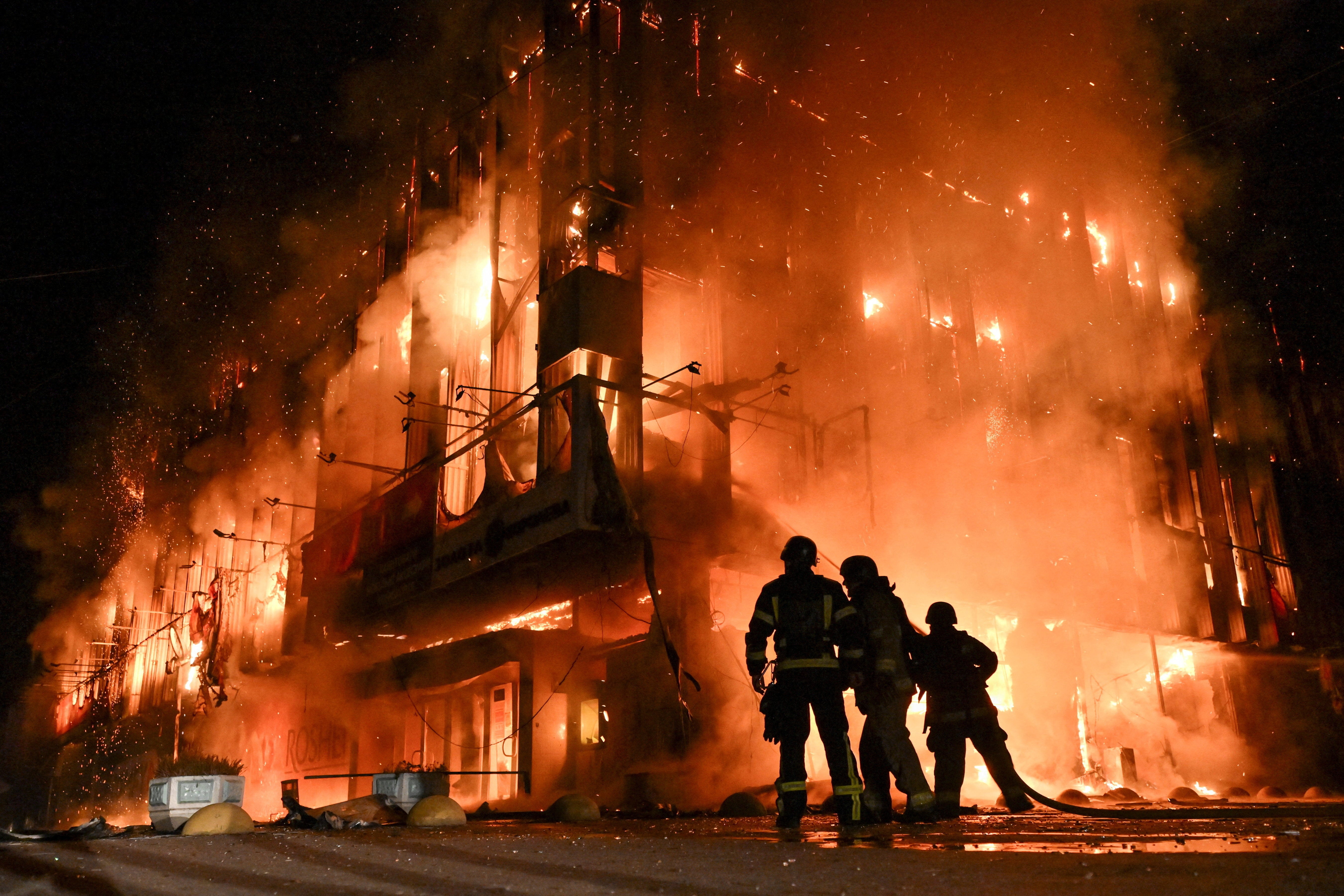
The attack came as Kremlin warned of retaliation after it accused Ukraine of launching a wave of drones in a bid to “disrupt” its tightly controlled wartime election.
Namita Singh21 September 2026 05:51
Russian opposition abroad holds protests
Russia’s exiled opposition, including the widow of Alexei Navalny, Yulia Navalnaya, called on anti-war Russians to cast their votes at noon on Sunday.
Thousands of Russians living in Armenia took part in the vote, lining up outside the Russian Embassy in the capital, Yerevan. Some of them joined the “Noon for a Peaceful Russia” anti-war demonstration, holding anti-war and anti-Putin posters.
Mark Podberezin, a journalist, said members of the election commission in Yerevan made remarks that felt like “outright intimidation”. He said he had heard comments “along the lines of, ‘You’ll have to return to Russia sooner or later, keep that in mind.’”
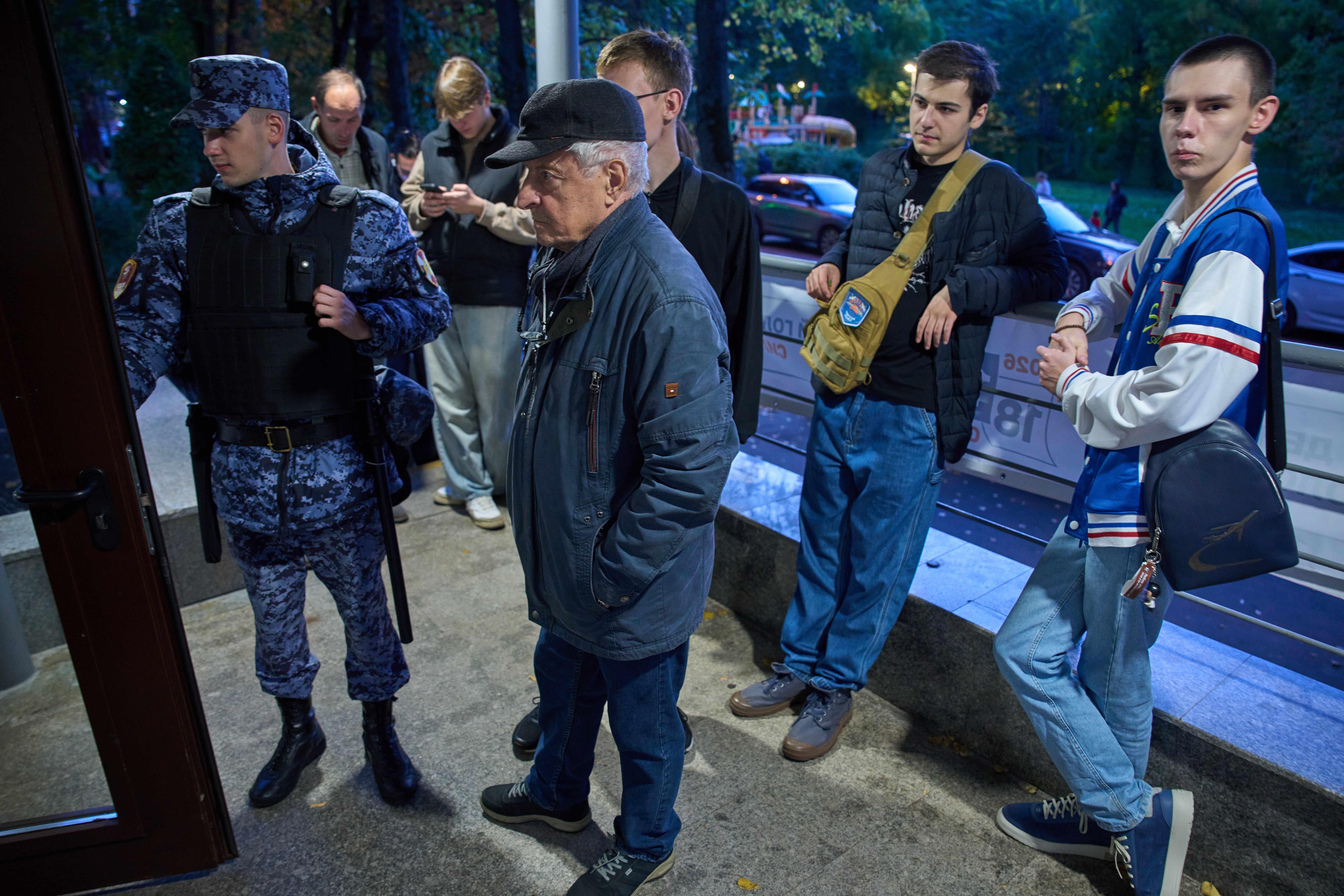
Lidiya Klimenko said she did not think her vote would have any real impact. The most useful thing to do, she said, was “to see other people who are also against the war, to be together in a shared cause”.
In Germany, voters cast their ballots at the Russian Embassy in Berlin. Andrei Pivovarov, a dissident and former head of the Open Russia group, addressed a protest gathered outside the building.
Namita Singh21 September 2026 05:15
Issues with electronic voting in Moscow
The head of Russia’s Central Election Commission, Ella Pamfilova, on Sunday said that the electronic voting system in Moscow was targeted by cyberattacks.
She blamed one of the “systemic parties” – meaning one of those taking part in the vote, without specifying which one.
SotaVision, an independent Russian news outlet, said on Sunday that voters were reporting glitches in the electronic registry systems at polling stations across Moscow.
People were not issued paper ballots and instead were asked to vote via an electronic terminal, the outlet said on Telegram.
Leonid Volkov, a close associate of the late Russian opposition leader Alexei Navalny, suggested the supposed breakdown of the system used to issue paper ballots in Moscow may have been deliberate, aimed at pushing voters toward electronic voting.
“Demand a paper ballot!” he wrote on X on Sunday.
Lines formed outside polling stations as many voters refused to vote electronically.
Having urged supporters to spoil party-list ballots, Yabloko party leader Nikolai Rybakov cast a ballot in St Petersburg on Sunday, covered in bright green writing declaring “For freedom,” “For peace,” and “Yabloko”.
Namita Singh21 September 2026 05:00
Russia turns away independent European observers from polling exercise
Russia didn’t invite observers from the Organisation for Security and Cooperation in Europe, with the Russian foreign ministry accusing the body of “double standards” for its criticism of Russia.
OSCE Parliamentary Assembly president Pere Joan Pons said that the decision was a breach of Russia’s commitments as a member state of the organisation.
Yabloko, the liberal opposition party, reported that one of its observers lost consciousness while being arrested by police at a St Petersburg polling station on Saturday, after officials accused him of trying to “disrupt the elections” and called police.
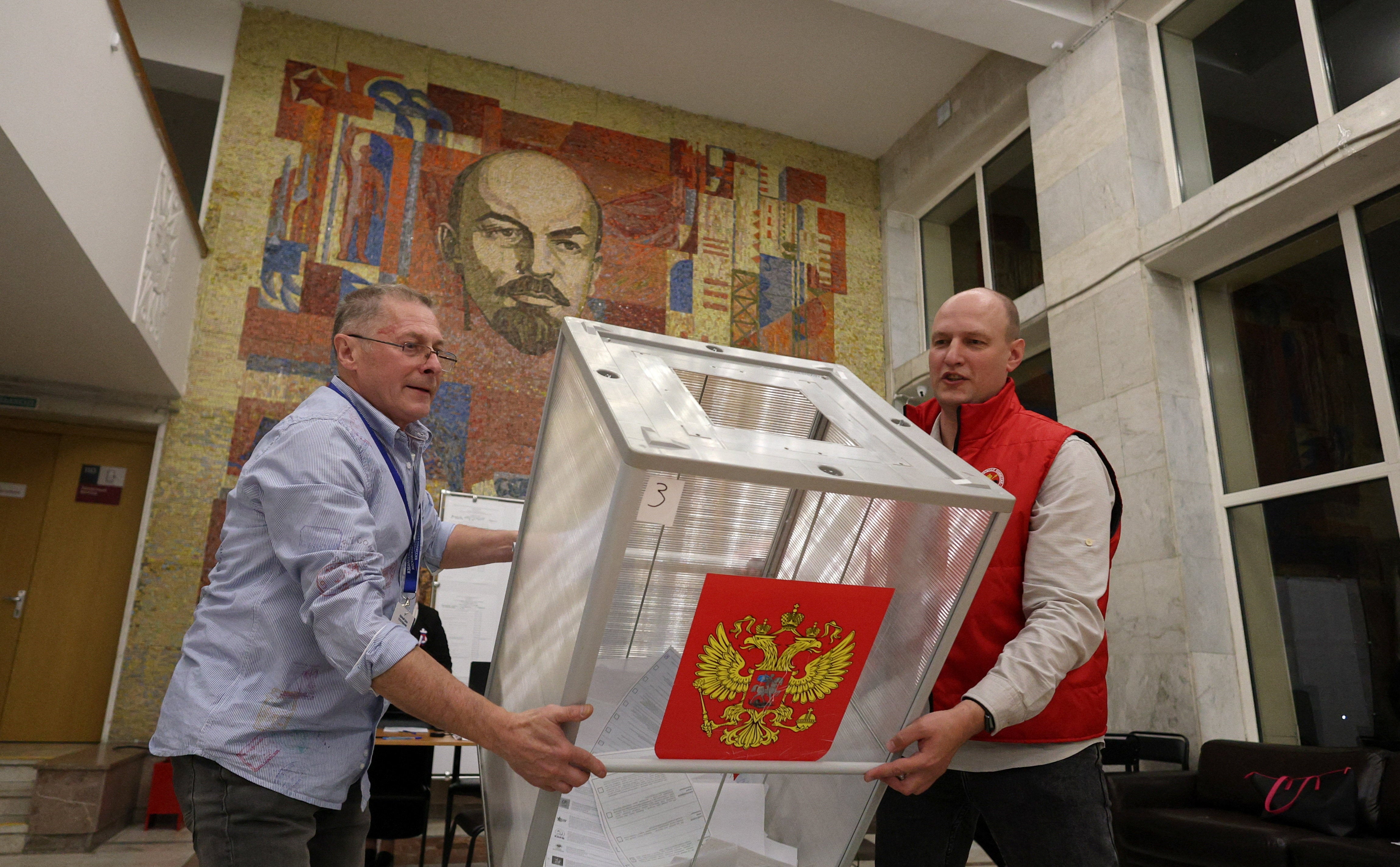
The parties reported violations including sealed ballot boxes being opened, doors to polling stations not being secured overnight, and a refusal to issue paper ballots. The claims could not be independently verified.
At one polling station in the Russian-held part of the Donetsk region, voters dropped their ballots in a box as an armed Russian soldier stood nearby and watched.
Namita Singh21 September 2026 04:45
Opposition sidelined as observers report violations
The liberal Yabloko party, the only registered political entity that dared to publicly criticise the war, was removed from the ballot last month by Russia’s Supreme Court, and only has a few dozen candidates in the single-constituency races.
Additionally, some anti-war politicians were imprisoned or forced to flee abroad ahead of the campaign.
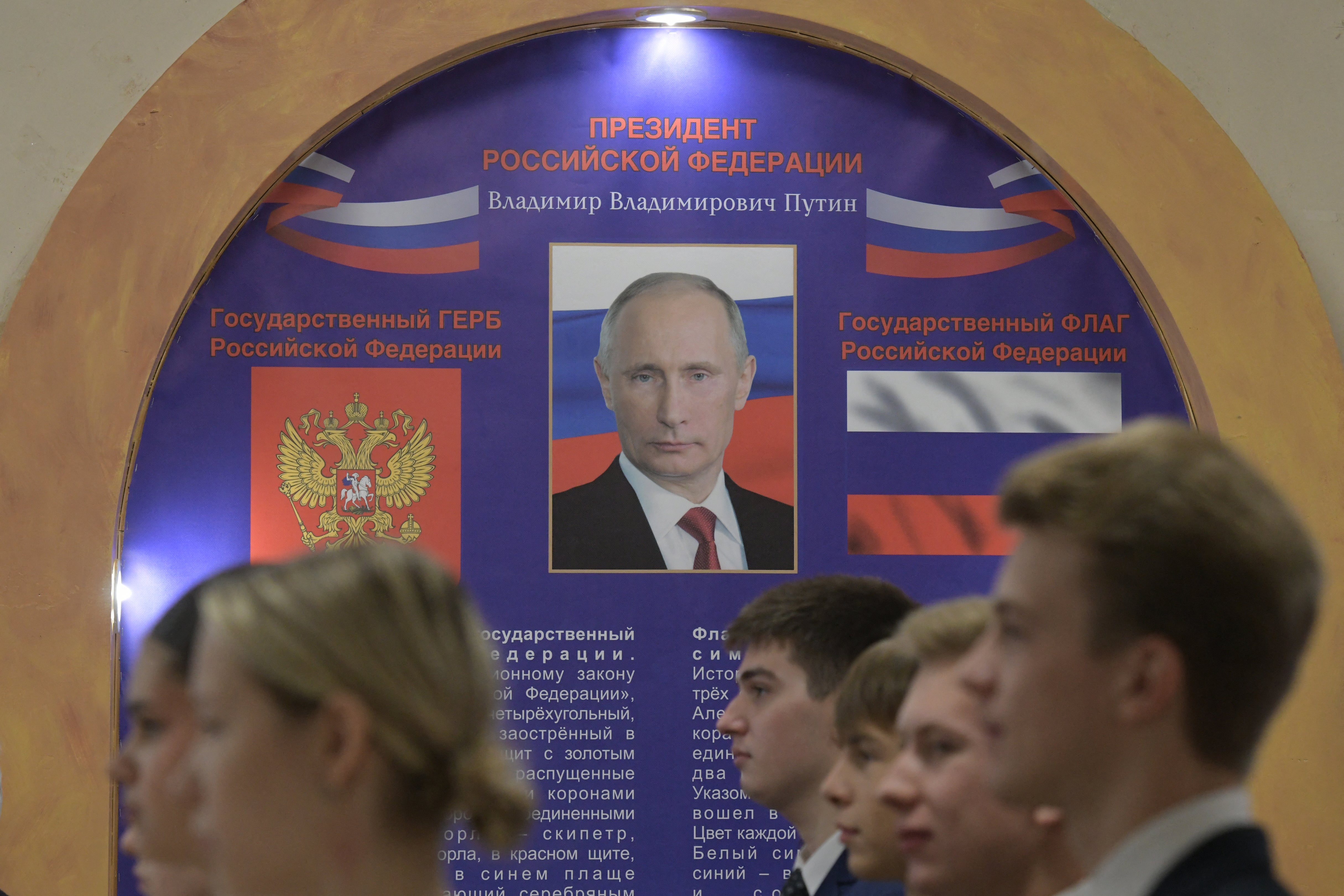
Yabloko and the Communist Party, which has criticised some aspects of government policy but carefully avoided any criticism of Russian president Vladimir Putin, said many of their observers were turned away from polling stations.
Namita Singh21 September 2026 04:30
Kremlin long expected to keep control
The Kremlin had called the parliamentary election, the first since the start of the full-scale invasion of Ukraine in 2022, to showcase popular support for the war and legitimise its action. It has sought to avoid political risks by stamping out any dissent.
A massive state media campaign and tight control over the election in the absence of genuine opposition all but assure the Kremlin will keep tight control of Russian politics amid mounting economic costs and increasing Ukrainian drone attacks deep inside the country.
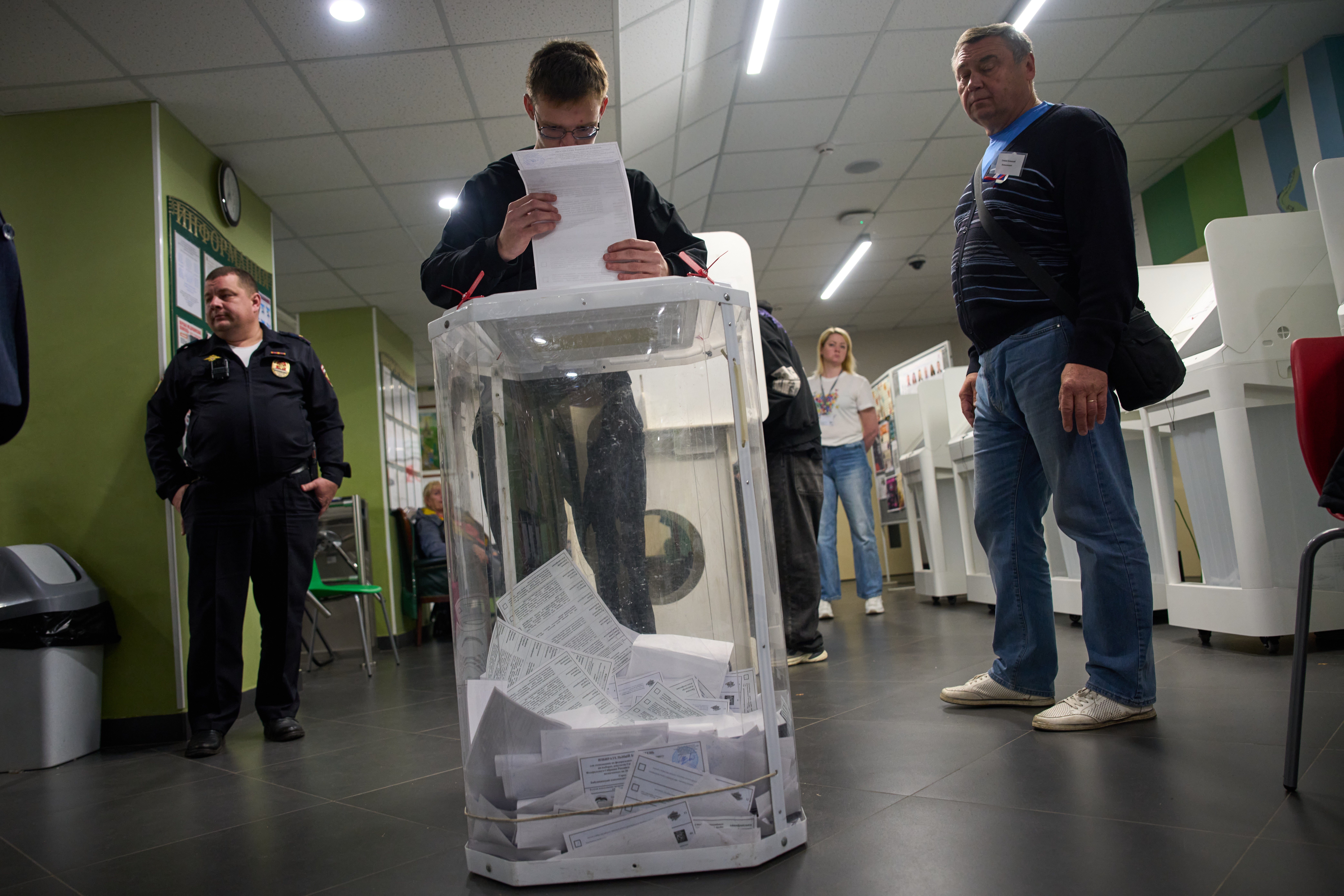
Voters cast two separate ballots, filling half of the Duma’s 450 seats by selecting political parties listed on the ballot. The rest are contested in single-seat constituencies, with voters choosing individual candidates.
The main Kremlin party, United Russia, has been widely expected to retain its overwhelming control of the lower house, the State Duma.
The early results showed four other parties that almost always vote for Kremlin initiatives returning to the State Duma.
Namita Singh21 September 2026 04:19
Putin’s party dominating tightly-controlled wartime vote in Russia
Russia’s ruling party United Russia was dominating early results in the country’s first wartime parliamentary election, according to the first returns released on Monday from a sham election where all genuine opponents of president Vladimir Putin had been barred from running.
The vote, which is all but certain to cement the Kremlin’s dominance, began on Friday for 111 million eligible voters and ended Sunday.
The balloting included residents of four Ukrainian regions that Moscow illegally annexed after the war began, but still doesn’t fully control, as well as those in Crimea, the Black Sea peninsula that was illegally annexed by Russia in 2014, a move Kyiv denounced as illegal and the European Union described as a “blatant violation of international law”.
With some 58 per cent of the precincts counted, United Russia had nearly 58 per cent of the vote for the 225 deputies apportioned by party lists, according to Russia’s Central Election Commission.
Another 225 lawmakers will be chosen in single-seat races, and United Russia also was poised to win most of those.
Namita Singh21 September 2026 04:12
About the Author