President Donald Trump is far more likely to talk about his signature Washington renovation projects than the Iran war, according to a new analysis, even as the conflict continues to evade a full resolution and helps drag down his approval ratings.
Between May 1 and June 10, President Trump talked about his favourite construction projects 70 percent more than the war, and on social media, he spoke about the renovations 35 percent more, The Telegraph finds.
Observers told the paper the president’s political style is to move on to a favored topic rather than dwell on the complications of another.
“Trump is a master of distraction; he is always pin-balling from one topic to the next no matter what, because no president likes to own failure,” Matthew Dallek, a professor of political management at George Washington University, said.
“He wants to distract from all the ways his war of choice has hurt people in the US, across the world, and contradicted his campaign promises.”
“President Trump remains laser-focused on lowering costs for working families, keeping the American people safe, and making this country greater than ever before — including the long-overdue beautification of our nation’s capital,” White House spokeswomanTaylor Rogers said in a statement to The Independent.
It’s not hard to see why the president would want to talk about something else other than Iran.
Trump’s approval ratings have continued to plunge since the U.S. and Israel kicked off the war, and the president is hovering near record levels of voter dissatisfaction.
The war has seemed to run against three of the Republican’s signature campaign promises: that he would lower living costs, avoid foreign wars, and use his dealmaking skills to boost America on the world stage.
Instead, the conflict snarled global oil traffic, sent gas prices skyrocketing, and has stretched on for months without a clean resolution.
A recently signed memorandum of agreement between the U.S. and Iran has set the vital Strait of Hormuz on the path to reopening fully, though shipping traffic has not returned to usual levels, and key questions remain about who will control the waterway as well as other big-picture aspects of the conflict.
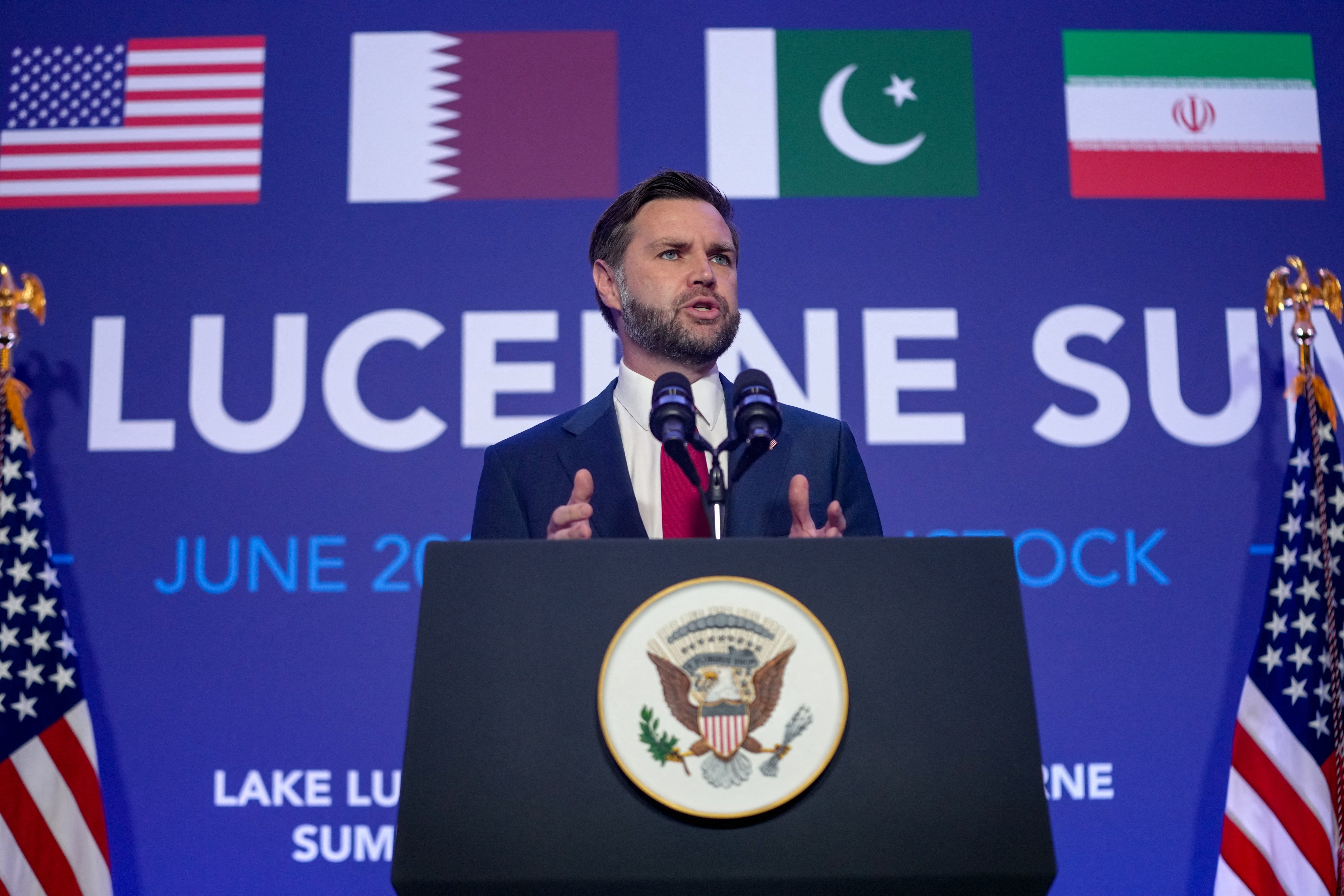
Weekend talks in Switzerland showed some progress, according to U.S. officials, who said they had hammered out “mechanisms” to protect the strait and end related fighting between Israel and the Iran-backed Hezbollah in Lebanon.
The U.S. also claimed Iran agreed to allow United Nations inspectors back to its nuclear sites, though a spokesman for Iran’s foreign ministry, Esmail Baghaei, told Iranian state media the country had in fact made “no new commitments.”
Thus far, the administration appears to have largely returned conditions to those negotiated by the Obama administration as part of its Iran deal, which Trump scrapped in 2018, at the cost of suffering an embarrassing military stalemate and exposing Gulf allies to damaging attacks from Iran.
The war remains unpopular at home and abroad, with most Americans saying in a recent poll that the conflict wasn’t worth the effort. The peace process has also angered Israel, where critics have fumed over the Americans appearing to leave the Iranian regime in place, relaxing sanctions, and punting negotiations about Tehran’s nuclear program to a later date.
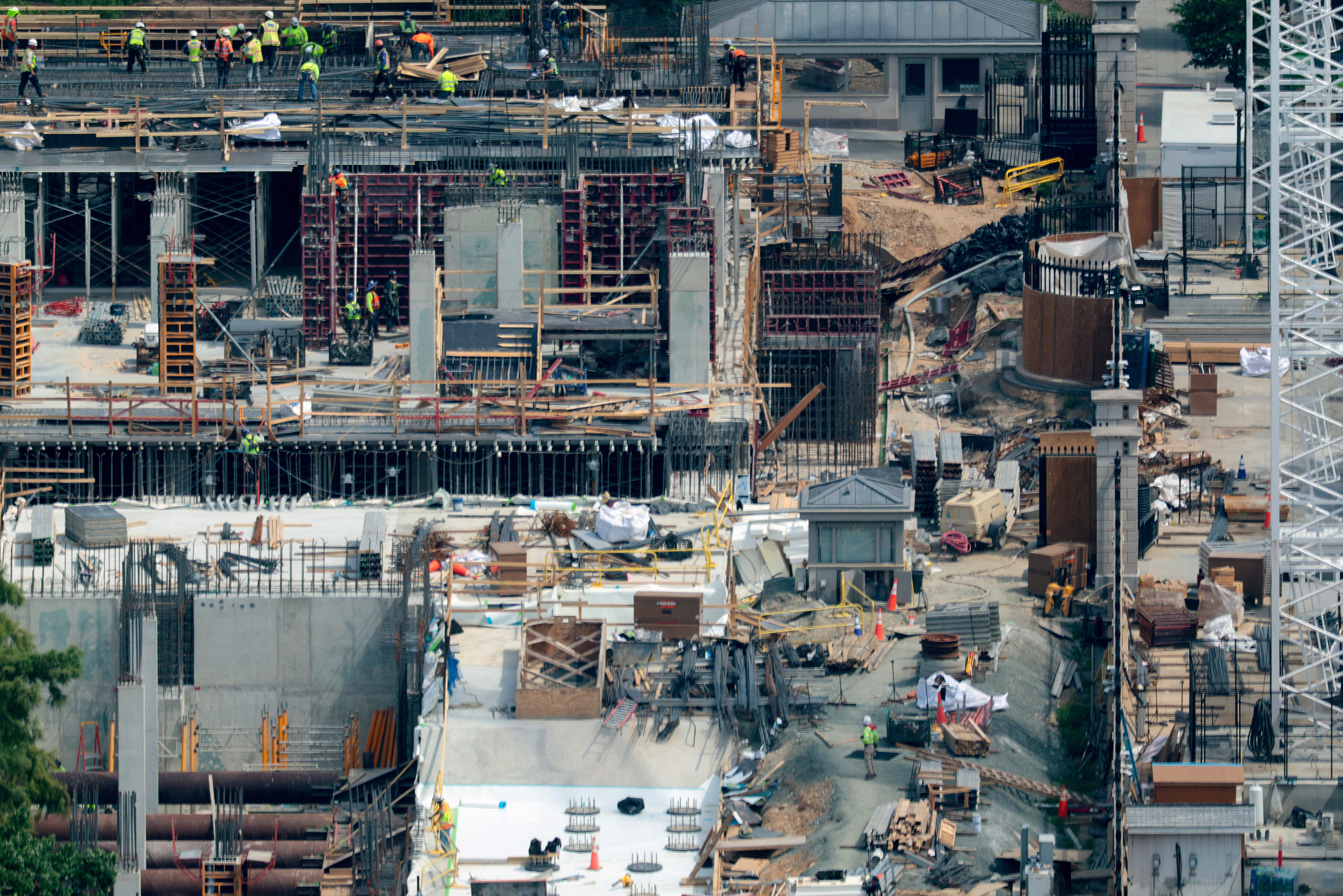
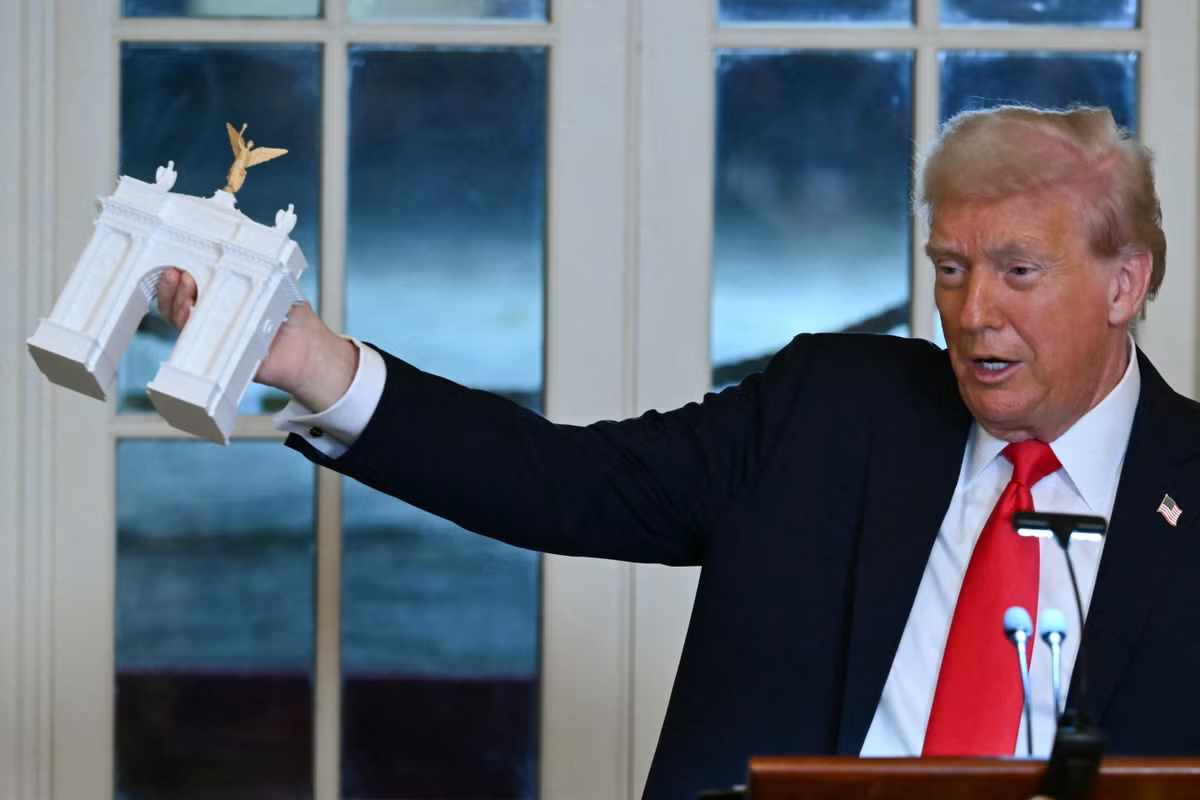
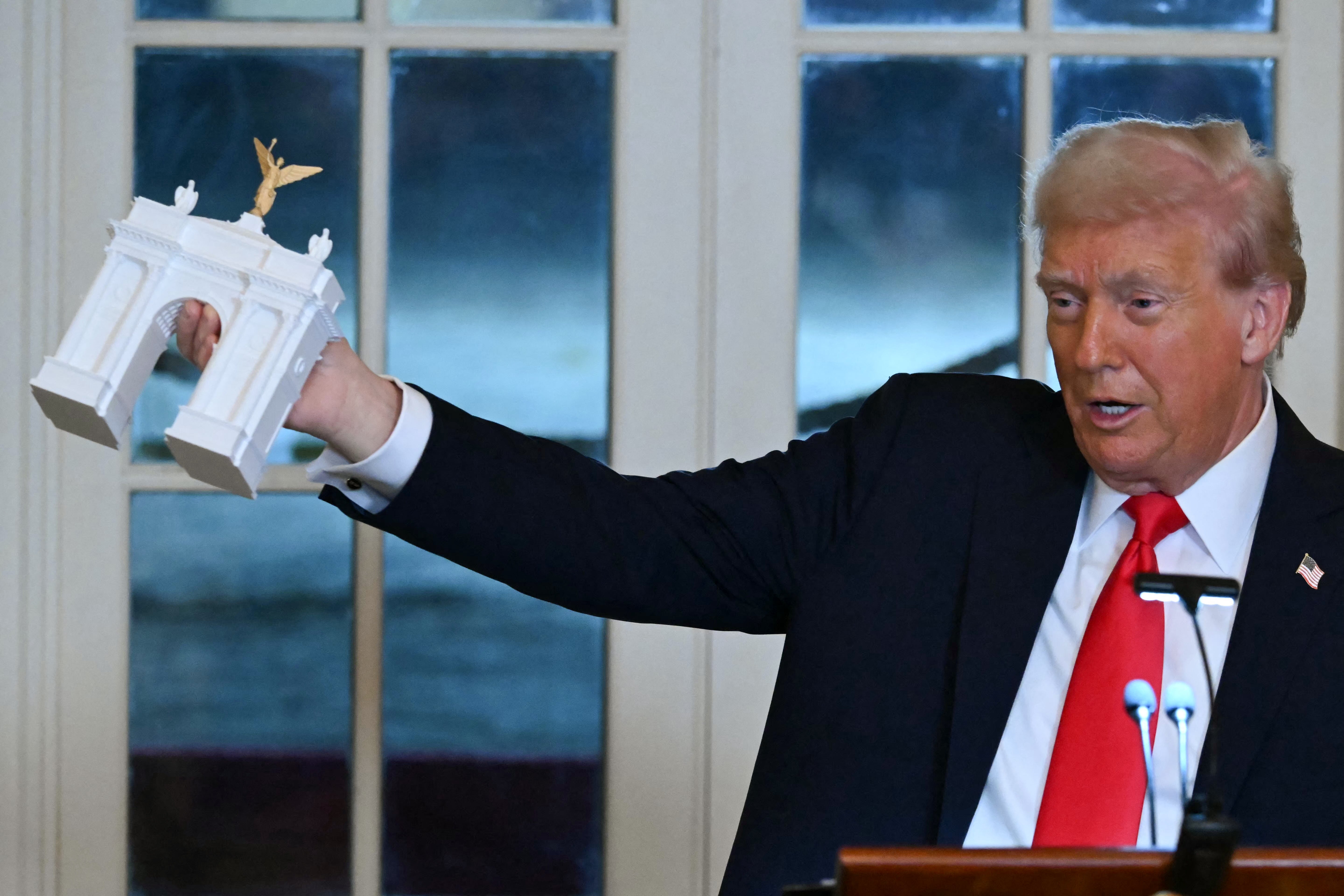
The overall negativity surrounding the Iran war hasn’t stopped President Trump, a celebrity pitch man and property developer before becoming president, from boosting his many Washington projects, which include the effort to build a White House ballroom, the resurfacing of the Lincoln Memorial Reflecting Pool, the construction of a new victory arch in the capital, and the renovation of the Kennedy Center.
However, even these efforts, clearly the apple of the president’s eye, have been marked with trouble.
Lawsuits have temporarily stopped construction on the ballroom and the Kennedy Center, which was forced to undo the president’s attempt to add his name to the institution. The Justice Department has argued in federal appeals court that the ballroom should move forward, citing the need for the renovations after an alleged terror plot aimed at the White House UFC fight was thwarted.

The president’s much-touted resurfacing of the Reflecting Pool has also gone off the rails. The project blew past initial cost estimates and appears to have been unsuccessful. The pool has struggled to contain algae blooms and cracks on its newly resurfaced bottom.
President Trump on Monday blamed the issues on “vandals” who he claimed made a lengthy slit down the center of the pool floor with a “box cutter or a knife of some kind.”
The ballroom, meanwhile, may have handed Democrats potent political ammunition ahead of the midterm elections this fall, where affordability is expected to be a major issue.
The ballroom has also proven unpopular in polling, and Americans are similarly unhappy with the president’s management of the economy.
Critics of the president have accused him of using public funds and high-dollar corporate donations to build a new Versailles, reinforcing a perception among some that the billionaire president is out of touch.
The administration has also faced scrutiny for awarding multiple highly priced, no-bid contracts for the Washington renovation push, much of which Trump is hoping to finish before July, when the U.S. will celebrate its 250th anniversary.
About the Author