
Donald Trump has announced a 20 per cent fee on cargo ships passing through the Strait of Hormuz, a move that would dramatically increase the cost of transporting oil through the vital waterway.
The US president vowed on Monday to charge the fee on all cargo shipped through the strait, a toll that would cover the cost of America’s self-declared role as the “guardian of the Strait”.
It is an announcement that has already sparked fury from major shipping companies. Hapag-Lloyd, a German firm, said charging fees for passage through international waters “would be fundamentally wrong”.
Follow The Independent’s live blog here.
And analysts have now cast doubt about how feasible the proposal is due to the huge costs it would involve for shipping companies – and whether Trump’s announcement should be taken seriously.
The US president hasn’t provided any detail on his plans for a 20 per cent toll. On the face of it, it appears more a typically bullish threat to pressure Iran into negotiations, rather than a detailed policy proposal.
But that isn’t to say a president as unpredictable as Trump will try to make it work in reality.
His proposal would see commercial shipping charged in exchange for US protection while transiting the Strait.
US could charge ships using corridor
Dr Neil Quilliam, a geopolitics and foreign affairs specialist at Chatham House, says the most likely approach would be to charge shipowners, cargo owners or insurers for passage through a US-protected corridor.
This could be “probably centred on the southern corridor close to Oman”, added Basil Germon, an expert in seapower and maritime security at Lancaster University. Whether this would involve naval escorts, organised convoys, or a more general protection of the waterway, he said, is less clear.
But it would face “significant legal, diplomatic and practical obstacles”, Dr Quilliam said.
In fact, Trump’s proposed toll would likely be far steeper than the $2 million fee which Tehran has sought to impose on shipping in the strait.
Rico Luman, an economist specialising in logistics at ING Research, told the New York Times that Trump’s toll could more than double the cost of shipping oil through the strait. Tankers typically charge around $10 a barrel to transport from the Persian Gulf to Europe, but the new fee could bring that cost to around $26.
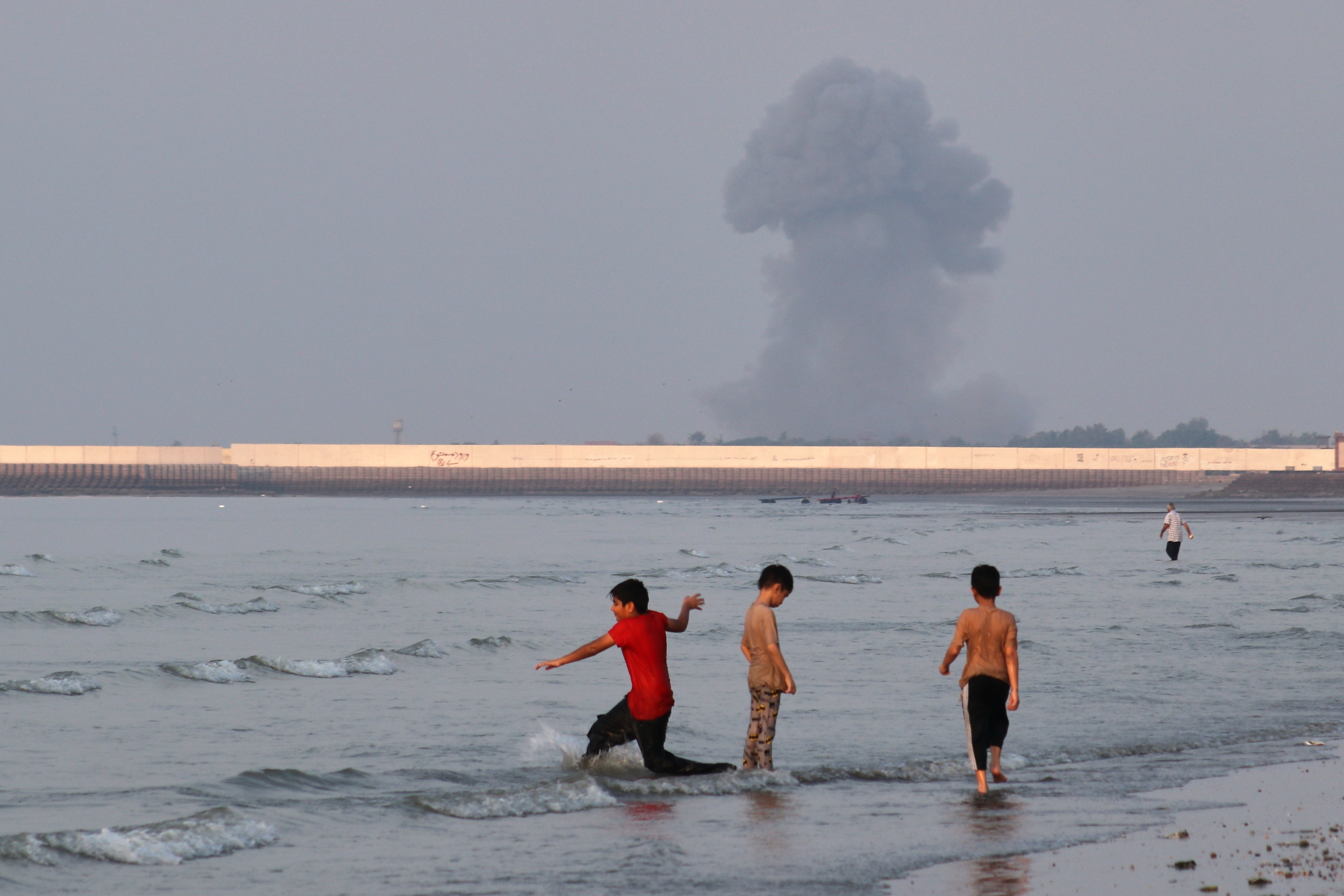
This is compared to the $1 a barrel premium charged by Iran, which Middle East expert at US think tank Defense Priorities Rosemary Kelanic described in March as “quite a bargain in this market”.
A tanker with two million barrels of oil would therefore incur more than $35 million in costs due to the US toll – a price that would likely be passed onto consumers.
Could Trump’s toll realistically be effective?
The challenge, explains Dr Quilliam, is that Washington does not have an existing mechanism to collect transit fees from all commercial traffic.
“An entirely new enforcement system would need to be created,” he said. “If it managed to do that, then the US could seek to deny naval protection or port access to vessels that refuse to pay.”
The issue of international compliance would also be a sticking point for the US, he added, with major shipping companies likely to reject the legitimacy of the levy.
“Without broad international support, some operators would look for ways to challenge, avoid or circumvent the payment system, creating uncertainty and disruption in global shipping markets.”
Prof Germond said there is a fundamental asymmetry in Tehran and Washington’s demands for a fee.

Iran, as the source of the threat, can promise not to attack vessels that comply with its system. The US, in comparison, can only promise to reduce the danger – but cannot promise total protection against Iranian attack.
The American offer may prove to be “commercially unattractive”, he said – especially given how high the proposed fee is.
Should Trump be taken seriously?
Trump’s announcement can be viewed in the context of a President who plays fast-and-loose with his verbal threats.
In fact, it signals Trump’s willingness to pair his military power with economic coercion, said Dr Quilliam.
Prof Germond said Tehran will possess “powerful leverage over energy markets and the wider global economy” for as long as it is able to disrupt commercial traffic – meaning it will be difficult for the Trump administration to accept a scenario that permits Iranian control.
“Tehran is likely to continue to use that leverage to seek a recognized role in any post-conflict system for managing navigation. Washington, however, cannot easily accept an arrangement that legitimizes Iranian control or makes freedom of navigation conditional on Iranian approval, which would be a much worse situation than before the war.”
About the Author