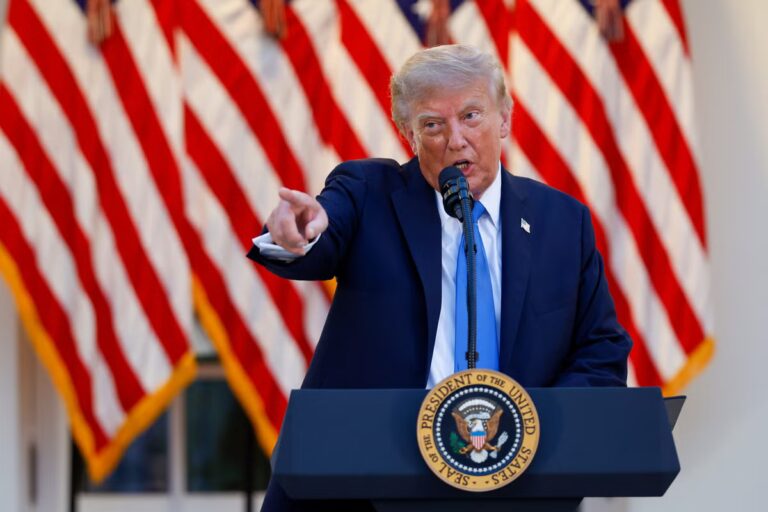
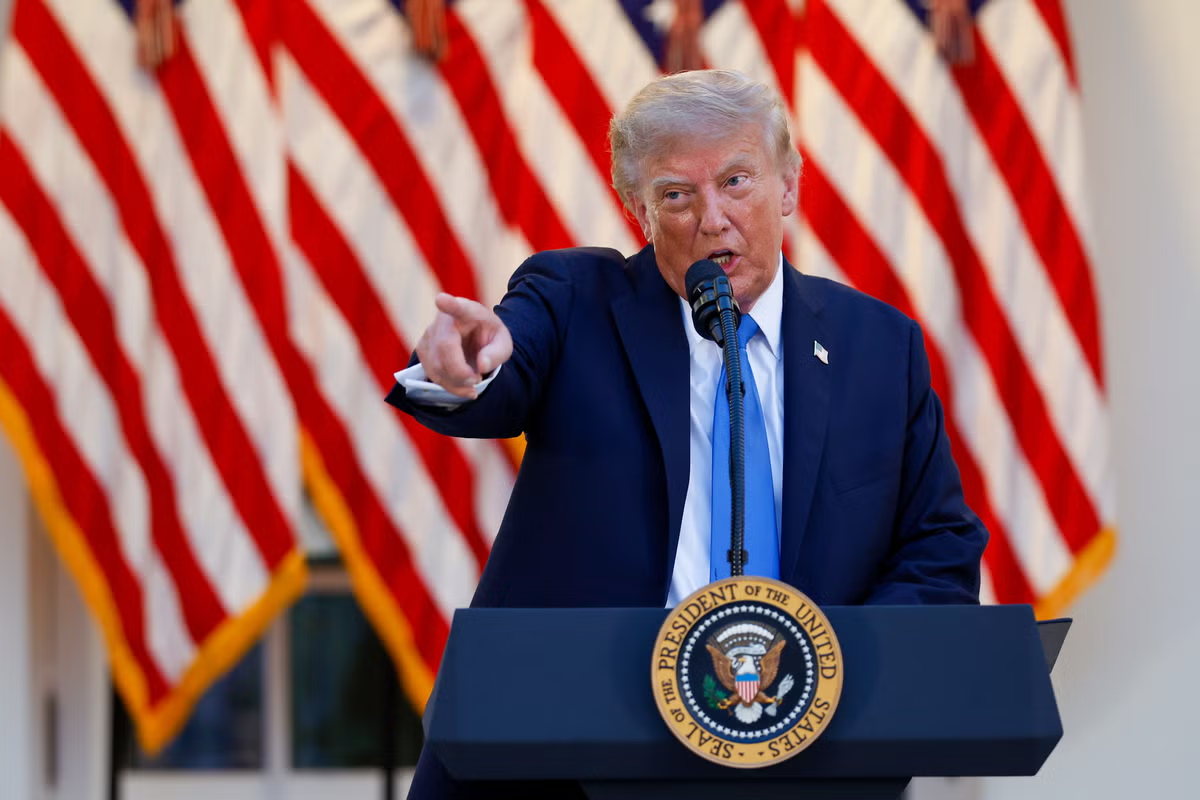
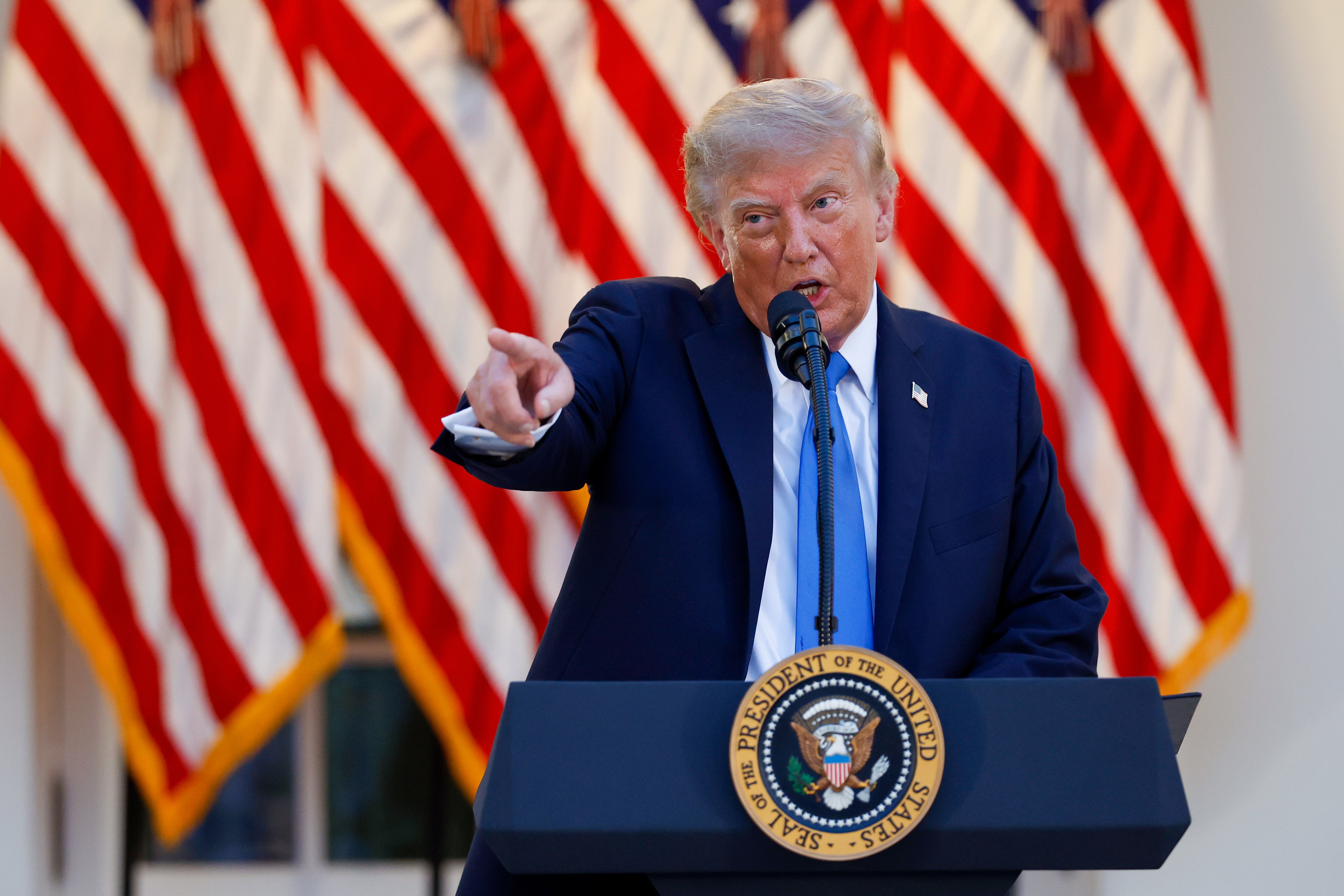
President Donald Trump threatened Friday to halt trade with every country that runs a surplus with the United States unless the Federal Reserve cuts interest rates, tying together two things that are not connected by any mechanism of American economic policy.
In a 183-word post on Truth Social published hours after Bureau of Labor Statistics released a better-than-expected jobs report, Trump wrote in capital letters: “LOWER THE RATE OR I’LL STOP TRADING WITH COUNTRIES WITH WHICH WE HAVE A DEFICIT.”
The president does not set interest rates, and the central bank’s Federal Open Market Committee does not set trade policy. The two are handled by different institutions under different statutes, and the Fed’s rate decisions are made without reference to the bilateral trade balance.
Yet Trump inexplicably argued that the central bank should slash rates by comparing the Fed’s interest rate to the interest one might pay on a home mortgage, automobile loan or business loan based on one’s individual credit score.
“Lower the interest rates because the U.S.A. is a much stronger credit than it was just a short time ago!” he wrote. “A STRONG COUNTRY MEANS A LOWER INTEREST RATE – IT’S A BETTER CREDIT…Very simple!”
That is a description of how consumer lending works. A borrower with a higher credit score is offered a lower rate by a bank, because the bank is pricing the risk that the borrower will not repay.
But that process has absolutely nothing to do with the Federal Reserve’s federal funds rate, which is an administered rate the central bank sets to pursue its congressional mandate of maximum employment and stable prices.
In short, it’s a tool for cooling or stimulating the economy, not a price quoted to the U.S. government by a lender assessing its creditworthiness.
The rate the government actually pays to borrow is the yield on Treasury securities, and that is set by investors in the bond market rather than by the Fed. Creditworthiness does affect it. But no rating agency has upgraded the United States. Moody’s stripped the country of its last AAA rating in May 2025, cutting it to Aa1; S&P affirmed the U.S. at AA+ with a stable outlook in June, one notch below the top; Fitch has had the country at AA+ since 2023.
Additionally, his threat to cut off foreign trade — something that could be beyond his authority despite his claim that a recent Supreme Court ruling would permit him to do so — would actually raise the borrowing costs he claims should be lower because of his administration’s policies.
Countries that run trade surpluses with the United States accumulate dollars, and a large share of those dollars are recycled into U.S. Treasury securities. That demand is one of the things that holds American borrowing costs down. Cutting off trade with surplus countries would reduce it.
Trump’s post came hours after Bureau of Labor Statistics reported Friday that employers added 162,000 jobs in August, with the unemployment rate holding steady at 4.1 percent. The August gain also ran well above the average of about 31,000 a month over the previous year, reversing a summer slowdown.
The federal funds target range has stood at 3.50 to 3.75 percent since December. At the July meeting — the first full one chaired by Kevin Warsh, who was confirmed 54-45 in May and sworn in on May 22 — the committee voted 9-3 to hold. All three dissenters, Cleveland’s Beth Hammack, Minneapolis’ Neel Kashkari and Dallas’ Lorie Logan, wanted a quarter-point increase.
Continuing a years-long trend of publicly bullying Federal Reserve chairs over interest rates, Trump called Warsh a “great new leader” but warned that the Fed “must get smart” and urged the board to “BE PATRIOTS for a change.”
“High interest rates put the U.S.A. at a very unfair disadvantage, and I won’t allow that to happen,” he said.
About the Author