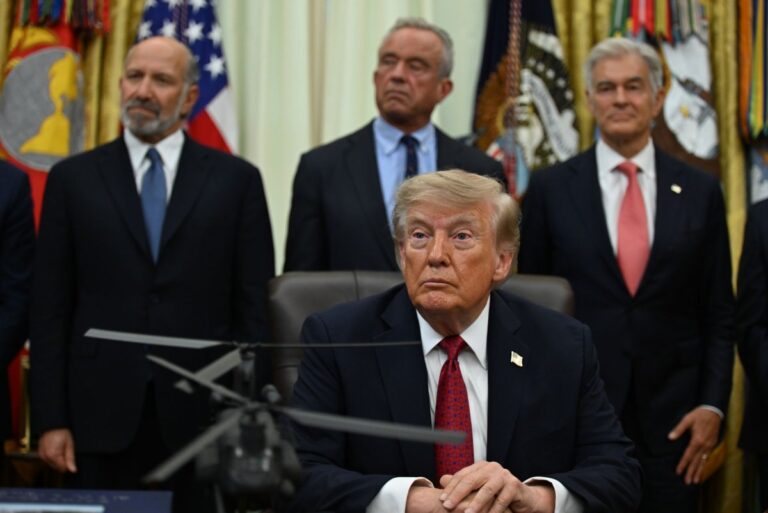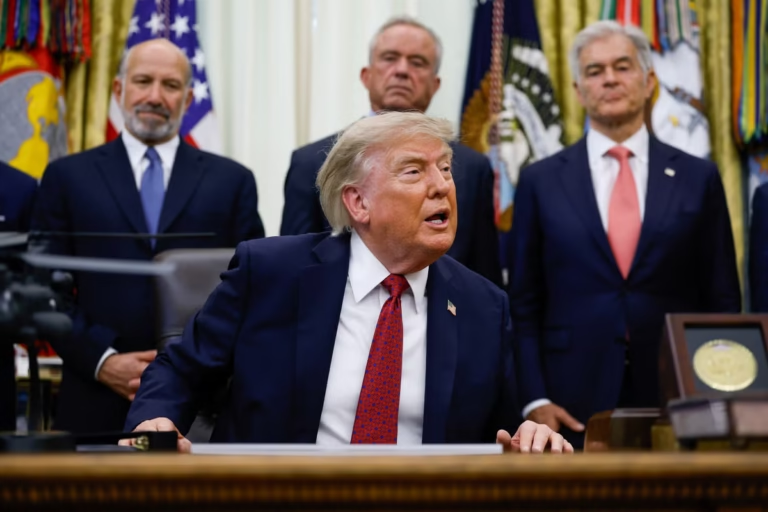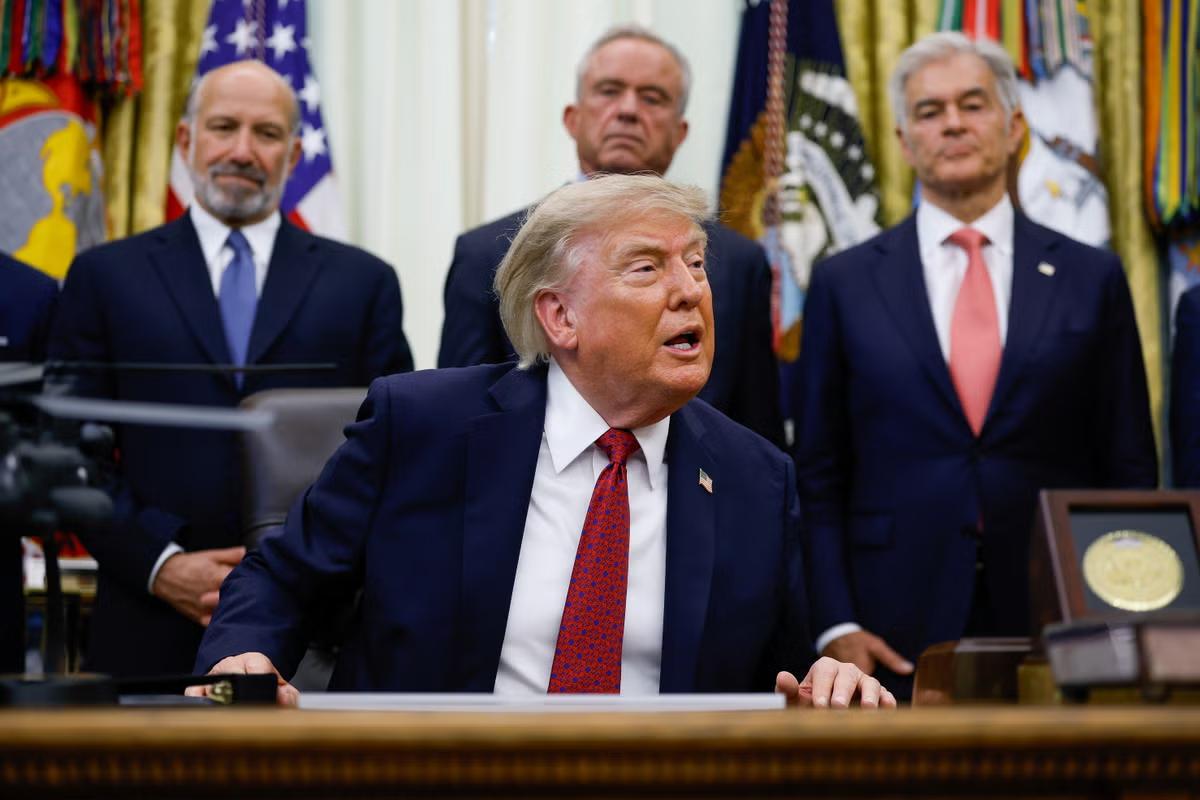
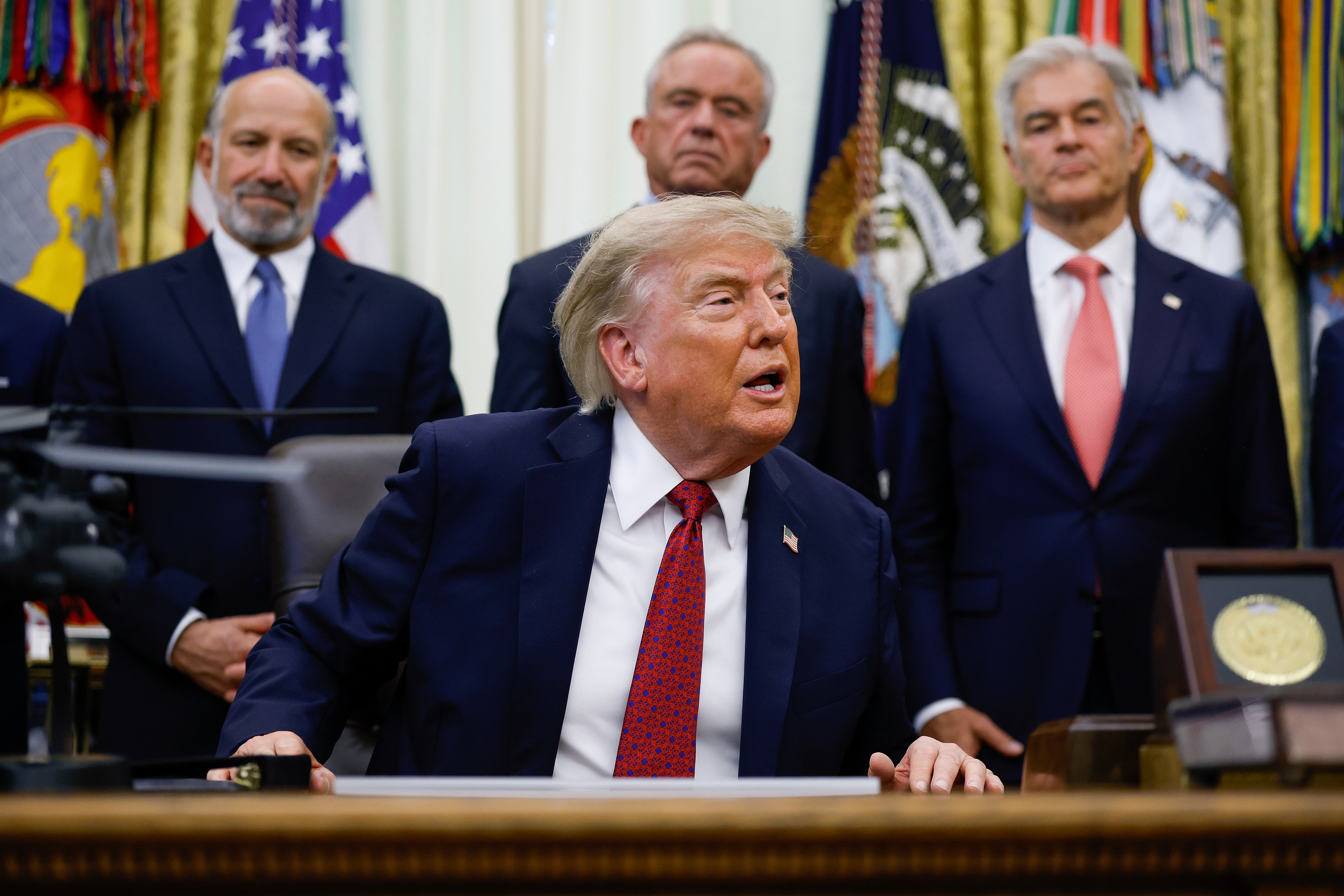
President Donald Trump was asked by a reporter Monday about rumors that Secretary of Defense Pete Hegseth may run for president in 2028—and he gave a response that probably won’t be well received by supporters of his presumed successor at the top of the ticket, J.D. Vance.
The vice president remains the most likely Republican to win Trump’s support for a presidential run in 2028, given his position, historical precedent and the groundswell of support for Vance that has followed Trump’s No. 2 ever since he joined the ticket in 2024.
But when asked by a reporter in the Oval Office, Trump gave no indication he had a favored candidate in mind to replace him and carry forward the MAGA mantle, and said there were many who could do it.
“I bet there’s a lot of people considering it, that you don’t know about,” said the president.
Of the Defense Secretary, he added: “I think he’s doing a fantastic job, but it’s very early to talk about that.”
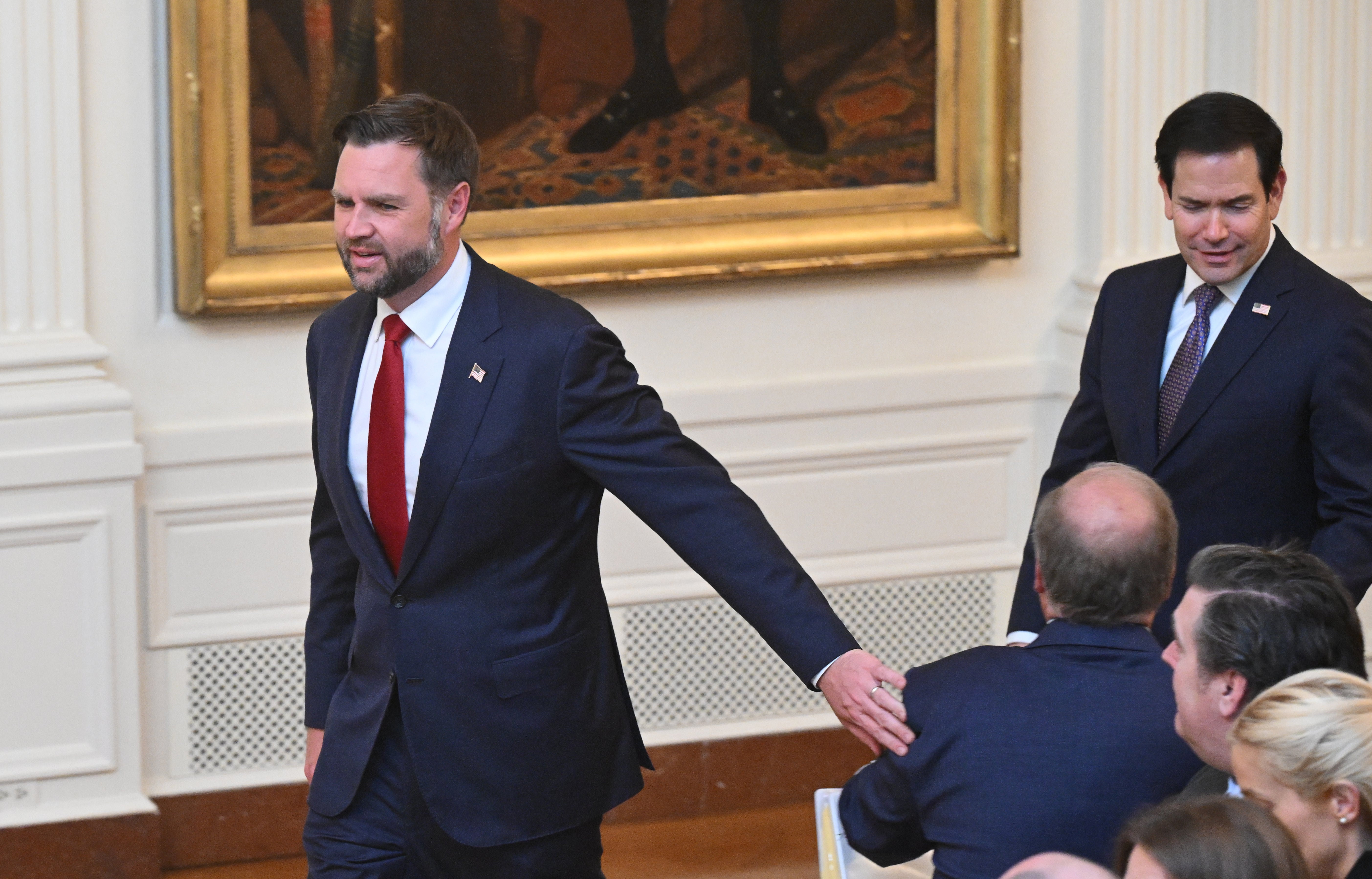
Vance won straw polls for the 2028 nomination at both the 2025 and 2026 Conservative Political Action Conference (CPAC) gatherings, hosted by the pro-Trump Matt and Mercedes Schlapp. He also consistently leads polling of the prospective GOP field, only occasionally being overtaken by another potential rival within the president’s Cabinet, Secretary of State Marco Rubio. Both men have taken on active, public-facing roles within the second Trump administration and have competed at times for the second-act spotlight. Rubio, the president’s chief diplomat, took over the role of acting national security adviser after his predecessor, Mike Waltz, was moved to a role as U.N. ambassador.
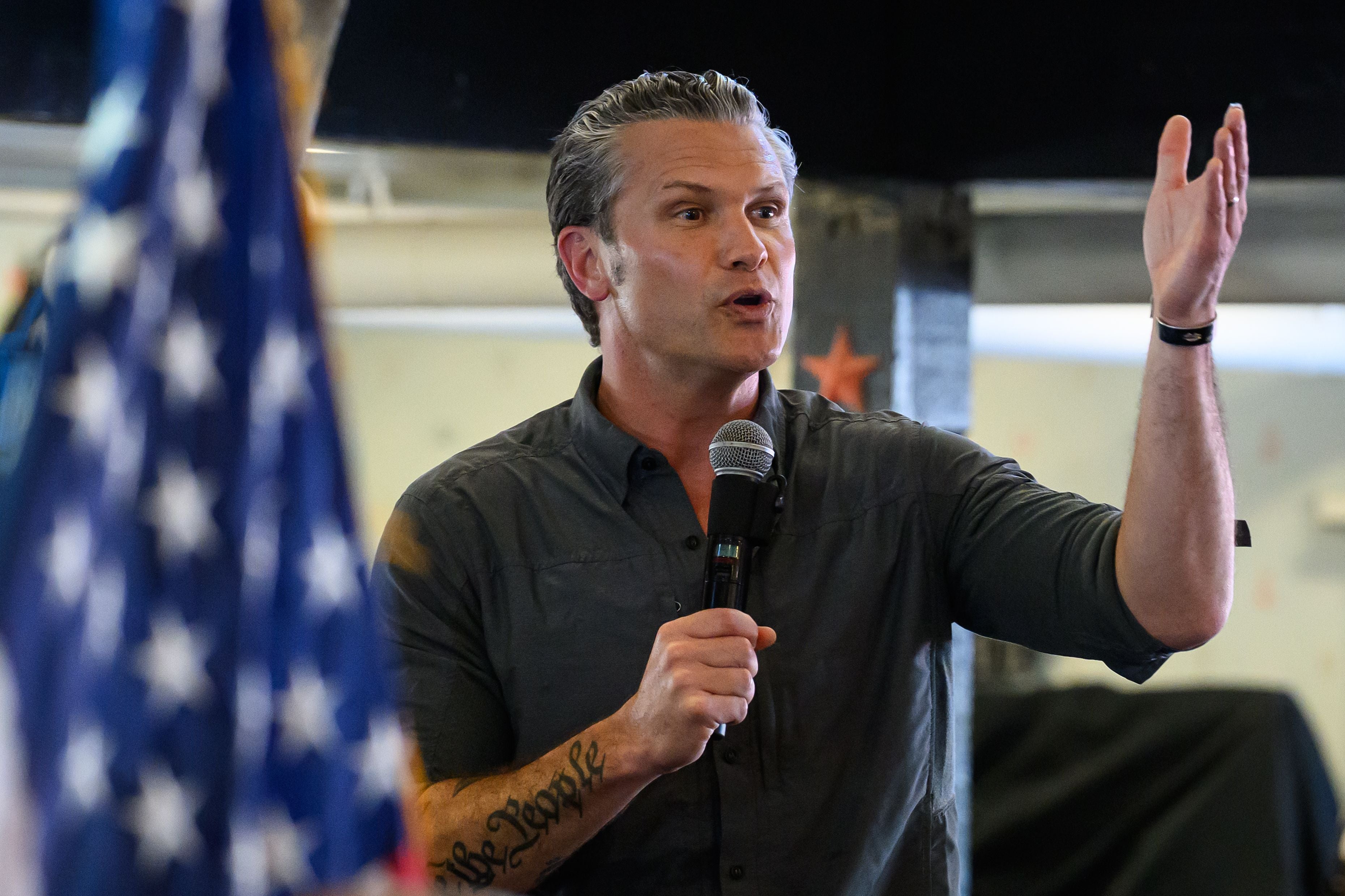
Hegseth, however, fueled rumors of his own future ambitions last week when he campaigned for Republican House and Senate candidates in Iowa at the Iowa State Fair, an annual hotspot for presidential contenders. Hegseth’s campaigning was rare for a defense secretary, though as a former Fox News host he is already a far more prominent political figure than most of his predecessors.
Trump is often asked about his favored successor and has publicly kept his own thoughts about who should take over the Republican ticket vague. But privately, the Washington Post reported in early August that Trump favors both Vance and Rubio, and even told a group of donors “we need to elect J.D.” at a recent gathering, though the exact context of those remarks was unclear.
The Post also reported that Trump polled staffers aboard Marine One in July to gauge who they favored for the 2028 nomination, with Vance and Rubio as the only options. He’s also reportedly suggested the two pair up as running mates, with no clear favorite for who should come out on top.
Monday’s comments seem to suggest that Trump is casting his net even wider as he looks for a Republican capable of keeping the White House in GOP hands and pushing ahead with a version of his doctrine.
While his pick for 2028 remains an open question, his continued fixation on control of the Republican Party is not. This cycle, the president has continued to endorse in key races to ensure his loyalists remain on the upswing within the party. Most recently, he backed the sister of the late Sen. Lindsey Graham, Darline Graham Nordone, for the primary election in South Carolina to serve for the upcoming term against a key ally of his onetime foe Nikki Haley and the House Freedom Caucus, Rep. Ralph Norman.
The president’s endorsement track record this cycle is spotty, however, as it proved to be not enough to propel a handful of candidates to victory, including the embattled Cory Mills of Florida, who was facing mounting calls for his resignation or expulsion before his primary defeat. Overall, Trump-endorsed candidates remain the favorite in most GOP races, including in some bluer states like Maryland.
His endorsement also proved to be a major factor in the Florida gubernatorial race, pushing Rep. Byron Donalds to the finish line in the Republican primary over Jay Collins, an ally of the incumbent Gov. Ron DeSantis, another former Trump foe. DeSantis ended up not endorsing a candidate in the primary.
Vance’s support from the president runs deep and may prove to be the deciding factor in determining the victor of the upcoming Republican race for the White House. Formerly a senator from Ohio, the Hillbilly Elegy author made an early alliance with the president’s eldest son, Donald Trump Jr., who supported him for Congress and lobbied hard against Washington establishment figures to see Vance added to the 2024 ticket alongside his father.
The vice president remains a favorite of many younger Republicans, like Trump Jr., due to his skepticism over America’s involvement in foreign conflicts and preference for an isolationist foreign policy. In 2024, the New York Times reported that he and Trump Jr. still spoke or texted almost every day.
About the Author