Want to bookmark your favourite articles and stories to read or reference later? Start your Independent Membership today.
Already a member?
Log in
Donald Trump labeled mail-in voting a “corrupt” threat to Republicans. His administration and allies didn’t produce the evidence. Now, as another election approaches, and Republicans need all the help they can get. So Trump tells Americans to vote by mail.
But by now, the president has spent months eroding trust in the nation’s elections and the people who run them, or confused voters about the rules and sowed enough doubt about the process to let him step in and take control of it himself.
We’ve been here before. The president has repeatedly turned to a familiar playbook to undermine faith in election administration and the results of the herculean bipartisan efforts to ensure each ballot is counted.
This time, Trump needs all the help he can get. The president is staring down the prospect of Republicans losing control of Congress, with polls reflecting vanishingly dim chances of political survival.
“If your state has early voting, do not wait,” Trump said in a video on his Truth Social account on Saturday. “Vote early, vote by mail, or vote in person on Election Day.”
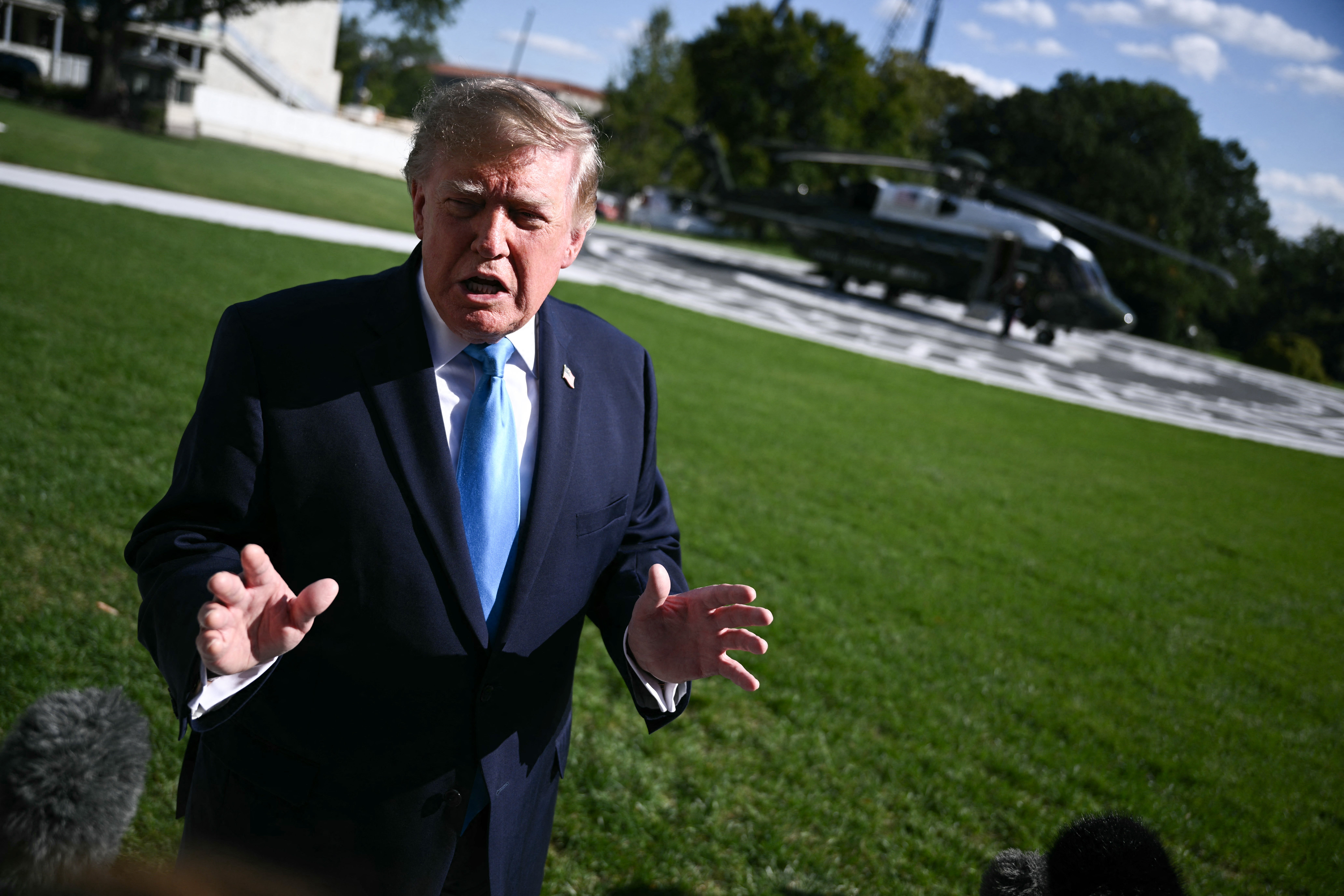
In a post accompanying the video, he wrote: “Republicans must WIN the 2026 Midterm Elections, and we must use every appropriate tool — Whether you vote early, absentee, by mail, or in-person, we must ‘swamp’ the Radical Left Dumocrats with massive turnout! SO IMPORTANT — PLEASE GET OUT AND VOTE.”
That “swamp” effort echoes the GOP’s 2024 strategy that returned Trump to the White House.
That year, Trump’s campaign and the Republican National Committee launched “Swamp the Vote,” which uses contact information from people who signed up to get campaign updates to “generate new absentee or mail ballot registrations and early in-person voting commitments” — similar to Democratic-backed election tools that Trump and his allies have tried to criminalize.
“You need to make a plan, register, and vote any way possible,” Trump said in a statement announcing the plan at the time.
Still, days later, during a Turning Point Action conference, Trump called early voting “sad” and “crazy.”
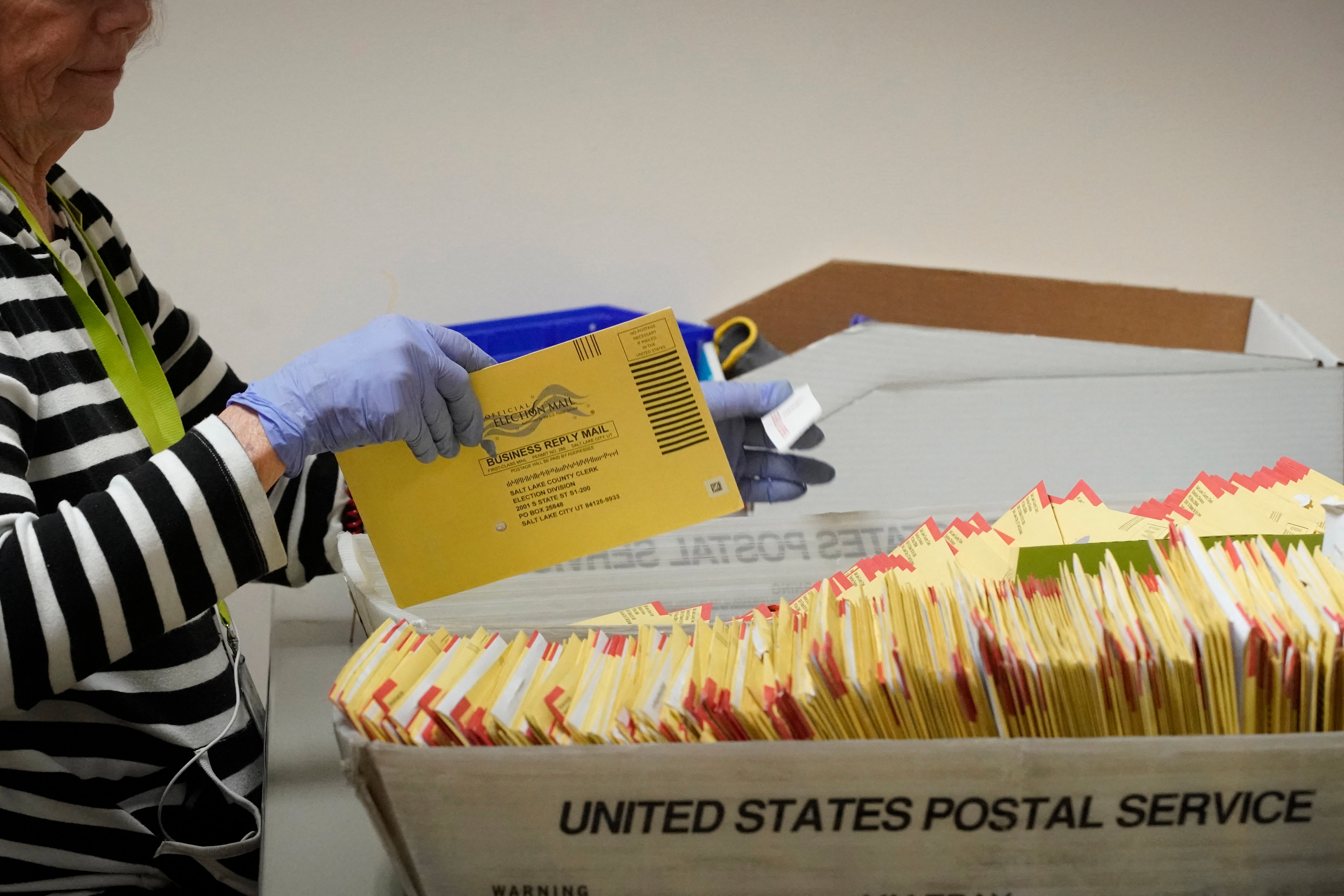
In the months before his latest Truth Social posts, Trump called mail-in voting “inherently corrupt” and a form of “cheating” while waging legal and political battles to implement an entirely new mail-in ballot system effectively controlled by the U.S. Postal Service.
“ELECTIONS CAN NEVER BE HONEST WITH MAIL IN BALLOTS/VOTING,” Trump wrote in August, just weeks before the Supreme Court rejected his attempt to restrict mail voting in next month’s midterms.
That plan would have required states to use a standardized envelope design and submit lists of eligible voters through an online portal. The USPS would then be allowed to refuse delivery of mail-in ballots from any state that failed to comply with these rules.
The ruling delivered a major blow to Trump’s attempts to centralize control of the nation’s elections, which would have given the nation’s postal agency expansive authority to decide who gets to vote in an unprecedented shakeup of election administration.
“The Supreme Court has really let our Country down!” Trump wrote in a response on his Truth Social, where he unloaded on the justices and expressed regret at his three appointees on the nation’s high court. “Certain Justices are petrified of these crazed and depraved Democrats, and are totally unable to show the courage necessary to save our America.”
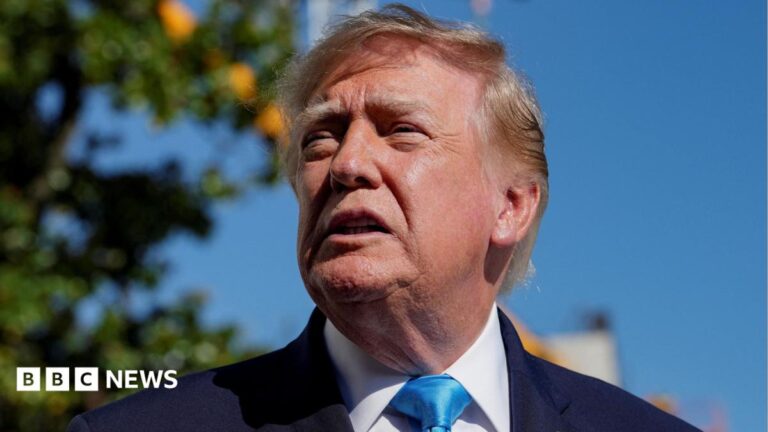
Asked on Monday why he’s now encouraging reporters to vote by mail, the president said he would “rather have them vote in person.”
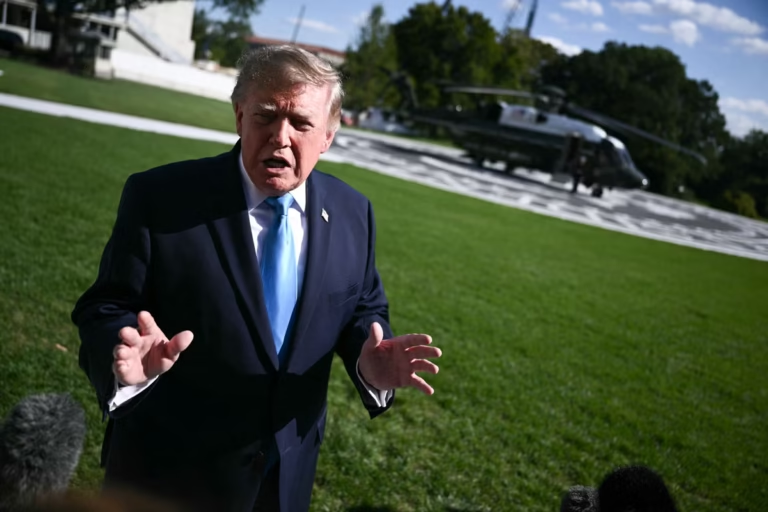
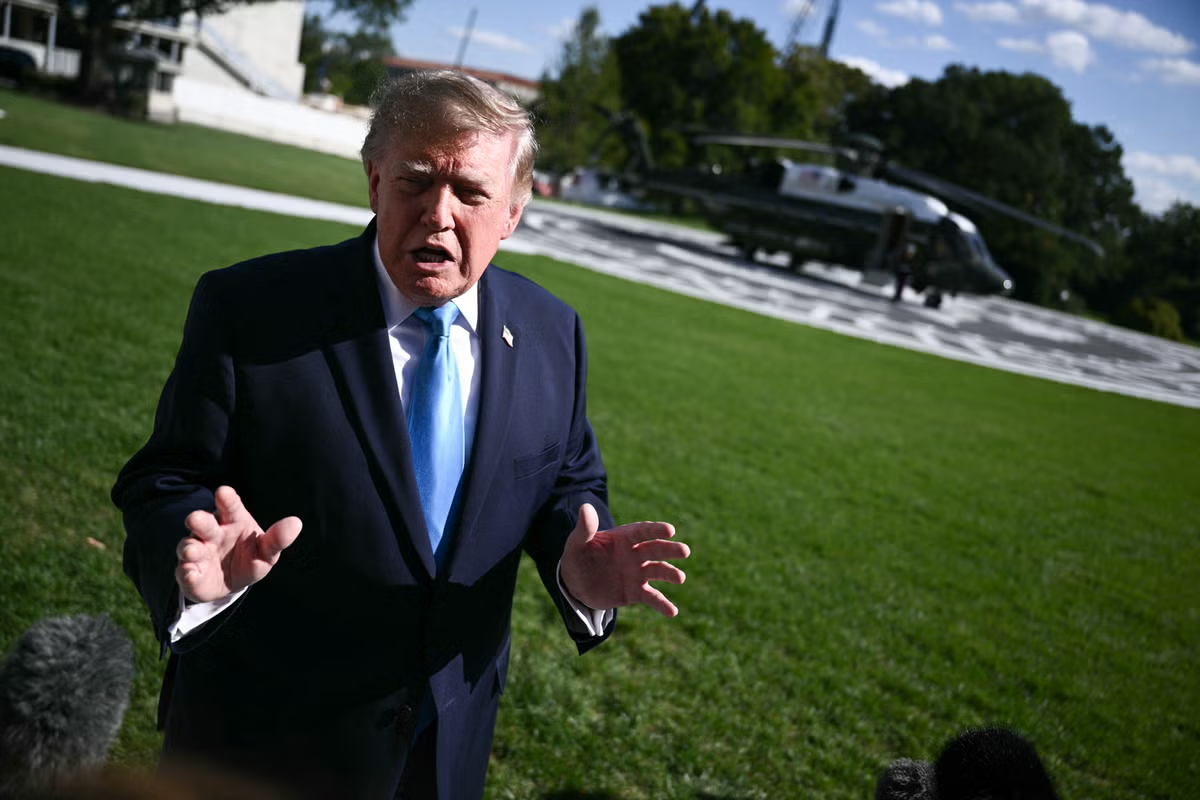
“They can vote by mail if they want. We seem to have no choice,” he told reporters outside the White House.
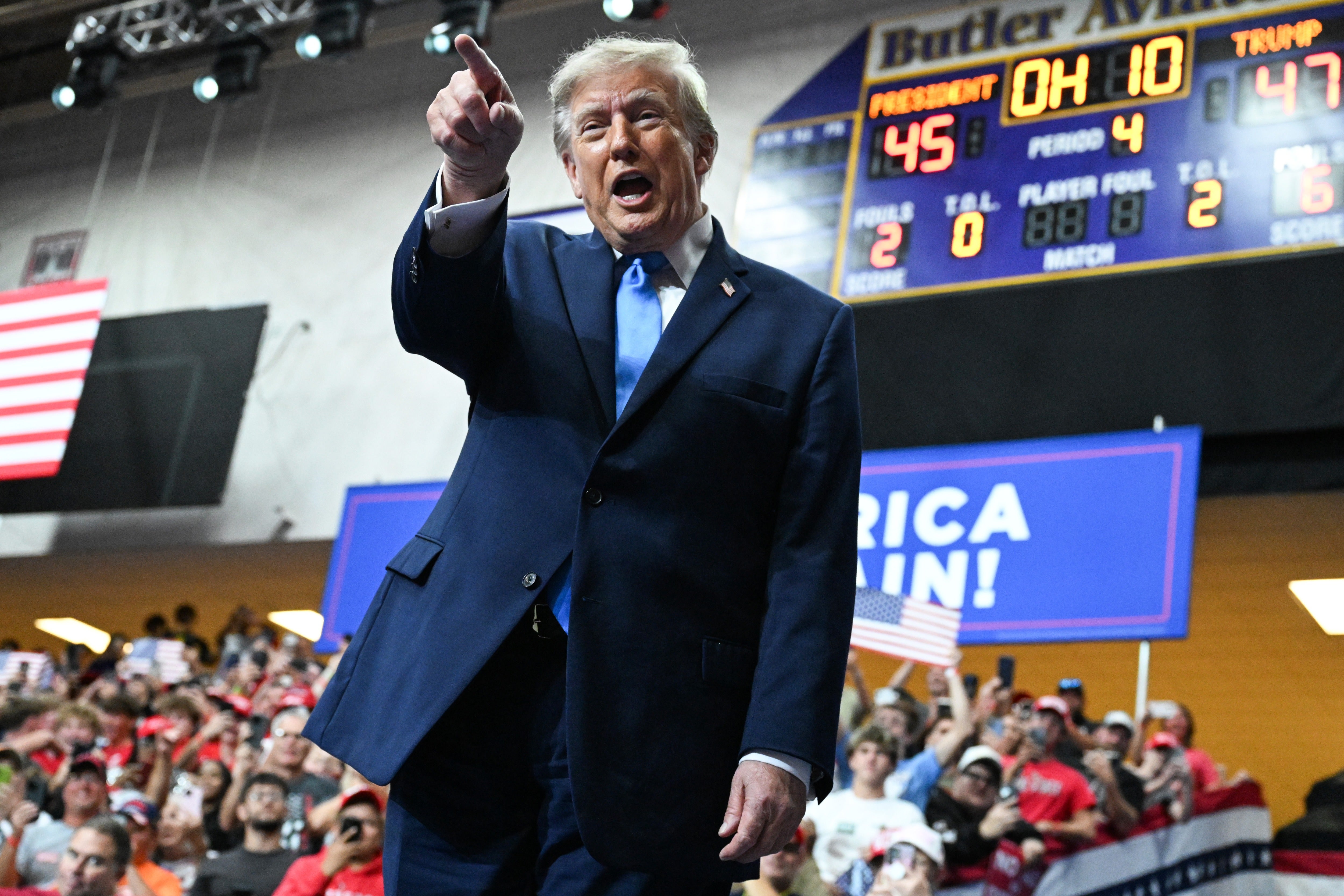
“A lot of people want to vote by mail, but a lot of very good people also want to vote in person. You can do either,” he said. “But [what] we’re concerned about is there seems to be — not seems to be — there is a lot of cheating in vote by mail.”
Asked for evidence, he said “take a look at California,” despite there being no evidence of widespread fraud manipulating election outcome. He then called the report questioning him “fake news.”
Trump, meanwhile, requested his own mail-in ballot this summer to participate in Florida’s Republican primary elections.
“His ‘election security’ crusade was only ever about one voter: him,” wrote Norm Eisen, a former White House ethics lawyer and prominent voting rights attorney with Democracy Defenders Action.
Still, Trump’s attacks appear to have made a dent in voter participation.
Several states have already started to send out mail ballots ahead of Election Day on November 3. Roughly one-third of all ballots cast in the 2024 presidential election were sent by mail, according to the U.S. Election Assistance Commission. In 2020, at the height of the COVID-19 pandemic, more than 40 percent of voters sent in their ballots by mail.
An NBC News poll last month showed that fewer than one-quarter of Democratic voters said they planned to vote by mail this year, amounting to a double-digit drop from 2024, when 34 percent of Democrats said they were planning to cast their ballots by mail.
Quentin James, founder and president of The Collective Political Action Committee, told Politico that Black voters have feared that their mailed ballots would be invalidated by the Trump administration.
“I think there’s confusion,” he said. “We know that the president has spent six months talking about changing the rules regarding mail-in voting, and a lot of folks are concerned about their ballot being secure.”
The Department of Justice, meanwhile, has rolled out a wave of noncitizen voting prosecutions, another major front in the Trump administration’s attempts to paint the nation’s elections as irredeemably corrupt, and can only be salvaged by the president.
“After nearly two years in complete control of the federal government, this administration has been unable to produce evidence of election theft or widespread fraud,” said David Becker, executive director of the Center for Election Innovation & Research, a nonpartisan election research group.
Americans, he said, should be “particularly skeptical of claims made by this administration now.”
About the Author