Justice department files lawsuit to challenge results of Alaska Senate race
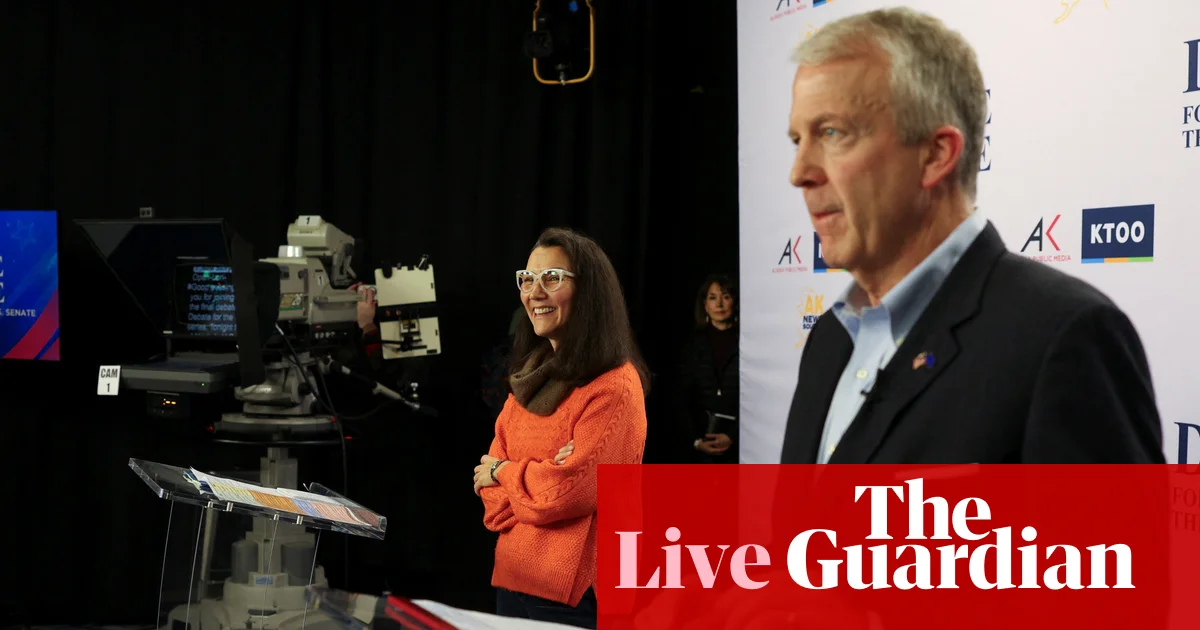
The Department of Justice has filed a lawsuit in federal court against Alaska’s and its election division, to block the certification of the state’s US Senate result if the Republican incumbent on the ballot doesn’t win.
The DoJ claims there could be “voter confusion” about the two GOP candidates on the ballot named Dan Sullivan – which might influence the race’s outcome in favor of the Democratic nominee, Mary Peltola.
A reminder, the Republican incumbent Dan S Sullivan will be competing against Peltola and another candidate named Daniel J Sullivan, a retired schoolteacher also running as a Republican.
The incumbent senator will appear on the 3 November ballot in Alaska with the words “(Registered Republican) Incumbent” next to his name to make it clearer for voters.
Since the Last Frontier uses ranked-choice voting in their elections, Alaskans will now rank the four candidates up for election in November. Their aim is to secure at least 50% of the vote in order to win the seat outright. However, Trump has routinely disparaged the voting method, calling it a “scam” and encouraging voters to support a ballot measure in the state to repeal it.
Key events
David Becker, executive director of the Center for Election Innovation & Research, said that the justice department’s lawsuit against Alaska – seeking to pause the US Senate race’s certification in the event that the Republican incumbent Dan Sullivan loses – is “an unprecedented intervention by the federal government”.
In a statement, Becker added that the administration has “absolutely no authority to tell Alaska when or how to certify the results of its Senate election”.
Attempting to intervene “at this late stage” is “entirely against department policy”, Becker said. “There is no legitimate enforcement of federal law here, and it raises serious concerns about political interference”.
Becker also said that he could not recall an administration “ever attempting to stop the certification of an election – and certainly not 11 days before polls close”.
With just 11 days until the midterms, early voting data is rolling in nationwide. Democrats need to net four Senate seats and hold 218 House seats to reclaim a congressional majority. Here is where the numbers stand so far:
-
Turnout is surging in key battlegrounds: More than 22 million Americans have already voted in person or by mail. According to the University of Florida’s Election Lab, battleground states – including Michigan, Ohio, Georgia, Texas, Florida and North Carolina – have each passed 900,000 ballots cast as of 21 October. Turnout is being driven in part by widespread voter frustration, reflected in Donald Trump’s record-low approval ratings.
-
Democrats lead in early returns: Registered Democrats account for 45% of early ballots cast, compared with 30% from Republicans (tracking returned ballots, not candidate selection). The party gap is particularly pronounced in North Carolina, Kansas and Iowa. While Republicans traditionally favor election day voting, strategists worry this widened margin signals a “red undertow” – GOP voters staying home due to frustration over high gas prices, the conflict in Iran and sweeping tariffs.
-
Early votes are pacing well ahead of 2022: In Georgia, early votes already represent more than 37% of the total turnout from the 2022 midterms. Texas and North Carolina sit at 33%, while Florida is at 27%. We’re seeing similarly high paces recorded in Michigan and Ohio too.
-
Mail-in voting remains resilient: Almost 57m mail-in ballots have been requested or sent nationally – greater than the 52m requested in 2022, according to NBC News (using data from TargetSmart). Despite executive orders from the Trump administration attempting to restrict mail-in voting, which the supreme court struck down in September, voters continue to utilize the process at pre-pandemic rates.
The astonishing battle between the dueling Dan Sullivans in the Alaska US Senate race has resulted in the president weighing in to urge voters in the state, which he won by 13 points in 2024, to “VOTE FOR THE REAL DAN SULLIVAN”, during the August primary.
Trump has claimed, without evidence, that Daniel J Sullivan – who is challenging the two-term incumbent – is an “impostor”.
Meanwhile, many Republicans across the country have accused the former teacher, who lives in Petersburg – a town of about 3,000 people in the southern part of the state – of being a Democratic plant in place to cannibalize votes from Dan S Sullivan.
Pivoting back to the lawsuit filed by the Department of Justice against the state of Alaska.
The federal government argues in the complaint that “the sole purpose” of Dan J Sullivan’s of candidacy is to “benefit the Peltola campaign by reducing the number of votes for Senator Sullivan”.
As a result, “there is a substantial likelihood that a certification of the election will reflect an electoral process that lacked integrity”, it writes.
The administration is calling for there to be a pause in certifying the vote in Alaska “pending an investigation” to determine whether votes that are cast for Dan J Sullivan were actually meant to be for the Republican incumbent.
Voting rights experts say, however, the basis for the lawsuit is thin given the fact that any meaningful probe into voters’ preferences after they have voted would be practically impossible to conduct.
In June, the Alaska supreme court ruled that the Dan J Sullivan could remain on the ballot, despite the frustration it has caused the Trump administration and national Republicans hoping that the incumbent Sullivan can win against Peltola, a moderate Democrat, in their bitter fight for a Senate seat that could deliver Democrats a key victory in their path for control of the upper chamber of Congress.
Trump doubles down on support for widely condemned Ramaswamy ad, scolds reporter for asking about GOP backlash
As the president headed to Florida, for his fifth midterm campaign rally of the week, he doubled down on his support for Vivek Ramaswamy’s widely condemned ad that features the estranged mother of his Democratic opponent in the Ohio governor’s race, Amy Acton.
“If my mother said bad things about me, do you think the Democrats would put it up? I think so, but my mother thought I was wonderful,” Trump said in response to a reporter from NBC News.
A reminder that Acton, the public health official who is leading Ramaswamy in polls, was removed from her mother’s care when she was 12, after her stepfather was charged and indicted for sexually abusing Acton. Her mother, Donna Arthur, fled the state with her husband, before his trial, and remained married to him until his death in 2004.
While several Republicans have disavowed the ad, where Arthur calls her daughter “a liar”, and urged Ramaswamy’s campaign to take it down, Trump has encouraged the opposite. Outside the White House on Friday he scolded the NBC News reporter who followed up with questions about Acton’s childhood, and whether that changed the president’s perspective on the ad.
“You’re a horrible little reporter, aren’t you?” Trump said, while continuing to ignore the myriad questions around Arthur’s credibility and background.
“This is a person, a mother, a smart woman,” Trump added. “This has nothing to do with the stepfather or anything else … the mother of a person running for governor of one of the greatest states, where I set records, said that she’s a liar. Her daughter’s a liar.”
“Why wouldn’t you listen to a mother that says that? Why? Why would you miss NBC? Why wouldn’t you listen?” he said, while telling the reporter to be “quiet”.
The Trump administration’s targeting of Alaska’s US Senate race is particularly consequential as Democrats have been making waves in flipping the red-leaning state.
Alaska’s Democrats believe circumstances have aligned for them to win a slew of competitive elections in the 3 November midterms. The Senate seat currently held by two-term Republican Dan Sullivan is a top prize.
If Democratic candidate Mary Peltola were to win the election next month, she would be the first Democrat to win the seat in nearly two decades.
Read more:
Donald Trump spoke to the British Foreign Office today, he told reporters at the White House.
Trump said that he discussed opening up the North Sea’s oil during a conversation with British prime minister Andy Burnham.
He also said that Canada was “working very hard” to make a trade deal with the US. “I hate to say this, but we have all the cards,” he said, referring to a trade deal with Canada. “Just like I told Zelenskyy, we have all the cards.”
When asked if he was aware of who ordered the Starlink access in Ukraine to be restricted, Trump replied: “Well, I wouldn’t tell you if I did know. I have no idea. But I wouldn’t tell you if I did know.”
He also said that he had not spoken to Elon Musk regarding the issue, but suggested he would do so if the access wasn’t fixed.
Justice department files lawsuit to challenge results of Alaska Senate race
The Department of Justice has filed a lawsuit in federal court against Alaska’s and its election division, to block the certification of the state’s US Senate result if the Republican incumbent on the ballot doesn’t win.
The DoJ claims there could be “voter confusion” about the two GOP candidates on the ballot named Dan Sullivan – which might influence the race’s outcome in favor of the Democratic nominee, Mary Peltola.
A reminder, the Republican incumbent Dan S Sullivan will be competing against Peltola and another candidate named Daniel J Sullivan, a retired schoolteacher also running as a Republican.
The incumbent senator will appear on the 3 November ballot in Alaska with the words “(Registered Republican) Incumbent” next to his name to make it clearer for voters.
Since the Last Frontier uses ranked-choice voting in their elections, Alaskans will now rank the four candidates up for election in November. Their aim is to secure at least 50% of the vote in order to win the seat outright. However, Trump has routinely disparaged the voting method, calling it a “scam” and encouraging voters to support a ballot measure in the state to repeal it.
With less than two weeks until the midterms, my colleague Jonathan Freedland and Guardian US columnist Moira Donegan are answering your questions in this week’s episode of Politics Weekly America.
They break down the final stretch ahead of these hugely consequential elections, that will decide control of Congress in Donald Trump’s final two years of office.

Frances Mao
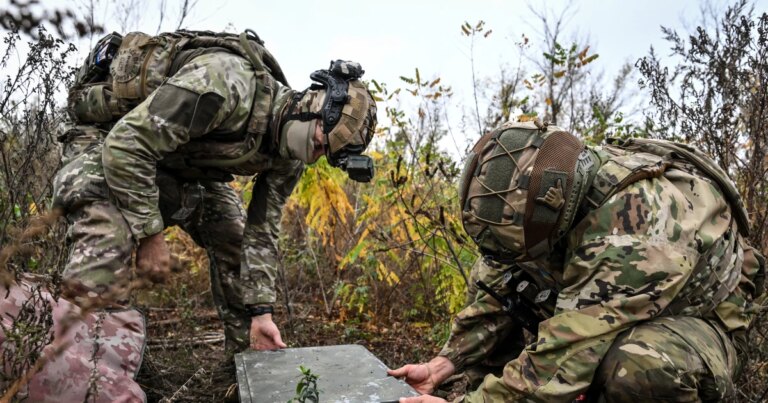
The White House has issued a statement saying first lady Melania Trump has helped broker a “ceasefire” in the Russian-occupied city of Oleshky, where residents have been enduring a worsening humanitarian crisis due to the lack of food, electricity and other resources.
The small town in southern Ukraine has been the centre of an increasingly desperate humanitarian crisis under Russian occupation.
Since May, Russia has failed to deliver food, medicine or other essential goods to the area leading to deaths from starvation and disease. There have also been problems with the burial of bodies and sanitation, as the local morgue has been destroyed and there is no running water.
Russia and Ukraine have accused the other of blocking supplies to the population of the town which Ukrainian forces want to retake.
Ukraine has previously appealed for a ceasefire to evacuate the estimated 2,000 civilians left in the town – but Russia hadn’t made any commitments.
Earlier this week, Pope Leo called for an intervention while the Kremlin said Putin had discussed the situation with Donald Trump.
The White House now say both countries have agreed to pause military action “to allow for humanitarian aid to enter and to prepare a civilian evacuation through a designated safe passageway”.
A ceasefire is set to come into effect on 29 October.
“The situation in Oleshky is dire. Oleshky is a frontline war city on the brink of disaster. Oleshky’s remaining population is comprised primarily of elderly residents who urgently need medical attention, medicine, food, and clean water,” Melania Trump said in the statement.
The Guardian’s international correspondents are looking into the statement and attempting to corroborate it with their sources.
Follow along with our dedicated Europe blog here:
Majority of voters say they will trust midterm results, according to new poll
Most likely voters say they will trust the results of the midterm elections, according to the latest poll from the New York Times and Siena University.
While 74% of those surveyed said they would have confidence in the outcome, 23% said they would not.
Notably, 50% of voters said that that the Democratic party is “too far to the left”, while 51% feel that the GOP is “too far to the right”.
Meanwhile, the latest polling also shows that a majority (53%) are not confident that Republican candidates will accept the results of the midterm elections if they lose. This is compared to 28% of those who feel the same about Democrats’ response to the results.
Almost half of those surveyed said that they were worried about the possibility of Republicans trying to overturn the results if they lose. Only 31% had the same fear about Democrats.
With only 11 days until the midterm elections, and with more than 20m early votes cast, we’re watching the key races that will ultimately decide who controls the Senate in the new Congress.
My colleagues John Farrell, Hazel Tang, Karif Wat and I have put together a video breaking down the candidates, stakes and issues in these four battlegrounds.

Jason Wilson
A data leak from Germany’s far-right German Alternative für Deutschland (AfD) has revealed the extent of efforts by the party to court Donald Trump and other leading figures in the Maga movement, stretching back more than a decade.
The trove reveals the pains the AfD took in wooing the president, whom they saw from the beginning as a potential ally, with senior party officials agonising over the wording of an obsequious congratulatory telegram when he was elected in 2016, which included the wish that his “hopes as a person be fulfilled”.
The AfD became a home for anti-immigration voters after 1.2 million refugees arrived in Germany in 2015 and 2016. It entered the Bundestag, Germany’s parliament, in 2017 with 12.6% of the vote, came second in the February 2025 federal election with 20.8%, and now leads national polls at about 30%. In September it won 43.8% of the vote in the eastern state of Saxony-Anhalt, and it is now trying to form Germany’s first far-right state government since the second world war.
Trump hailed the win in Saxony-Anhalt in a post on his Truth Social, concluding his message with a German version of his Make America Great Again acronym, “MGGA!!!”
Germany’s domestic intelligence agency monitors the party as a suspected rightwing extremist organisation, and state agencies classify five of its regional branches as confirmed extremist.
The leaked documents show AfD officials quickly moving to requests for support from the White House on policy issues when he first won the 2016 election.
Others show a burgeoning political courtship between senior figures including the AfD’s now leader Alice Weidel and key Trump ideologue Steve Bannon.
The data, provided to reporters by the transparency organisation Distributed Denial of Secrets (DDoSecrets), covers more than 420,000 emails, along with documents and personnel records, from the party’s foundation in 2013 to the present, with most coming before 2019.
Read the full report here:
The ongoing slowdown to Ukraine’s access to Starshield – the modified military-grade version of the Elon Musk’s Starlink satellite network – reached fever pitch this week.
The Wall Street Journal reported on Thursday that the Donald Trump had asked Musk to restore the service, with Trump later told reporters the system was “back”.
However, the president refused to comment on whether he had spoken to Musk, but appeared to suggest the ultimate power to limit the service rested with the SpaceX founder and CEO. “I guess the bottom line, he put it back,” Trump said, referring to Musk.
This comes after a protracted series of disruptions for Ukraine accessing the network – a key defense tool against Russian strikes.
Despite Trump’s insistence, Ukrainian officials said on Friday morning that speeds remained capped, with no indication that the restrictions had been lifted.
Trump will begin his day in Washington, before his midterms blitz continues in Florida. A reminder that today is his fifth day of campaign rallies this week. He’ll deliver remarks at 2pm ET in Fort Myers.
We mentioned the key gubernatorial race in the Sunshine state earlier – where Republican congressman Byron Donalds will face off against Democrat David Jolly. But there is also a key contest that we’re watching in Florida too.
This is the special Senate election, where the Republican incumbent, Ashley Moody, is facing a challenge from progressive Democrat Angie Nixon – who defied odds and won her primary earlier this year.

George Chidi
Americans heading to the polls for next month’s midterm elections are not just choosing whom to send to Washington, or their state capitols. There are also 145 statewide measures on ballots across 39 states, polling voters on actions from a novel wealth tax on California’s billionaires to requiring Alabama’s public schools to broadcast or perform the first stanza of the national anthem each week.
Voters in Idaho, Nevada and Virginia are asked to protect abortion rights; voters in Missouri are asked to give those rights back. Property tax issues appear on dozens of state ballots. Several state referendums ask voters to bar trans athletes from competing in women’s sports, or bar gender-affirming medical care for minors.
Voters like referendums, in principle, as a tool of direct democracy. “Polls in every state show at least 2-to-1 support for having an initiative process,” said John Matsusaka, a business professor at the University of Southern California (USC) and executive director of the Initiative and Referendum Institute.
Here are the big topics voters are being asked to decide this year:
Ashley Hinson’s criticism of the ad came after similar condemnation by Ohio governor Mike DeWine triggered a swift rebuke from Donald Trump.
Speaking to ABC News, Hinson said: “It’s terrible. I think about it as a mom and you think about your kids surviving childhood sexual abuse and having to relive that trauma on TV again.”
Hinson also criticised vice-president JD Vance for striking “absolutely the wrong tone” when he said he was “disgusted” by Republicans “whining” about the ad.
“Iowans want – and probably Ohioans want – someone who’s going to be an empathetic leader, and I think it sends absolutely the wrong message.
“And I would bet that Amy Acton and I probably don’t agree on anything, either. But like the last thing I would want as someone who’s running against is to force them to relive the childhood trauma. So, I think, again, I think it’s wrong, and it should come down.
Trump to rally in Florida amid growing outcry over Ramaswamy attack ad
Good morning and welcome to our live coverage of US politics. Donald Trump is travelling to Florida today to speak at another rally as midterm election day races nearer.
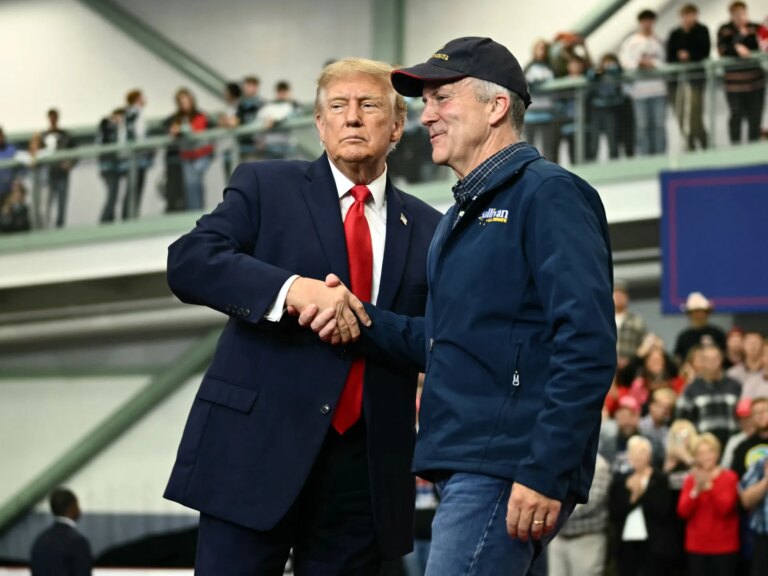
The president will stump for gubernatorial candidate Byron Donalds. Whether Donalds regards this as helpful remains to be seen after he removed mentions of the president from his website and has barely uttered his name during the race for governor.
My colleague Richard Luscombe has more on that race:
Last night, Trump further stoked the controversy over an attack ad by Vivek Ramaswamy, featuring the mother of his Democratic rival, Dr Amy Acton – telling supporters at a rally that he personally told the Republican candidate for Ohio governor to keep running the spot.
Acton’s mother lost custody of her daughter at age 12 because her husband was charged with raping the young girl. Trump told the rally in Iowa: “I said, ‘You’ve got to ride with it.’”
Trump looks increasingly out of step with his own party over the ad after yet another Republican denounced the ad on Thursday. Iowa Republican Senate candidate Ashley Hinson broke with the president by denouncing the attack ad, saying: “I think it’s absolutely terrible, and I think they should take the ad down.”
About the Author