
Trump bound for Ohio, and Vance for North Carolina, with less than a week until the midterms
Donald Trump will return to Ohio on Wednesday to campaign for Republicans in the state, as the GOP looks to hold on to the seat currently occupied by Senator Jon Husted. Husted’s opponent, Sherrod Brown, a former Democratic senator from the state, has a decent lead in the polls with less than a week remaining until election day.
Up until now, Trump has made a habit of praising Husted’s physique (his butt, especially) on the campaign trail. We’ll see if he keeps that up today.
JD Vance, perhaps Trump’s busiest surrogate on the campaign trial, will continue a cross-country air campaign by heading east to North Carolina, where he’ll back Republican Senate candidate Michael Whatley, who is trailing in the polls to Democratic former governor Roy Cooper.
Key events
-
How an innocent chain restaurant became a talking point in the final day before the midterm election
-
Federal Reserve keeps interest rates steady
-
Dolores Huerta, titanic leader in labor and civil rights movement, dies at 96
-
A Senate race in deep red South Carolina could go either way, poll finds
-
‘A revolution in slow motion’: is Arizona’s wealthiest district finally done with Trump?
-
Will ‘prairie populism’ defeat Republicans in the midterms? – podcast
-
US costs of Iran war rise to over $47bn, Pentagon estimates
-
How Trump is trying to disrupt the midterms – video explainer
-
Mark Kelly on possible 2028 run: ‘I’m considering it’
-
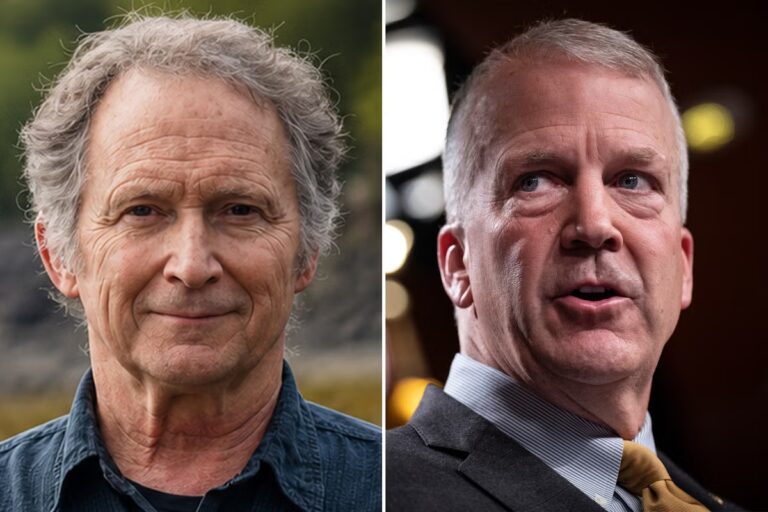
Alaskan Democrats intentionally sought out candidate with same name as Senate component, NYT reports
-
The Trump prosecutor trying to stop California ballots from being counted
-
RFK Jr faces heavy criticism over anti-Arab remarks on campaign trail
-
Flavio Bolsonaro lands in Miami, having fled to US following Brazilian election defeat
-
Republican senator Lisa Murkowski backs Democrat in Alaska governor’s race
-
Trump bound for Ohio, and Vance for North Carolina, with less than a week until the midterms
-
Obama to campaign in Georgia alongside Jon Ossoff and Keisha Lance Bottoms
-
Flávio Bolsonaro, defeated rightwing Brazilian presidential candidate, expected to arrive in Miami
-
Federal judge rules Trump-appointed US prosecutor in Los Angeles isn’t legally serving
How an innocent chain restaurant became a talking point in the final day before the midterm election
It was a fairly standard quip from former president Barack Obama, delivered to an Ohio crowd as he stumped for the state’s Democratic midterm ticket.
“He’s got the White House looking like Saddam Hussein opened a Cheesecake Factory,” Obama said, mocking Trump’s redecorating of the White House. “Just gold everywhere.”
Little did the ex-president know, that remark would catapult the humble Cheesecake Factory, and its interior decorating choices, into the public consciousness, ahead of a decisive vote for control of Congress.
Republicans quickly hit back at the remark, accusing Obama of being elitist and out-of-touch (a well-worn talking point) for speaking ill of the interior decorating a beloved restaurant enjoyed by vast swaths of everyday Americans.
My colleague Matthew Cantor has the full story here:
Vice President JD Vance just took the stage at a campaign event in Kinston, North Carolina.
Vance’s stop in the state comes as the Republican Senate nominee, Michael Whatley, is trailing in the polls to Democratic former governor Roy Cooper.
The vice president has been barnstorming across the country in recent weeks to stump for Republican candidates, serving as one of Trump’s top surrogates on the campaign trail. In the last several days, he’s made stops in Montana, Kansas, and Michigan, among other states.
Federal Reserve keeps interest rates steady
The Federal Reserve has opted to maintain interest rates at their current level, though inflation remains higher than the central bank’s target.
In a statement, the Fed characterized inflation as “elevated,” remaining above the bank’s target of two percent. Two members of the central bank’s board of governors voted against the decision to keep rates steady, preferring a quarter-point increase. One of them was Lisa Cook, the member who President Trump has tried and so far failed to remove over unsubstantiated claims of mortgage fraud.
President Trump has leaned on the Federal Reserve, as well as Kevin Warsh, his newly appointed chair of the body, to lower interest rates, hoping it would juice the economy. But lower rates can also worsen inflation, which the central bank has been dedicated to reining in.
My colleague Gaya Gupta has more on the Fed’s most recent decision here:
Dolores Huerta, titanic leader in labor and civil rights movement, dies at 96
Dolores Huerta, an influential leader in both the organized labor and civil rights movements who won organized major labor protests and won better conditions for agricultural workers, has died at 96.
Her namesake foundation said in a statement that she died at her home in Bakersfield, California, surrounded by family members.
“We are sad to announce that our beloved mother, Dolores Huerta, has passed away today at the age of 96,” Huerta’s family said in a statement. “As you can imagine, this is an incredibly difficult time for us, and we ask for privacy as we grieve this incredible loss to our family. We know that many of you around the world share in our mourning, and we will be following up on plans to recognize and celebrate her incredible life and legacy.”
Several prominent Democrats, including former president Bill Clinton and his wife, former first lady and secretary of state Hillary Clinton, as well as former House speaker Nancy Pelosi, publicly mourned Huerta’s death.
“With the passing of Dolores Huerta, Hillary and I have lost a dear friend, and we’ve all lost a stalwart champion of working Americans,” Bill Clinton said in a statement.
“Dolores was a dear friend, and we all responded to her rallying cry, ‘Sí se puede,’ which inspired generations of Americans to believe in the power of collective action,” Pelosi said in a statement.
The legacy of the labor movement Huerta helped lead was shaken earlier this year when Huerta, along with several other women, accused Cesar Chavez, another UFW co-founder and towering figure in the labor movement, of sexual abuse in an investigation published by the New York Times.
A Senate race in deep red South Carolina could go either way, poll finds
The race for a Senate seat in South Carolina, a state normally as deep red as they come, could break for either the Republicans or Democrats in the midterm election, a new poll from the New York Times and Siena University has found.
Darline Graham, the sister of the deceased senator Lindsey Graham who was appointed to finish his term, leads her Democratic challenger, Annie Andrews, by a single percentage point, the poll found. If Andrews were to win, it would be the first time in nearly three decades South Carolina has voted a Democrat into the Senate.
The poll comes amid growing Republican unease about the security of House and Senate seats that are normally reliable GOP strongholds. Polls show races in places such as Kansas, Ohio and Texas with margins much closer than anticipated, or even Democrats leading.
In recent weeks, top Republicans, including Donald Trump and JD Vance, have campaigned in those deep red states in addition to more expected battlegrounds, like Michigan.
‘A revolution in slow motion’: is Arizona’s wealthiest district finally done with Trump?
Mary Jo Pitzl
in Scottsdale, Arizona
Donald Trump has repeatedly asked voters to pretend that he is on the ballot in November’s crucial midterm elections. And in the comfortable confines of Arizona’s most affluent and fiercely contested congressional district, Trump is definitely on voters’ minds.
But whether that helps or hurts the warring congressional candidates in this sun-drenched swath of suburbia, where Teslas and walled-in luxury homes dominate, depends on who you ask.
“Any politician on the face of the Earth who’s a Republican is not getting my vote,” Tom Wolfe, a lifelong Republican, said while sitting down to a lunch of a burger and fries. Trump’s endorsement is a “death knell”, the 82-year-old said. He plans to vote for Democrats in next week’s elections.
For David McGahan, a retired accountant reveling in his retirement life in Rio Verde, a desert enclave outside Scottsdale, the economy and the country are working well under Trump.
“I like the course the country is on,” McGahan said while pumping gas at a local Costco. “Mostly,” he conceded, when a reporter noted the $101 charge for his fill-up.
Cushioned between blue cities and red counties, America’s suburbs have emerged nationally as political battlegrounds. That is especially true of Arizona’s first congressional district, which includes north Scottsdale and Paradise Valley.
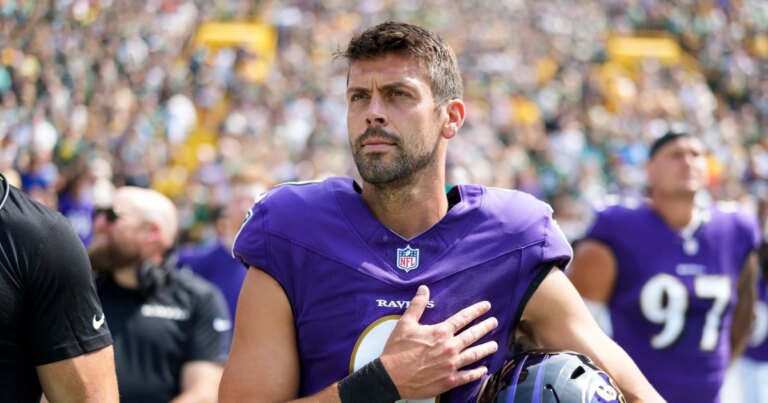
Here, among the high-end golf courses and desert estates with breathtaking mountain views, the competition between Democrat Amish Shah – an emergency room doctor who narrowly lost the seat in 2024 – and Republican Jay Feely – a former NFL kicker backed by Trump – could help determine control of the House in November.
Since Trump’s election a decade ago, Republicans’ hold on the district has slipped, though the party still maintains a voter registration advantage. The seat is open, after Republican congressman David Schweikert opted to not seek a ninth term.
“These are your McCain-type voters,” said Matt Grodsky, a Democratic political strategist referring to the late Arizona senator and 2008 Republican presidential nominee John McCain. They’re business owners, hold college degrees and relatively tuned in to politics.
Given the current dissatisfaction with the Trump agenda and no incumbent with built-in name ID, Grodsky said circumstances are ripe for a change in this one-time Republican stronghold.
If there’s going to be a swing, it should be this cycle.
You can read Mary Jo Pitzl’s dispatch here:
Will ‘prairie populism’ defeat Republicans in the midterms? – podcast
Adam Hamilton in Kansas, Dan Osborn in Nebraska, Joshua Turek in Iowa. They’re all hoping to flip ruby-red states in the midterm elections next Tuesday.
In this episode of our Politics Weekly America podcast, Jonathan Freedland speaks to Rachel Leingang about her reporting across the midwest, where she has charted the renaissance of progressive populism.
US costs of Iran war rise to over $47bn, Pentagon estimates
The US military has spent over $47bn so far on Donald Trump’s war against Iran, more than 25% higher than the defense department’s estimate in July, according to Pentagon data first obtained by Reuters.
The figure includes $29bn in munitions fired by US forces, while the destruction of other weapons platforms, such as fighter jets, has cost $6bn. The figures does not account for damage sustained by US military bases in the region during the last eight months.
The disclosure comes as Republicans scramble to mitigate the political fallout of the deeply unpopular conflict, launched by the US and Israel in February, ahead of next week’s midterm elections that will determine control of Congress for the next two years.
The war’s impact on global energy costs and the cost-of-living crisis in the US has weighed on support for Republican candidates, even in previously reliably red states, and has tanked Trump’s approval ratings.
Trump is reportedly considering further strikes against Iran after the midterms.
How Trump is trying to disrupt the midterms – video explainer
From redrawing electoral maps to installing a sense of uncertainty around the electoral process ahead of the midterms on 3 November, Republicans have deployed several tactics to try to skew the vote in their favor.
As Donald Trump’s popularity continues to drop, it is crucial for him and his administration to retain a majority in Congress or they could face investigations and even impeachment.
In this video explainer, Guardian political reporter Shrai Popat looks at the ways the Republicans have tried and are still trying to influence the election.
Mark Kelly on possible 2028 run: ‘I’m considering it’

Shrai Popat
in Brunswick, Maine
While stumping on behalf of Troy Jackson, the Democratic nominee for US Senate in Maine, Senator Mark Kelly teased a possible run for president in 2028.
“I’m considering it,” the Democratic lawmaker for Arizona said at a campaign event for Maine veterans in Brunswick. “I’ll make a decision after this election sometime.”
Kelly noted the weight of the decision. “You know, I’ve always served this country … usually in the cockpit, strapped into the rocket ship,” he said. “By far, the most important job I’ve ever had is the one I have now,” he said referring to his first full-term as US senator.
“If I screw it up in the rocket ship, it just gets blown up. People get over it in a week. This is different. I mean, this is 350 million people, and people around the world. It’s important that the United States maintains its position of leadership in the world,” Kelly added.
About the Author