Ten years ago, I crossed the Aegean Sea in an overcrowded inflatable boat, hoping only to survive.
I did not leave Syria because I wanted a different life. I left because the life I knew had disappeared. War had taken away my home, interrupted my education and replaced every certainty I had with fear, loss and uncertainty.
Like millions of others before me, I suddenly became something I had never imagined I could become.
A refugee.
This year marks the 75th anniversary of the 1951 Refugee Convention, the international agreement created after one of history’s darkest chapters to ensure that people forced to flee persecution would never again be left without protection.
For many people, it is simply a legal document. For me, it represented protection, hope and a new start.
Without the right to seek asylum, I would never have had the opportunity to rebuild my life in Germany. I would never have competed at two Olympic Games or become a UNHCR Goodwill Ambassador, using my voice to stand alongside people who, like me, were forced to flee.
The Convention did not give me success. It gave me a chance. That distinction matters.
Today, more than 120 million people around the world have been forced from their homes by conflict, violence and persecution. But no one experiences displacement as a statistic. Every number represents a person. A child who should be in school. A parent trying to keep a family together. A young person wondering whether they will ever have the chance to build a future.
Too often, however, refugees are discussed only as numbers, political problems or security challenges.
Rarely are they recognised for who they are: people.
People with professions, talents, ambitions and dreams.
When I became a refugee, I did not stop being a swimmer. I did not stop being a daughter or a sister. Becoming a refugee changed my circumstances, not my identity.
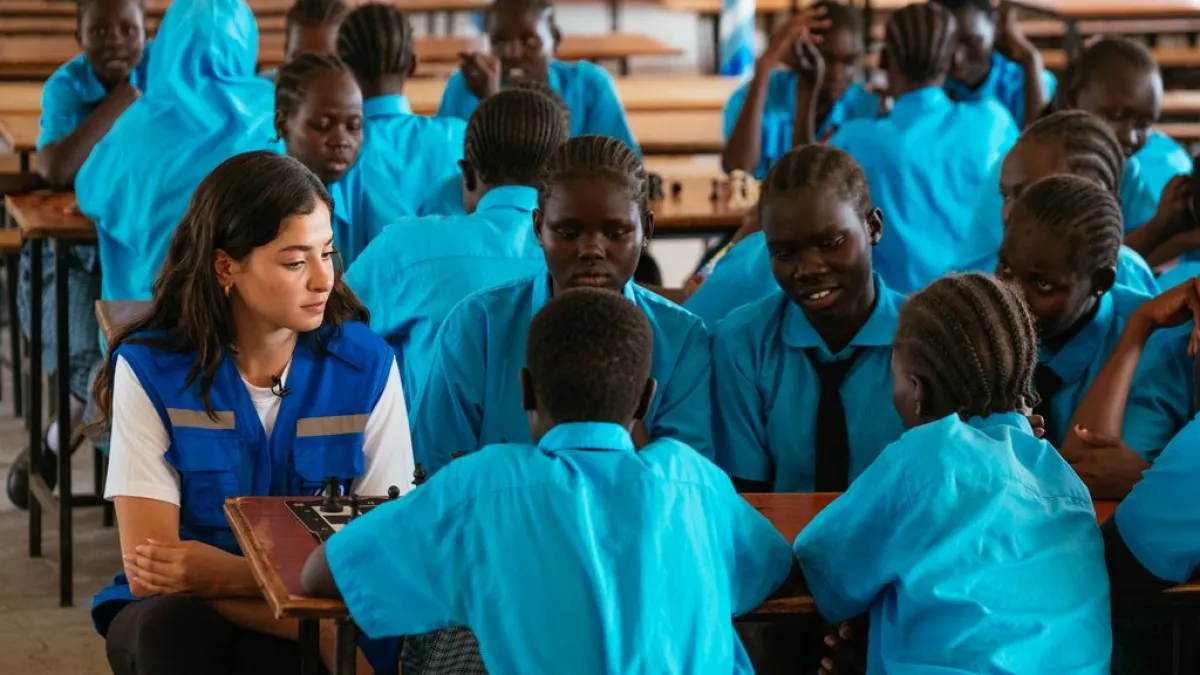
Over the years, my work with UNHCR, the UN Refugee Agency, has shown me this again and again. I have met families who have lost almost everything except hope. I have spoken with children who still dream despite growing up surrounded by conflict. I have visited young athletes who refuse to give up on their future, even when the chances are stacked against them.
What they all have in common is not only extraordinary resilience. It is their extraordinary determination to keep moving forward, to keep believing that tomorrow can be better than today.
But hope is not enough. Protection matters.
The international refugee system is under enormous pressure. Conflicts are lasting longer. New crises continue to emerge. Many countries hosting the largest refugee populations are carrying responsibilities that should be shared much more fairly by the international community. Meanwhile, many people seeking safety encounter closed borders, dangerous journeys and growing hostility.
No one should be forced back into danger.
Everyone should have the opportunity to seek safety.
Every refugee deserves dignity.
These are not simply political ideals. They are promises the world has already made.
In early 2025, I returned to Syria for the first time in a decade. The return was indescribably emotional. I hugged family members I hadn’t seen for years, walked through places that had shaped my childhood and saw both the beauty that remains and the deep scars left by war.
That journey reminded me that returning home is never simply about crossing a border.
People need safety.
They need functioning schools and hospitals.
They need homes, jobs and the confidence that they will not be forced to flee once again.
For many refugees around the world, those conditions still do not exist. That is why the Refugee Convention remains so important today.
Protection is not only about surviving the journey. It is about giving people the opportunity to rebuild their lives afterwards. I often think about how differently my own story could have ended. It could have ended in the Aegean Sea.
Instead, because protection existed, I was able to continue my swimming, represent the Refugee Olympic Team and use my voice to advocate for others who are still waiting for the same opportunity.
Millions of refugees possess the same determination, talent and potential. What they need is the same chance I was given.
Seventy-five years ago, the world made a promise that people forced to flee would not be abandoned.
Seventy-five years later, the Refugee Convention remains one of the clearest expressions of that promise.
In today’s increasingly divided world, protecting it matters more than ever. Because one day, any one of us could depend on the protection it provides.
The views expressed in this article are the author’s own and do not necessarily reflect Al Jazeera’s editorial stance.
About the Author