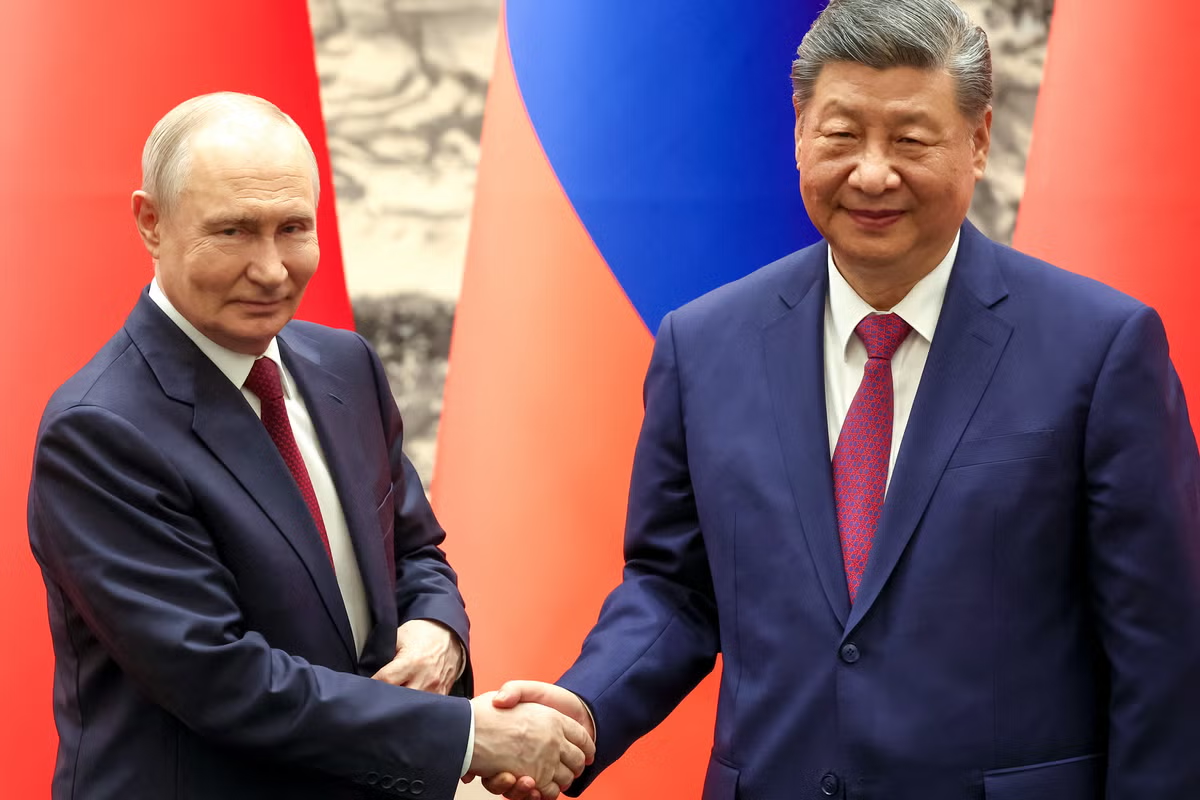
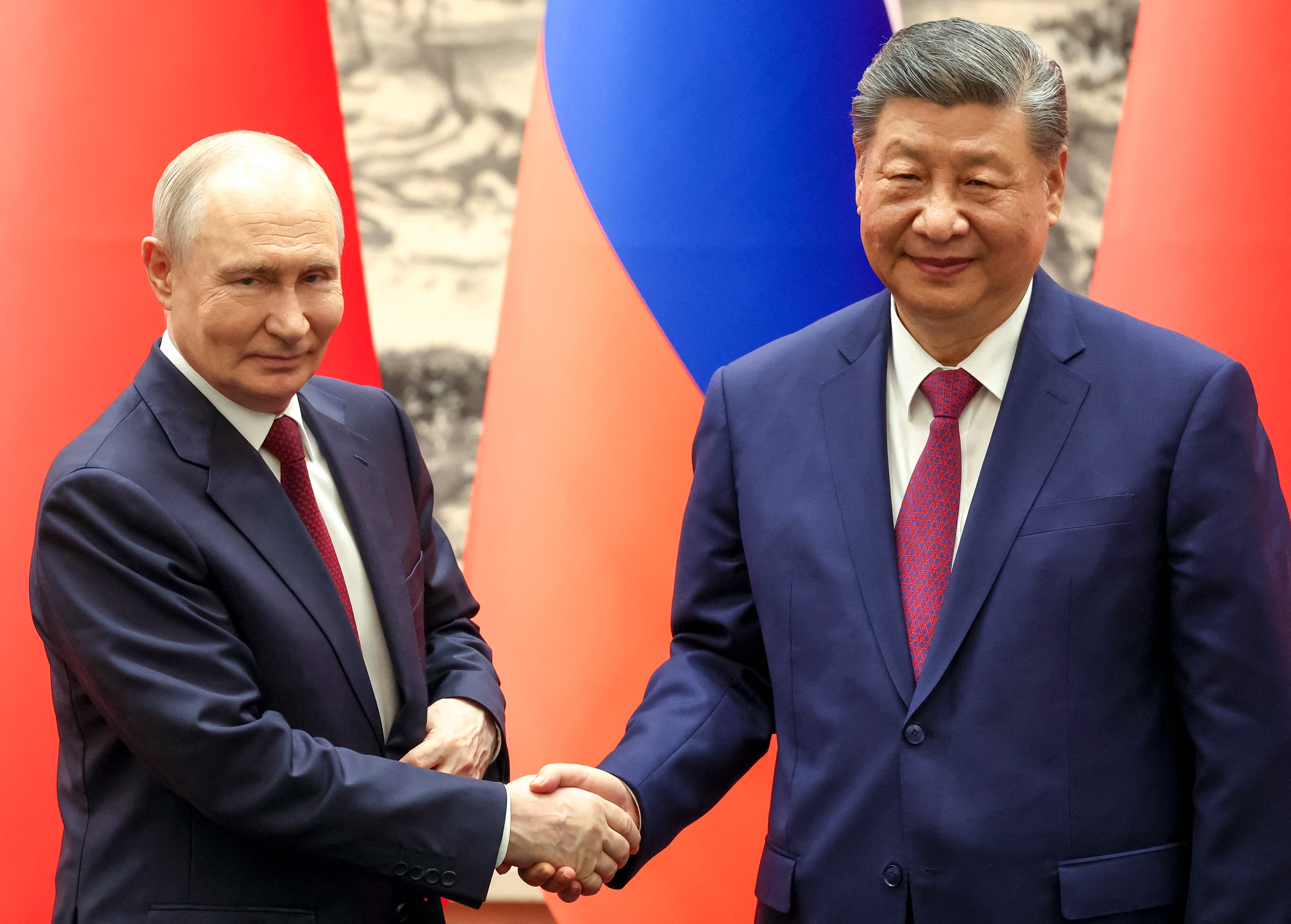
Russia has said that a general understanding was reached with China on their joint Power of Siberia 2 gas pipeline during Vladimir Putin’s summit with Xi Jinping in Beijing – but key details and a timetable for the vast project still needed to be agreed.
China, the world’s largest importer of oil and gas, remains a crucial market for Russian energy products.
The planned Power of Siberia 2 system, spanning 2,600 kilometres, is designed to transport 50 billion cubic metres (bcm) of gas annually to China via Mongolia, originating from Russia’s Arctic Yamal gas fields.
This new pipeline would complement the existing Power of Siberia 1, which delivered 38 bcm of gas from Russia to China last year. During their last meeting in September, Mr Putin and Mr Xi agreed to increase Power of Siberia 1’s capacity to 44 bcm per year.
Russia’s Gazprom, tasked with constructing Power of Siberia 2, initiated a feasibility study in 2020 and announced a legally binding 30-year supply memorandum in September 2025.
The project has faced delays due to disagreements over pricing, with Mr Putin stating in September that gas prices would be based on a market formula, similar to those for Russian shipments to Europe.
The pipeline has gained renewed strategic importance for Russia following sanctions imposed after its invasion of Ukraine, which significantly curtailed its access to European energy markets.
China, however, has offered limited public commentary on the pipeline. When Gazprom announced the memorandum, Beijing did not issue a corresponding statement.
The head of the research unit at China National Petroleum Corp noted last November that such large-scale gas projects typically require at least eight to ten years for construction. Despite this, China’s 15th five-year plan, released in March, indicated a commitment to advancing “early-stage” work on the Power of Siberia 2.
China’s natural gas imports via pipelines have seen consistent growth, reaching 59.4 million tons in 2025 and accounting for approximately 19 per cent of its domestic consumption. This is facilitated by five existing pipelines that bring natural gas from Central Asia, Russia, and Myanmar.
Three of these pipelines originate in Turkmenistan and Uzbekistan, traversing Kazakhstan before entering China’s Xinjiang region, supplying over 40 bcm of natural gas annually.
In the south, the 793-kilometre Myanmar-China Gas Pipeline, operational since 2013, was designed to carry 12 bcm per year.
Additionally, Russia and China are jointly constructing another pipeline with a 10 bcm capacity to transport gas from Russia’s Pacific island of Sakhalin.
About the Author