The colour purple has links to royalty, the Catholic church, Prince, Gordon Brown’s ties and Barney the dinosaur andit now has a new association – autumn 2026.
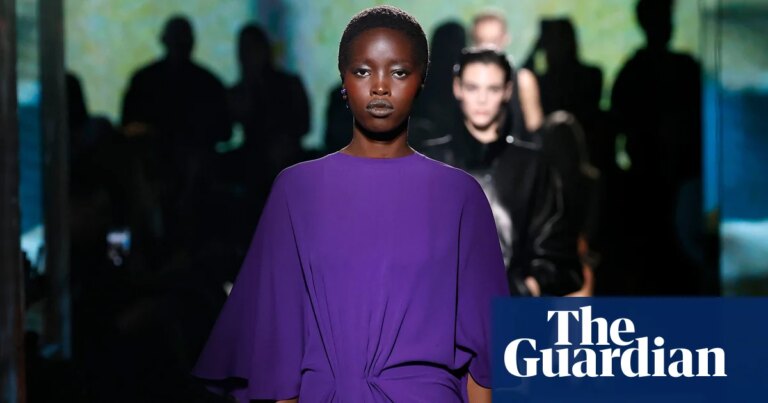
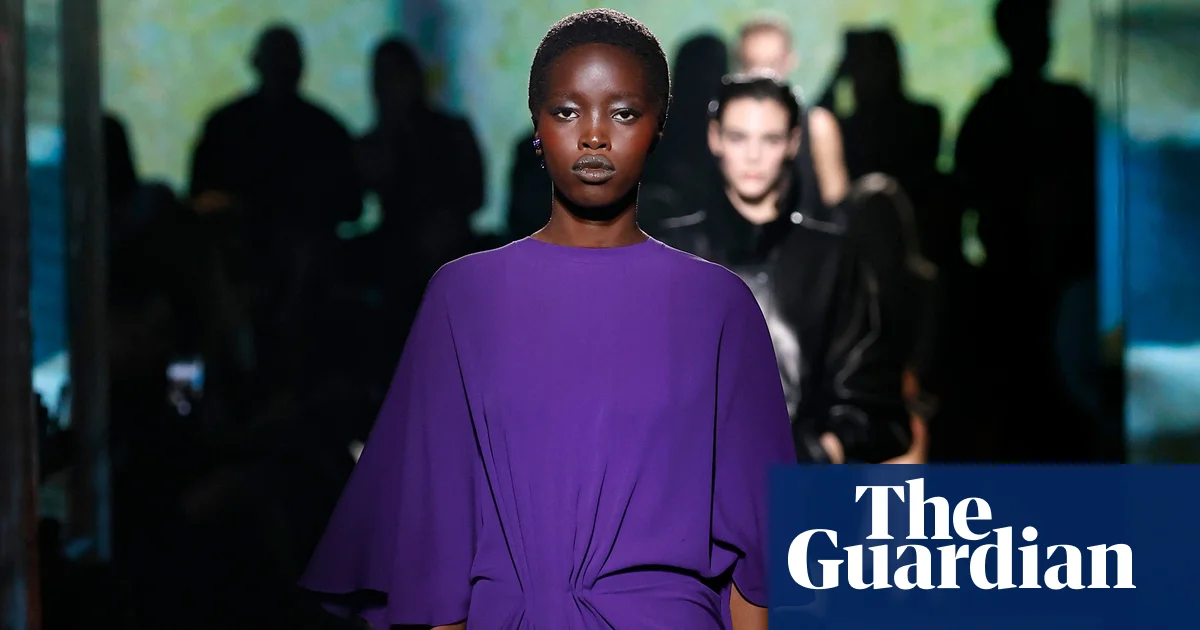
It’s been deemed fashion’s favourite colour having been spotted on autumn/winter catwalks, with Balenciaga, Celine and Valentino showcasing all-purple designs.
Jennifer Lawrence and Zoë Kravitz have also been spotted wearing purple, while Naomi Ackie and Nicola Peltz have worn it on the red carpet. The high street is in on the trend too, with Cos, H&M and Asos selling purple knitwear and accessories.
This season’s shade has been called “royal purple” – a vivid take on the colour, rather than a darker plum or muted lilac. This is a contrast to the neutrals that have dominated fashion in recent years.
In fact, fashion insiders are leaning into the bright theme by often pairing purple with red. Vogue recently declared that autumn’s “coolest colour clash” had arrived.
In 2024, the trend forecasting agency WGSN predicted that the colour – a shade they called “fresh purple” – would be fashionable this autumn. Sara Maggioni, WGSN’s head of womenswear, sees its popularity as part of a wider shift. “[We are seeing] a growing appetite for brighter, more expressive shades,” she says. “This reflects a gradual move away from the restraint of quiet luxury as consumers become more confident in using colour to express their personal style.”
Purple is sometimes seen as a “tricky” colour by designers because it’s hard to ignore. This now may be part of its selling point. “A couple of months ago I loathed it,” Daisy Murray, the fashion commerce editor at Grazia, says. “It was a lightbulb moment for me – I’m a big fan of a bold red, particularly in summer, so a punchy purple suddenly made sense.”
after newsletter promotion
Kassia St Clair, the author of The Secret Lives of Colour, says purple has long been linked to the wealthy and powerful. Tyrian purple is associated with the Romans – when dye was made from the secretions of molluscs near the ancient city of Tyre. However, with the mollusc population declining and the collapse of the Byzantine empire in 1453, the method for making the dye was lost. “But the reputation of purple lingers,” St Clair says.
The problem was solved in 1856 when the chemist William Henry Perkin accidentally created a bright purple liquid while attempting to find a treatment for malaria. The first chemical dye, which Perkin called mauve, began to be produced, and Queen Victoria and her granddaughter Princess Eugenie began to wear it. St Clair says purple became so popular that the satirical magazine Punch said everyone in London had “caught the mauve measles”.
Purple’s associations with the elite remain today. “We do still have a simmering cultural awareness of the associations between purple and power,” says St Clair. “These things persist for an extraordinarily long time despite the fact people don’t know the history.”
Maggioni argues that purple’s popularity is bolstered by a more modern context, too. “[Fresh purple] has a ‘phygital’ quality – it can work across physical settings and virtual worlds,” she says. “Its vivid, slightly otherworldly character suits digital imagery and immersive environments, where colour can be intensified [and] transformed.”
Of course, purple clothing is worn in the real world – with something as prosaic as the weather a factor. “[Red and purple are the] colours of autumn and winter – think heather and rosehips,” says Murray. “There’s something about purple that really suits dark evenings,” adds St Clair. “It’s hard to imagine it in beautiful spring light.”
About the Author