Want to bookmark your favourite articles and stories to read or reference later? Start your Independent Membership today.
Already a member?
Log in
A Pakistani astronaut is set to join the crew of China’s Shenzhou 24 spacecraft on a mission that would make him the first foreign national to board Beijing’s space station, state media reported on Saturday.
The astronaut, backed by the Pakistani national space agency, Space and Upper Atmosphere Research Commission (SUPARCO), would complete a short on-orbit flight and then return to Earth aboard the Shenzhou 23 spacecraft, China’s official news agency Xinhua reported.
The mission would mark the first joint flight involving Chinese and foreign astronauts in the history of China’s crewed space program, it said.
Beijing is yet to confirm the launch date.
Earlier this year, Xinhua reported that two Pakistani candidates, Muhammad Zeeshan Ali and Khurram Daud, started their training alongside their Chinese counterparts, and the plan was that one of them would be selected as a payload specialist for a short-term spaceflight mission.
The two were reportedly chosen after a rigorous three-stage selection and assessment process, including operational exercises and intensive Chinese language lessons.
They have spent months training at the China Astronaut Research and Training Centre in Beijing, a Pakistani space agency official told Reuters.
While the training focused on developing hands-on operational capabilities, it also involved “intensive Chinese language instruction”, it said.
The upcoming flight is part of an agreement signed by China and Pakistan in February 2025.
SUPARCO has officially signed an agreement with the China National Space Administration (CNSA) to deploy its very first lunar rover, named Jinnah-1.
The 35-kilogram rover, equipped with special scientific instruments, would study the lunar soil, radiation, and plasma properties.
Pakistan currently lacks independent launch vehicles or a crewed spacecraft.
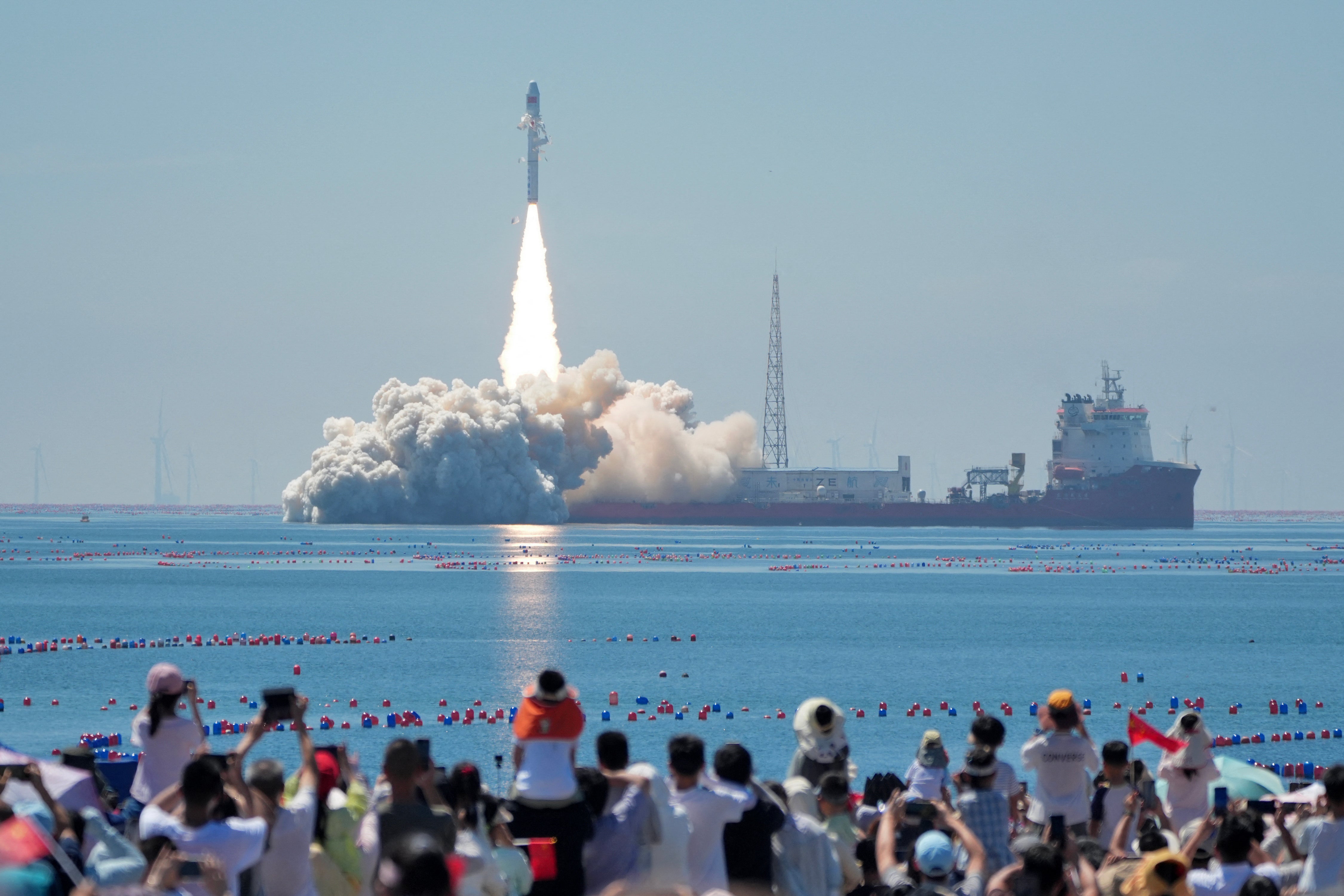
It will fly aboard China’s Chang’e 8 mission slated to launch in 2028 to the lunar south pole, which is sought after for its rugged terrain and suspected water ice.
China is preparing for its first crewed lunar landing by 2030.
With these Chinese-led missions, Beijing aims to build a permanent robotic and human base on the Moon by 2035.
The US is seen as China’s top space rival, with Nasa aiming to land astronauts on the lunar surface in 2028.
About the Author