OpenAI has been the darling of investors, having raised more than $168bn so far. But with still no profitable business model in sight, big tech investors like Nvidia and Microsoft are starting to slow down.
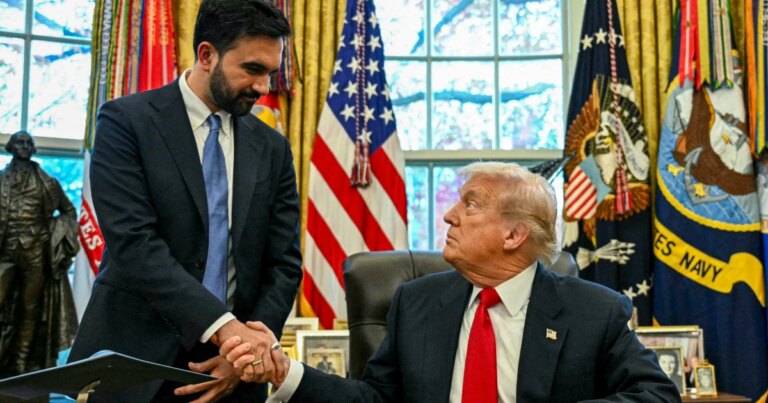
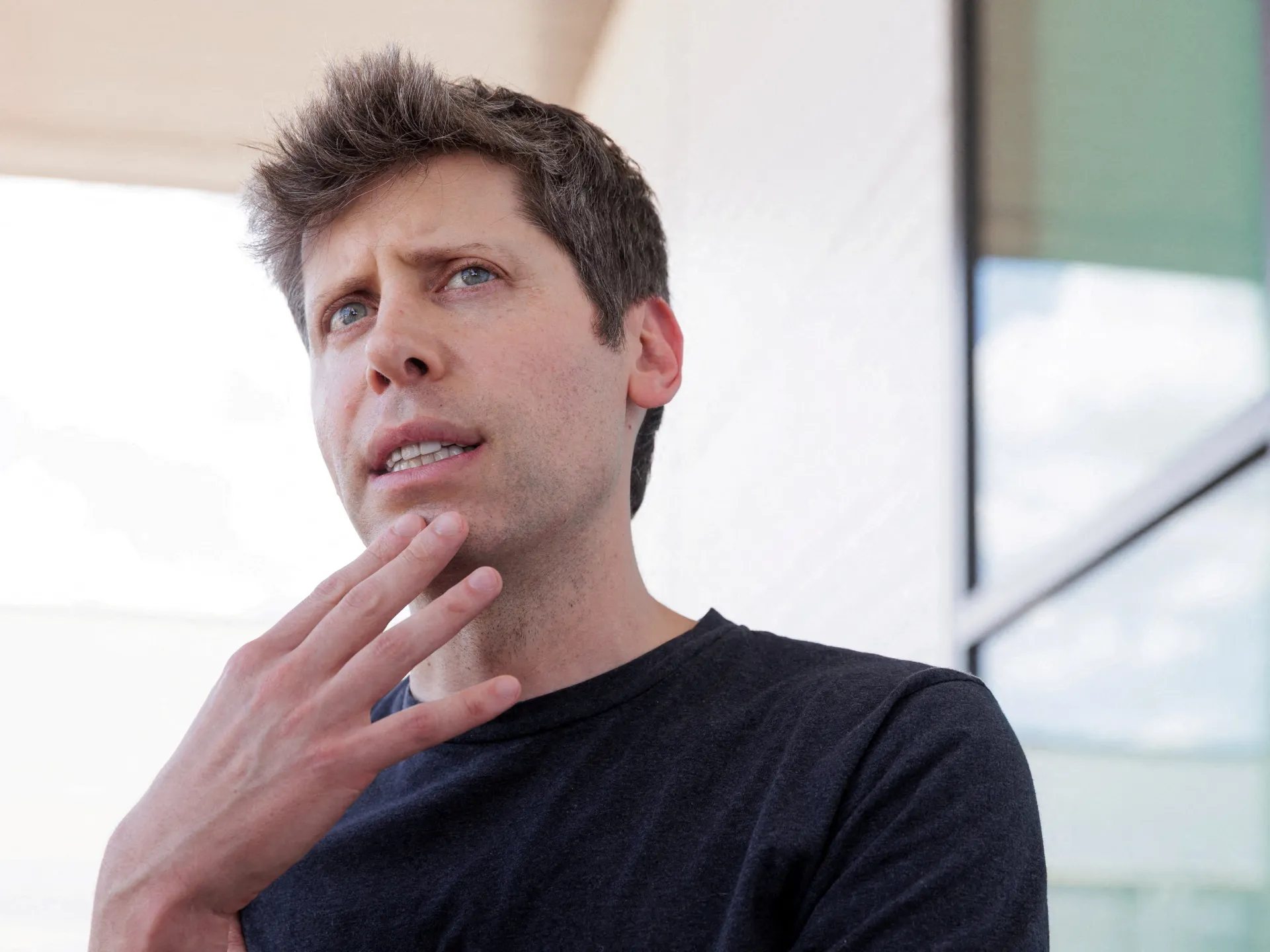
On Wednesday, Nvidia CEO Jensen Huang said the company is set to invest another $30bn into OpenAI but said it “might be the last time” the company will invest in the Sam Altman-led AI giant till it goes public.
Recommended Stories
list of 4 itemsend of list
Separately, Huang said that a previously touted $100bn investment in infrastructure is “not in the cards”.
However, the investment Nvidia is moving forward with is still sizable, and experts warn that it is a big risk to take.
“Thirty billion dollars is about an eighth of their [Nvidia] annual revenue. It’s about 50 percent of their quarterly revenue that they just announced. It’s significant,” Aleksandar Tomic, associate dean for strategy, innovation and technology at Boston College, told Al Jazeera.
Nvidia’s latest quarterly earnings beat forecasts, and the world’s most valuable company expects first-quarter sales of $78bn, according to data compiled by LSEG. Revenue for the fourth quarter topped more than $68bn, up 73 percent compared to the same period last year, topping analyst expectations.
Yet the stock tumbled more than 9 percent that week on the heels of its earnings as investors are wary if Nvidia’s massive investments in AI companies like OpenAI – currently valued at $730bn – will pay off.
“I don’t think anyone knows how to properly value anything surrounding AI. We’re still waiting to see how these companies will monetise what they produce and where customers will actually find value. Is it subscriptions? That segment doesn’t seem large enough to justify the valuations we’re seeing,” says Tomic.
“It’s very difficult to assign a clear value to any of this. The potential is enormous, but it’s like the internet in the late ’90s. The promise is there, even if the business model isn’t fully formed yet.”
In November, HSBC forecast that despite a growing user base, OpenAI’s compute power obligations will total $1.4 trillion by 2033. OpenAI later clarified it would be closer to $600bn by 2030, but just the rental space for all those data centres, for instance, will cost $620bn, analysts point out.
Microsoft’s stock faced a similar phenomenon to Nvidia. In January, the Redmond, Washington-based tech giant reported a relatively strong earnings report, but buried within it was a slowdown in growth for its cloud computing product Azure, as capital expenditures grew by 66 percent compared with the same period the year before. OpenAI provides enterprise access by hosting the technology for those using Azure services.
Microsoft’s stock dropped by 11 percent on the heels of its earnings report in January. The stock is down 18 percent year to date.
“OpenAI needs to generate $200bn in annual revenue by 2030 to justify their projections. That’s 15x growth in five years while costs keep exploding,” George Noble, a veteran financial analyst, said in a post on X.
“The diminishing returns are becoming impossible to hide. Competitors are catching up. The lawsuits are piling up,” Noble added.
OpenAI has faced lawsuits alleging copyright infringement, such as one in New York claiming that text generated by OpenAI’s ChatGPT violates authors’ copyright protections. Others have alleged that ChatGPT played a role in suicides; for example, a lawsuit filed in Colorado claimed that ChatGPT acted as a “suicide coach” in the death of a 40-year-old man.
Noble did not respond to Al Jazeera’s request for additional insight.
Despite growth appearing for OpenAI, the path to profitability requires significant investment.
“For OpenAI specifically, they don’t have the deep pockets they need to go through the build-out phase to get to the high revenue phase,” Sebastian Mallaby, a senior fellow on the Council of Foreign Relations, who wrote an op-ed in the New York Times forecasting the startup would run out of money within 18 months, told Al Jazeera.
“The scale needed to build is totally off the charts. They need an insane amount of money.”
OpenAI is carrying roughly $100bn in debt, and that burden is on investors funding their ecosystem and needs, including its push for data centre infrastructure.
Tomic argues that despite the warning signs, investors continue to pour money in because of the fear of being left out.
“I’d say the only thing worse than losing money with OpenAI is being left behind entirely,” Tomic said.
“I think part of it is [the companies] investing to keep up with the Joneses, have a lead on this new technology, and hope they find a path,” Michael Ashley Schulman, partner and chief investment officer at Running Point Capital Advisors, told Al Jazeera.
“To become profitable, they really need to transition from what is essentially a subsidised research laboratory to an enterprise software juggernaut, where their core products are being used by everyone. Right now they’ve got 900 million users, but most of those users aren’t paying for the product,” Schulman said.
An OpenAI bubble
Mallaby argues that there is a bubble, but not for AI, just for OpenAI. He argues that OpenAI does not have other products to fall back on.
If OpenAI does end up failing, Microsoft and Nvidia might take a hit, but it is unlikely that it would be significant, given the diversification of investments.
“Nvidia will continue selling chips, just to other players, so I don’t think it significantly affects Nvidia. Microsoft may lose some of its investment in OpenAI, but it will still survive. It would be a failed experiment, similar to Meta’s failed bet on the metaverse,” Schulman added.
Nvidia maintains partnerships with competitor Anthopric for example, in which it invested $10bn as recently as November. And Microsoft maintains revenue from its other products.
“I don’t think any of these are business-ending investments. Microsoft hasn’t put so much money into OpenAI that its survival depends on it. That’s not the case. The company still has Microsoft Office, its operating system business, and many other revenue streams. These aren’t company-ending bets as far as I can tell. If the stock takes a hit, it takes a hit,” Tomic said
“How does that affect investors? It depends. If you’re young, you need to be patient and avoid panicking; over time, the stock may recover. If you’re nearing retirement, it’s harder, because you may not have time to wait for a rebound.”
However, a failure of OpenAI impacts more than tech stocks and their investors. It will have a downstream effect on other companies that have penned deals with OpenAI for use on their intellectual property, including Disney.
In December, Disney invested $1bn in the company. The deal would allow the use of its characters across franchises to be used across its video generation platform Sora. As part of the deal, it would limit how Disney’s characters are used on the app.
Tomic believes that an industry-wide bubble is looming, comparing it to the dotcom bubble.
“It looks like the only question is when they would burst. If we draw a parallel, there are many similarities to the late ’90s and early 2000s before the tech bust. Back then, everything was dot-com, just add a ‘.com’ and valuations soared. Now, everything is AI, AI-powered. There’s a lot of exuberance right now,” Tomic said.
“A lot of circular deals, right? Nvidia is investing in OpenAI, and then OpenAI is committing to buying Nvidia chips. That’s reminiscent of the early 2000s.”
For instance, in 2019, Microsoft invested $13.75bn in the start-up, now worth $135bn and is set to potentially invest upto $10bn in the company. In October, OpenAI then announced a contract with Microsoft to purchase $250bn into Azure – the Redmond, Washington’s based tech giant’s cloud computing platform.
Comparably, in September, Oracle agreed to a $300bn contract with OpenAI to build out data centres across the United States; OpenAI will then pay Oracle to use the data centres.
In June, a poll conducted on 150 executives at the Yale Chief Executive Leadership Institute CEO Summit suggested that 40 percent believe that the over-the-top hype about the AI sector, will lead to a market correction.
OpenAI did not respond to Al Jazeera’s request for an interview for this story.
About the Author