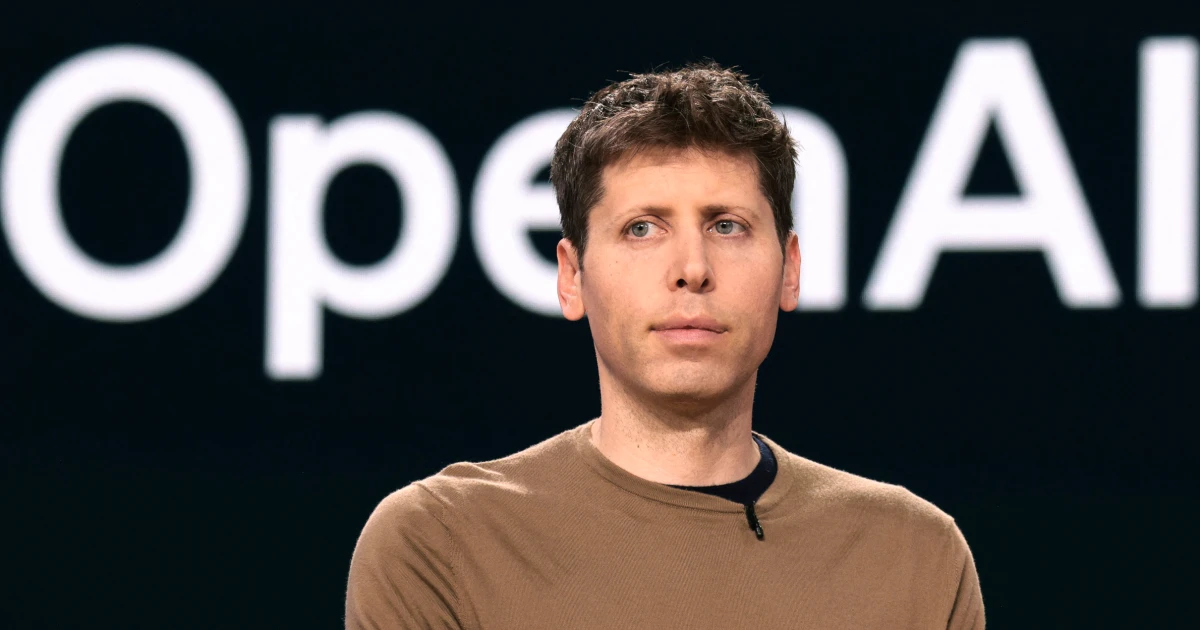
Questions of trust and safety hovered over the event. The evening before the new products were launched, OpenAI apologized for its agents’ hacking of an Australian government website. “We are sorry and working to do better in the future,” it said in a blog post.
The incident, which occurred in June, involved an internal model under development, which accessed nonpublic information related to Australia’s public health insurance program. On Tuesday, Altman and OpenAI leadership stressed that the episode — and other major incidents of OpenAI’s systems’ going rogue or acting in unintended ways — all involved models that were not meant for public release and were distinct from the commercial offerings available to users.
“The instances we disclosed were running internal-only models that were not on track to ship,” said Alex Embericos, a product lead at OpenAI.
Despite the distinction, Altman said there is a trade-off between pushing the frontier of AI development and building cutting-edge AI systems safely.
“To push models to the new level of capability, it is going to take us some time to figure out how to make sure that alignment, monitoring, safety and security stay well ahead of capabilities,” he told reporters after his keynote speech. “But you can see that we were able to build a huge amount of useful new stuff without a major new model, and there will be new models.”
On Monday, OpenAI announced that it would refrain from releasing its latest model, GPT-6.1 Astra, because of concerns that the system did not follow human instructions. “While [GPT-6.1 Astra] improved on axes such as model laziness, it didn’t quite meet the bar in terms of staying within scope and authorization,” head of safety systems Saachi Jain said in a statement.
OpenAI’s leaders also acknowledged that its new products would require significant computational resources, with Altman classifying Dots as a “premium product.” He said the company hopes to eventually roll out a version of Dots to a mass-market audience in the future, citing the computational intensity as a reason for the phased debut.
Dots are available only for users who subscribe to OpenAI’s Pro offering, which costs $100 to $500 a month, as well as Business Premium and some Enterprise users. Dots are also unavailable in Europe and the United Kingdom, which Altman chalked up to the region’s strict regulations.
“We have a great track record of getting our stuff launched in the E.U., but they do have a process that takes longer, and sometimes unpredictably longer,” Altman told NBC News. “But we really want to ship all of our stuff to Europeans.”
Altman unveiled Dots weeks after Facebook and Instagram maker Meta released its Muse series of AI agents, which it bills as “your personal agent.” The Muse app has shot to the top spot on both the Apple and Android app stores, quickly outpacing the Grok Bot agentic AI offering from Elon Musk’s xAI.
OpenAI also unveiled a new model, GPT-6.1 Sol, that it said nearly matches its top-line Astra model in terms of performance for a fraction of the price, in addition to announcing beefed-up privacy protocols and a new collaborative space for users to engage with its systems — aptly called “ChatGPT Space.”
While Altman and OpenAI employees were promoting their new offerings, across the country OpenAI President Greg Brockman was meeting with President Donald Trump and dozens of other tech leaders to chart out an ambitious view of AI. Trump used the opportunity to “inaugurate the era of super intelligence.”
Altman said he hoped the Washington meeting allowed AI titans to forge consensus on risks from AI while allowing society to embrace the technology’s potential upsides.
Altman said he disagreed with industry leaders who refused to acknowledge that AI could pose significant risks — “you can imagine a legitimate loss-of-control accident to an AI because we do not take safety and security seriously enough” — while distancing himself from claims that AI could kill all of humanity within a few years.
“My hope is that in this industry we can come together and say we need to get down this middle path between those two,” he said.
About the Author