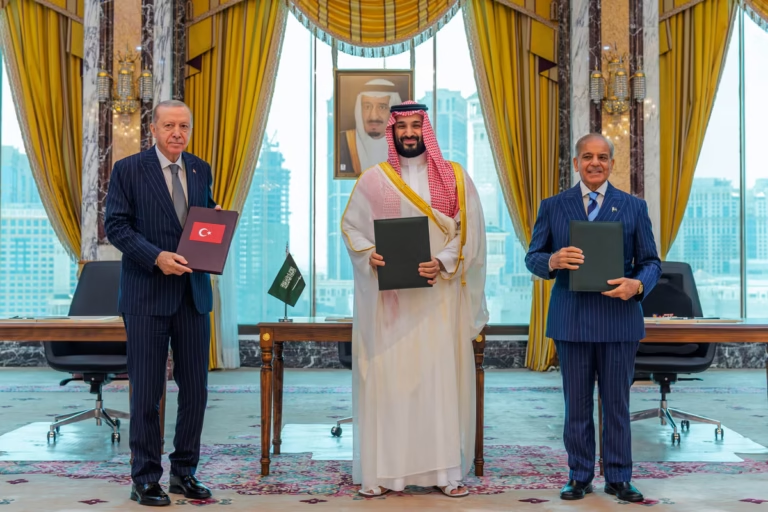
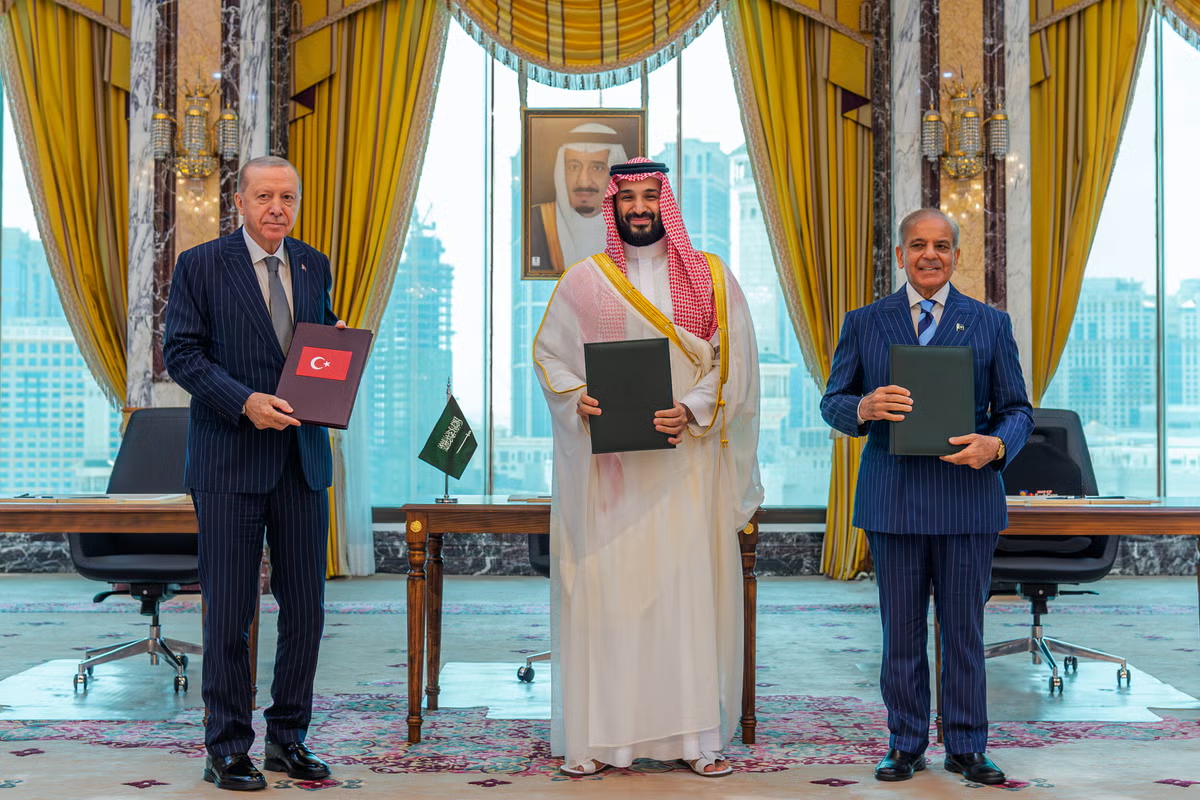
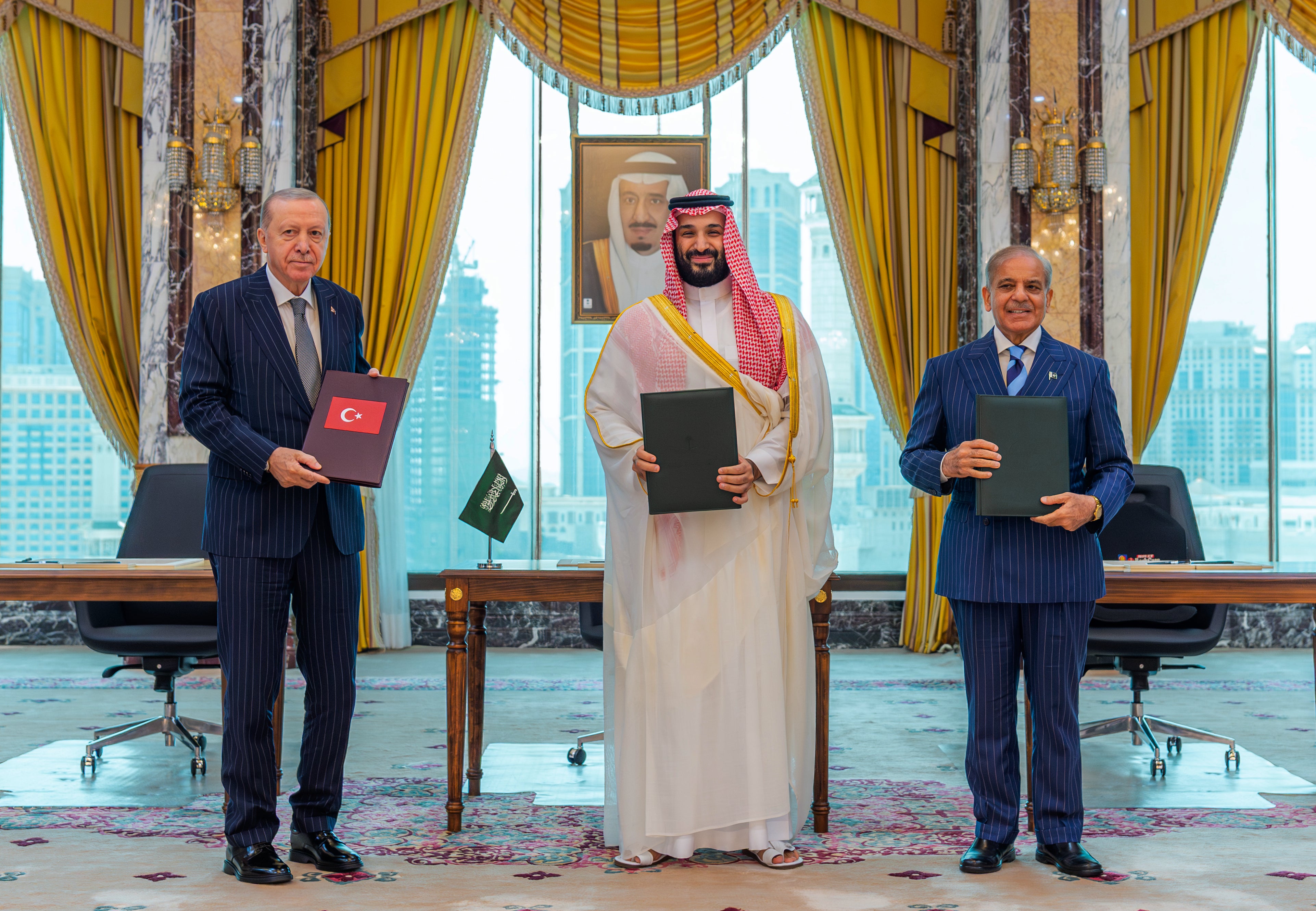
As Donald Trump continued his attacks on Iran earlier this month, a deal that could radically reshape security in the Middle East was quietly being done in Saudi Arabia.
On 7 August, Pakistan, Saudi Arabia and Turkey signed the Mecca Joint Defence agreement, a Nato-style mutual defence pact that states an attack on any one of the group will be considered an attack on all.
The timing is significant. All three countries have been the target of Iranian retaliatory attacks across the Middle East since US-Israeli strikes killed supreme leader Ayatollah Ali Khamenei in February.
Turkey boasts the second largest army in Nato (second only to the US), while Saudi Arabia is the second most oil-rich nation on the planet. Pakistan is a nuclear power that has also acted as a broker between the US and Iran throughout the ongoing conflict.
But although Trump praised the agreement on Sunday as an example of the countries “finally being able to defend themselves in a more meaningful way”, experts say the agreement marks a major shift in the global world order – away from the US.
Deal is ‘a response to US and Israeli military action’
Hugh Lovatt, a senior policy fellow at the EU’s European Council on Foreign Relations, says that the realignment can be seen as “a response to the conflict and a way for some of these actors to try and secure themselves”.
“It is also unavoidable as a response to Israel’s increasing regional aggressiveness.”
Mr Lovatt says that Israeli attacks on Doha in Qatar last year during the country’s war in Gaza “shook the region” and that Turkish and Gulf officials had told him they feared they would be next.
Israel has recently launched strikes in several countries including Syria, Lebanon, Iran, Yemen and Qatar, according to Acled data analysed by Al Jazeera, as well as continuing attacks in Gaza and the occupied West Bank.
Tel Aviv’s “hegemonic ambitions” are increasing threat perceptions on the ground, he adds. Trump has also shown no hesitation in threatening to attack his allies, saying he would “bomb the s**t” out of Oman on Monday.
Trump is ‘unreliable’
“The US remains indispensable for the region, but it is also unpredictable and unreliable,” says Galip Dalay, a senior research fellow for the Middle East and North Africa at Chatham House.
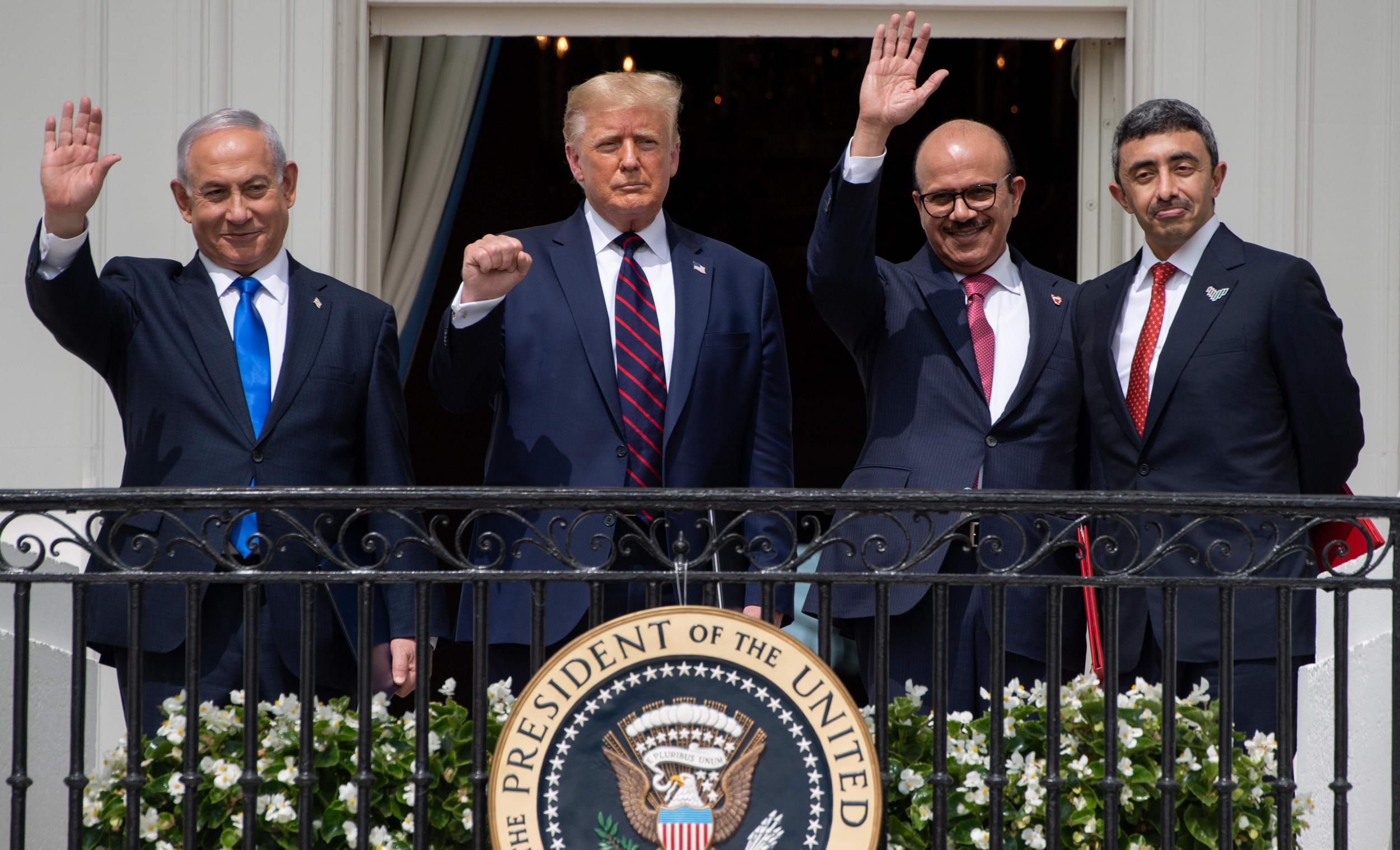
Reflecting on the Trump-brokered Abraham Accords signed in 2020 to normalise relations between Arab states and Israel, he explains that the “central weakness of the US vision is that it did not have a place for the Palestinian question”.
“It did not have a vision for non-Arab state actors. This agreement signals a post-Abrahamic regional reordering and represents the failure of the Abrahamic vision but it is still not inherently anti-Israel.”
All three countries have expressed a reluctance to normalise relations with Tel Aviv, with both Saudi Arabia and Pakistan effectively banning Israeli citizens from entering the country.
But despite this, Lovatt believes that the three countries are seeking to find common ground on security issues rather than outright rejecting the US.
Signatories to the Abraham Accords, including the United Arab Emirates, Bahrain, Morocco and Sudan, have faced backlash in the Arab world for normalising relations with Israel.
While Iran’s proxy network, including Hezbollah in Lebanon, the Houthis in Yemen and Hamas in Palestine, is transparently the most hostile towards the West, experts say the Mecca group represents a middle ground: seeking partnership with Washington but showing suspicion towards Israeli ambitions in the Middle East.
“I would call it a counter-Abraham Accords axis,” Lovatt says, noting that the group is not strictly religious in nature despite its framing as a “Muslim Nato”.
Sharing the burden
However, the US will be eager to position the announcement as an example of countries sharing the burden of defence with less dependence on Washington – in keeping with Trump’s demands.
“You can see quite clearly that Turkey and Saudi Arabia are rising middle powers and now these aspiring regional powers are trying to influence the geopolitical order in the Middle East to their advantage,” says Lovatt.
“But from a rational US strategic viewpoint, this is not a threat to US regional ambitions. If they had partnered with Russia or China, it would be different.
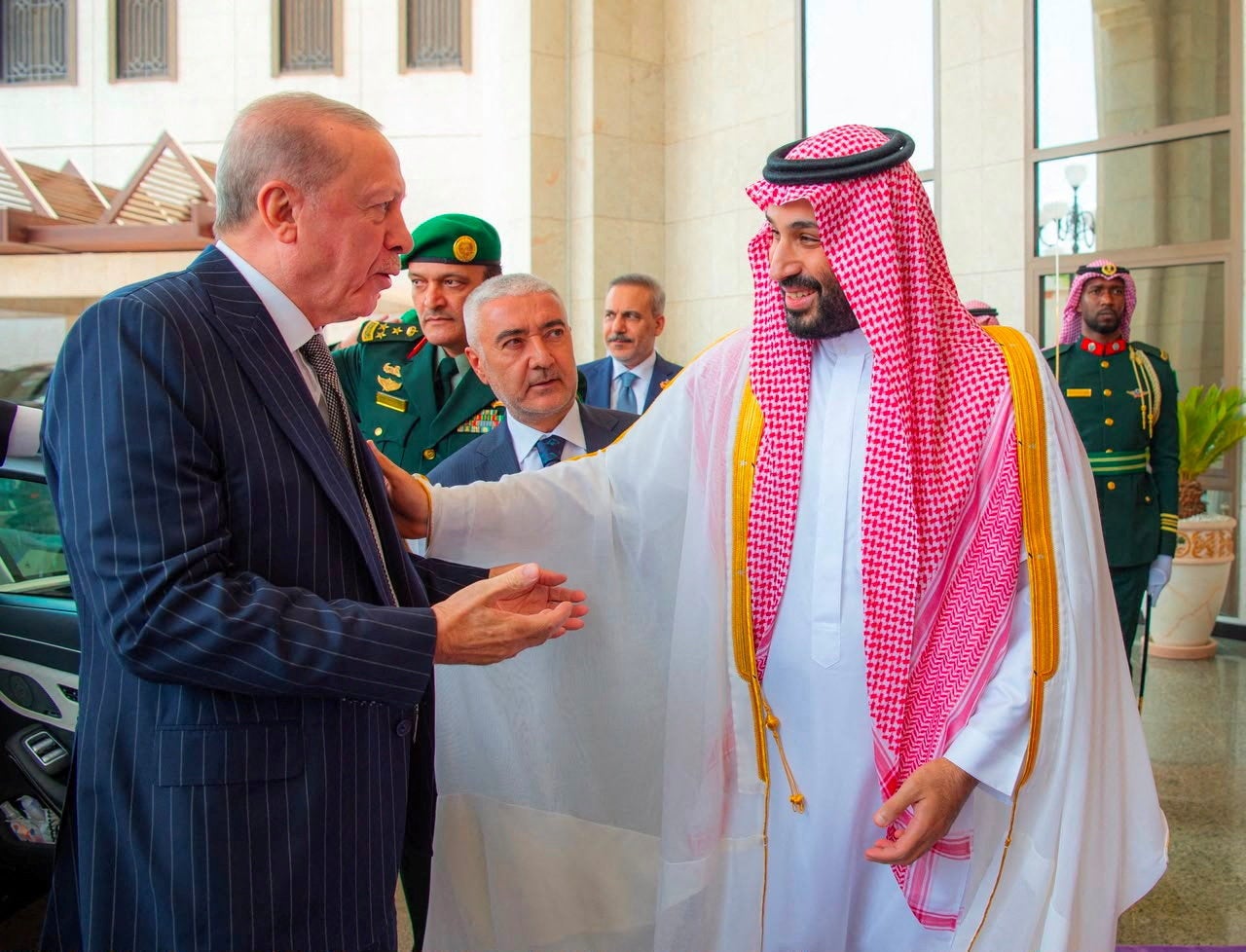
“This is an intra-regional alignment, and all three countries have very close relations to the US. They are its partners and allies, so the US is unlikely to see this as a threat.
“You could even make the argument that this plays to US ambitions to encourage regional partners to do more to defend themselves and ensure their own security and defence in terms of burden-sharing”.
However, the close relationship between the US and Israel could affect this thinking if Israel – which hopes to become a Middle Eastern “superpower” itself according to Netanyahu – sees the alliance as a threat to its own ambitions.
It has already made no secret of its hostility towards Turkey, with Netanyahu accusing Ankara of having “aggressive aspirations”. Saudi Arabia could be considered a positive actor in relation to Israel, but there is no guarantee of its future position, he says.
What does the agreement mean in practice?
Although the Houthis have continued to attack Saudi targets in the aftermath of the signing, the pact is yet to be truly tested. After all, Nato’s Article 5 has only ever been triggered once, after the 9/11 attacks in 2001.
Erdogan has directly likened it to the Nato rule and said that the Mecca agreement “applies in a similar way”. He has also said: “This is not limited solely to the Kingdom of Saudis, Turkey, and Pakistan. Other countries may also join us. Egypt too, if it wishes, can join the agreement with these three countries. The doors are open to Egypt.”
Lovatt believes that the alliance could prove most effective in the sphere of diplomacy.
“Nato is more than just some members working together,” he says.
“This alignment has the most value and could be the most impactful in the diplomatic sphere, where these countries act together in pursuit of a common regional vision.”
About the Author