Montreal’s mayor has called for a halt to random police checks as the city’s police force grapples with an internal investigation into racism and racial profiling by 16 officers.
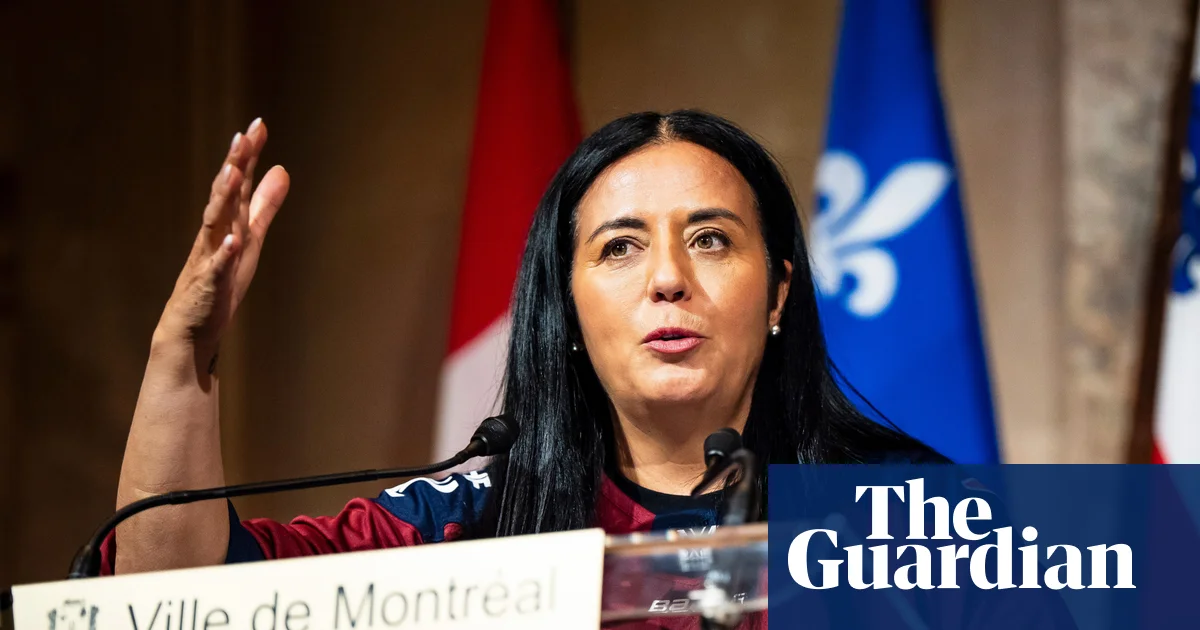
Mayor Soraya Martinez Ferrada told reporters last week that her husband, who is Black, has been repeatedly stopped by police while driving.
“Like many other Black people in our city and the racialized people this happens too many times,” she said. The checks have happened at least five times within the last year for “no reason at all”, she said.
Those revelations followed a late-night press conference from the city’s police chief to announce that more than a dozen officers had been reassigned or relocated while investigators investigate claims that officers – most of whom are young men with less than five years on the force – disproportionately targeted Black and Arab residents. Two more officers have been suspended and two cases have submitted to Quebec’s director of criminal and penal prosecutions to determine whether criminal charges should be laid.
“I was extremely surprised. I didn’t think it was possible in 2026. This is how deeply, deeply hurt I am,” police chief Fady Dagher said, describing the officers as “tarnishing our uniform”.
Those officers are accused of cutting pieces of dreadlocks from people during police stops, as well as issuing tickets to people solely on the basis of their ethnic background.
Quebec’s new premier, Christine Fréchette, called the alleged behavior by officers “unacceptable”. But, like her predecessor, Fréchette, pushed back on the idea that the behavior reflects the presence of systemic racism.
“For me, it’s a small group that’s behind these organized, repeated action,” she said of the 16 officers under investigation. “That’s not systemic racism. If it’s a small group, it’s not necessarily systemic. For me, systemic means on a larger scale.”
But allegations of racial profiling and systemic racism within the police force are nothing new for the province. In 2024, a Quebec judge awarded damages in a class-action lawsuit initiated by residents who were racially profiled and arrested without justification by Montreal police. She also awarded compensation for “physically racialized people” whose rights were violated by police but the evidence wasn’t recorded.
In her ruling, the judge found that members of racialized groups are over-represented in police stop and the “the plausible explanation for this disparity is the racial profiling that characterizes many arrests”.
And in 2021, a Quebec coroner concluded that an Indigenous woman who was taunted by nursing staff as she lay dying in a Quebec hospital would probably be alive today if she were white, calling her treatment an “undeniable” example of systemic racism.
Montreal’s mayor says the moratorium on random checks would be a good “first step” to repair relations those affected by police behavior.
“I think it is also a way to rebuild trust with citizens and it’s something that I think the police should be looking into,” Martinez Ferrada said, adding that body cameras are crucial to combating future instances. “This will not solve the problem. This is one tool that we have in our toolbox, but it will not solve the whole thing.”
About the Author