Want to bookmark your favourite articles and stories to read or reference later? Start your Independent Membership today.
Already a member?
Log in
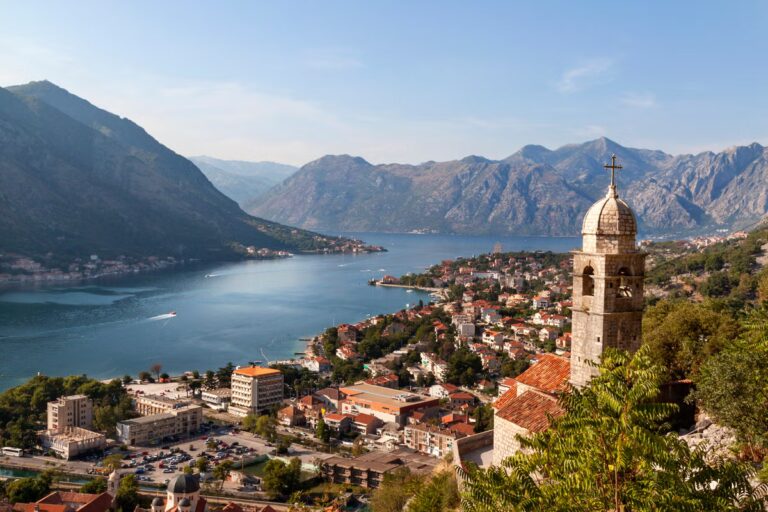
The European Union could conclude accession negotiations with Montenegro by the end of this year, the European Commission said on Wednesday.
“For the first time since 2011, when the EU closed accession negotiations with Croatia, the EU is in a position to soon close accession negotiations with another candidate country, Montenegro,” the EU’s executive said in its annual enlargement policy report.
“This is testament to Montenegro’s sustained efforts to advance on the European path and implement the reforms needed to turn EU membership into reality,” it said.
It added that “it considers that accession negotiations could realistically be closed by the end of 2026” and an accession treaty could be signed by June 2027.
Montenegro, with a population of just 630,000, aims to become the 28th member of the EU in 2028.
Joining the bloc requires all current 27 member countries to ratify an accession treaty.
“In the weeks and months ahead, it will be essential that Montenegro maintains a steady focus on completing the preparations for EU membership, sustaining the adopted reforms and ensuring continuous cross-party support to its EU path,” the Commission said.
Earlier this year, President Jakov Milatovic expressed confidence that Montenegro was on track to fulfil its ambitious goal by 2028.
“We can achieve it. I am optimistic about it,” he said from his presidential office in the capital, Podgorica.
The EU sees Montenegro as the candidate country that is closest to membership, with Albania, Ukraine and Moldova also considered frontrunners.
The Western Balkan nations of Bosnia-Herzegovina, North Macedonia, Serbia and Kosovo are also at different stages of the process.
In its assessment of Albania’s progress, the Commission said: “cross-party cooperation and inclusive and constructive dialogue in the Parliament and with civil society are needed to move ahead on EU key reforms, in particular in the context of the ongoing largest protests since the country’s democratic transition”.
“Albania needs to continue adopting key reforms to fulfil closing benchmarks across all chapters of negotiations.
“This is important for Albania to meet its ambitious but achievable target of closing negotiations by the end of 2027,” it added.
About the Author