A security dossier reviewed by Spanish media has detailed several threats against Lionel Messi during the 2026 FIFA World Cup, including alleged bomb plots, while Cristiano Ronaldo and referee Francois Letexier were also targeted.
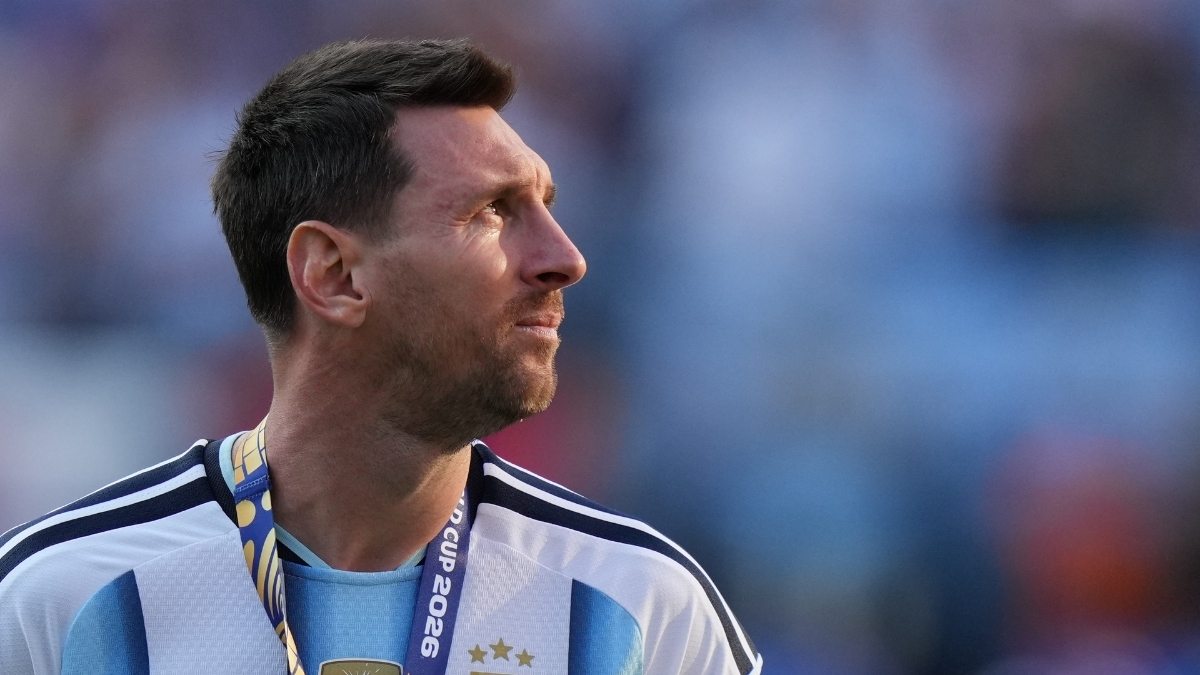
According to reports, Lionel Messi was the most targeted footballer during the 2026 World Cup, with a police dossier documenting multiple security incidents involving the Argentina star, including alleged plans to attack him with explosives.
The details, reported by Spanish media and subsequently cited by several outlets, form part of a wider security operation involving the FBI and the Centre for International Police Cooperation (IPCC). Authorities monitored threats against players, officials, their families and tournament venues throughout the World Cup.
Here is what the reported dossier says about the threats involving Lionel Messi and other major players.
What were the threats against Lionel Messi during the 2026 FIFA World Cup?
One of the most serious incidents reportedly occurred around Argentina’s group-stage meeting with Jordan in Dallas.
The reports state a caller claimed that he and two other people were travelling towards the stadium carrying homemade explosives and an AR-15 rifle. Police were also told that both players and officials were among the intended targets, with Messi as the main target.
A separate threat emerged ahead of Argentina’s match against Egypt in Atlanta.
An X user allegedly posted that they were going to enter the stadium with four bombs attached to their body and attack Messi. This threat prompted heightened security around the venue.
The reported incidents did not indicate that an attack was imminent, but they were serious enough to trigger responses from security agencies.
Stadium searched for bombs after Lionel Messi threat
The security concerns escalated during the Argentina-Egypt fixture after authorities received another report claiming that three bombs had been placed inside bins at the Atlanta stadium.
Explosive specialists, sniffer dogs and K-9 units were then deployed at the venue as a precaution. The search ultimately found no explosives, with the bomb threat turning out to be a false alarm. Nonetheless, the incident highlighted the scale of the security operation surrounding Messi and the players at the tournament.
How did Lionel Messi become such a security concern?
Messi entered the 2026 World Cup as one of the biggest attractions in world football and the captain of the reigning champions.
That status made him particularly visible throughout the tournament, with large crowds and extensive media attention creating additional security challenges for authorities.
The reported dossier covered more than direct threats against players. The wider operation also involved suspected stalking, violent threats and suspicious behaviour involving footballers and their relatives.
Cristiano Ronaldo also targeted
Messi was not the only global superstar to feature in the reported security files. Cristiano Ronaldo was reportedly targeted by people attempting to obtain information about his whereabouts and accommodation with Portugal.
On June 14, a FIFA employee allegedly alerted authorities after noticing a man seeking information about where Ronaldo was staying. Houston police subsequently arrested the man at the hotel at which the Portugal squad was staying.
A separate incident occurred in Toronto, where another person was reportedly detained after attempting to enter a lift with Ronaldo.
Referee Francois Letexier received thousands of threats
Match officials also faced significant abuse during the tournament. French referee François Letexier reportedly received more than 6,000 threatening messages after officiating the controversial Argentina-Egypt match.
Authorities subsequently provided additional protection for Letexier and his family in France, according to the reports. The scale of the threats highlighted that the security challenges at the 2026 FIFA World Cup extended beyond the tournament’s biggest players.
The reported incidents involving Messi, therefore, sit within a wider security picture surrounding this World Cup, rather than being isolated incidents involving the Argentina captain.
For authorities, the challenge was not only to protect football’s biggest stars but also to identify credible threats amid the enormous volume of online abuse, hoaxes, and suspicious activity generated during a tournament of this magnitude.
Story first published: Saturday, August 8, 2026, 18:05 [IST]
About the Author