NEED TO KNOW
-
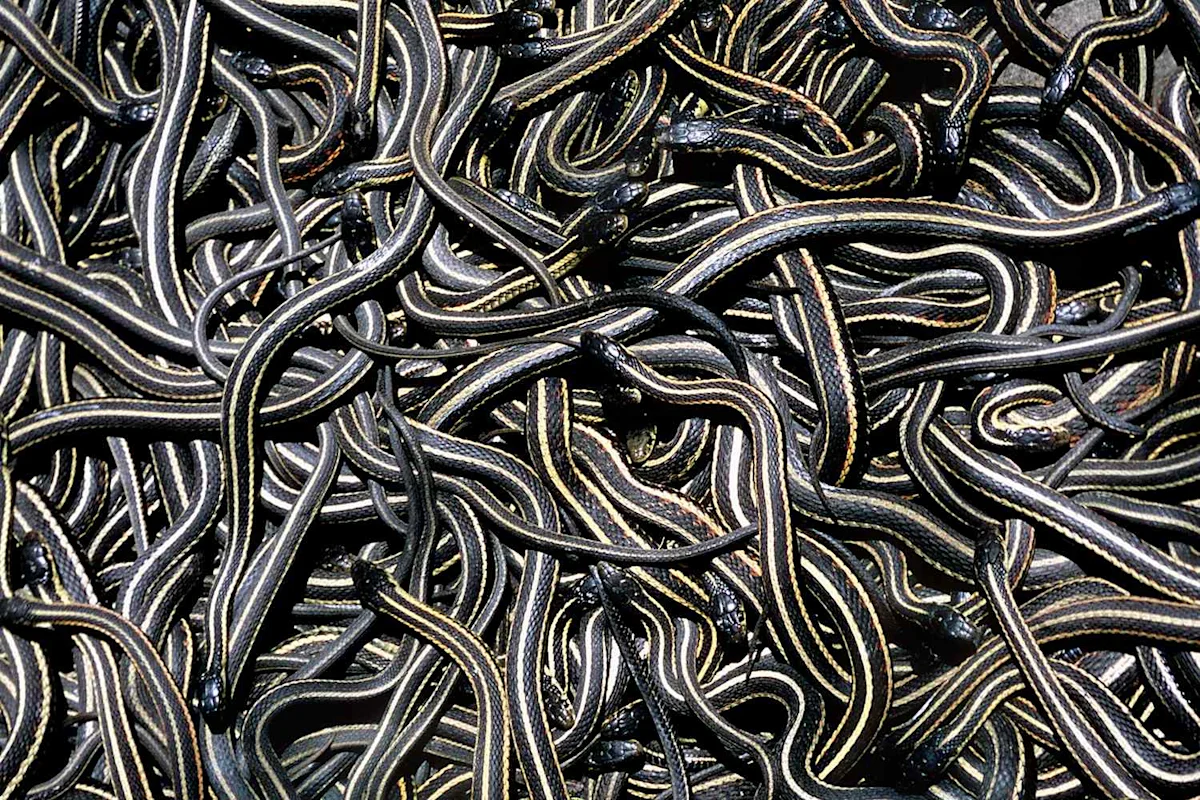
Manitoba, Canada, is home to the world’s largest snake pits, which hold an estimated 100,000 red-sided garter snakes
-
Each spring, visitors to the Narcisse Snake Dens can watch the snakes’ mating ritual, when the snakes surface and form “mating balls.”
-
The non-venomous snakes hibernate in limestone crevasses during winter and emerge for their mating season, which lasts around 1 to 3 weeks
If you ever dreamed about what it’s like to live in a snake den, book a trip to Narcisse in Manitoba, Canada.
The town is home to the world’s largest snake pits, where tens of thousands of non-venomous red-sided garter snakes emerge each spring to wriggle over one another. According to Manitoba’s government website, the snake pits are part of a wildlife management area, called the Narcisse Snake Dens, that is open to the public.
Advertisement
Advertisement
Now is the time to visit for snake fans, as the reptiles are in the midst of their annual mating ritual, which begins with thousands of male garter snakes emerging from their underground winter dens. The males, eager to mate, wait for the female to emerge shortly after them. Once the females surface, the males pounce, forming “mating balls” in which “one female is surrounded by up to one hundred males,” according to the Manitoba government.
Visitors watching snakes at the Narcisse Snake Dens
Credit: Getty
All the action is visible to visitors to the Narcisse Snake Dens, who can observe each of the area’s four dens from observation platforms. The Manitoba government shared on May 7 that “the number of snakes at Narcisse has been increasing and viewing will be good,” with “warm, sunny days are best for viewing snakes.”
The agency added that this intense mating ritual, also known as the world’s largest gathering of snakes, lasts about 1 to 3 weeks. After the mating season concludes, the snakes spread out, so there is far less activity at the dens. In September, the garter snakes begin to return to the dens and stay above ground until the weather gets too cool for them.
The garter snakes survive Manitoba’s severe winters by hibernating in a network of limestone crevasses and caverns below the frost line.
Advertisement
Advertisement
Never miss a story — sign up for PEOPLE’s free daily newsletter to stay up-to-date on the best of what PEOPLE has to offer, from celebrity news to compelling human interest stories.
According to CBC, the garter snakes at the Narcisse Snake Dens emerged later than usual this year due to persistent cold weather.
Raelene Sawatzky-Dyck, one of the Narcisse dens on-site snake experts, told the outlet that there are an estimated 70,000 to 100,000 in the area each spring.
“We think they come back to the same dens, but they’re very small and hard to study. So we’re not 100 percent sure,” Sawatzky-Dyck added.
Read the original article on People
About the Author