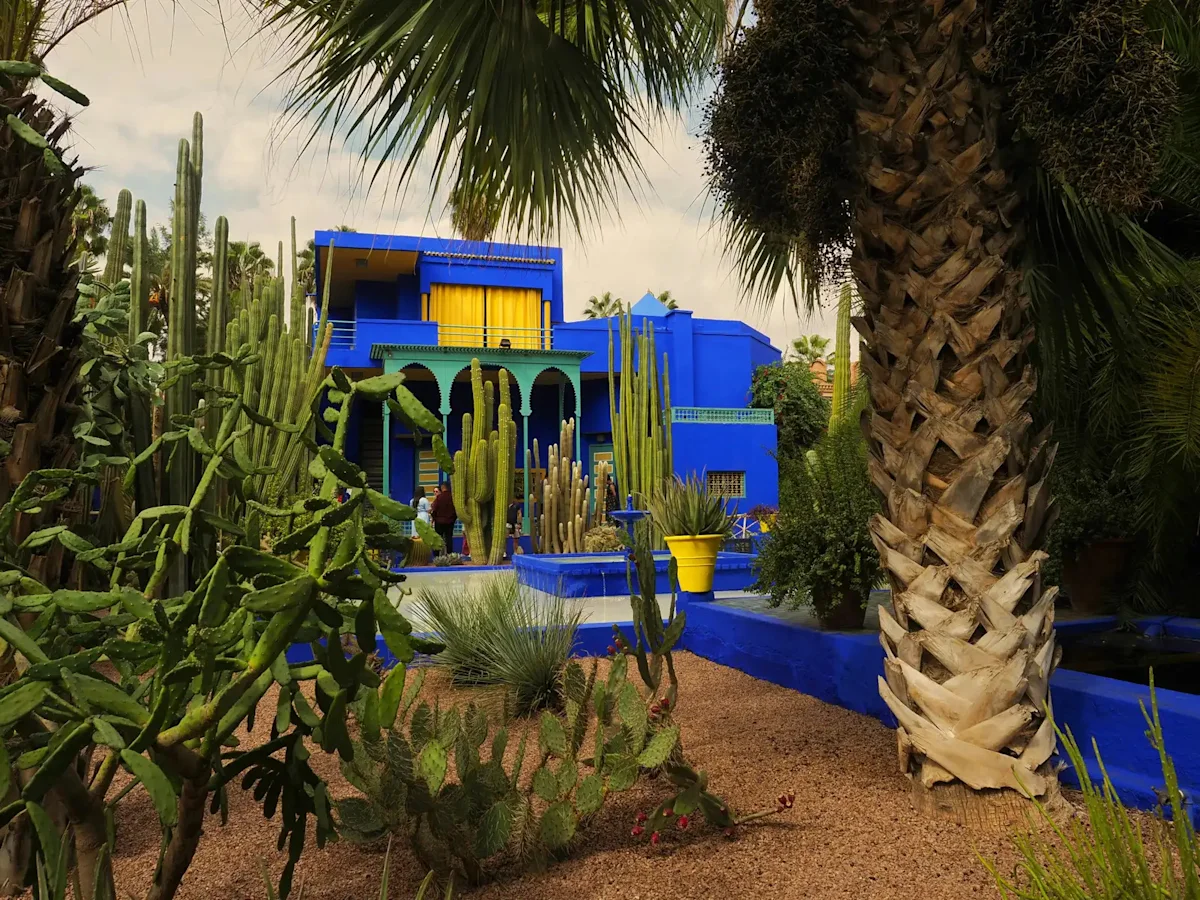
Marrakesh – A short distance from the bustling medina lies a garden that stands apart for its deliberate fusion of painterly vision and botanical diversity. Created over decades by French artist Jacques Majorelle, Jardin Majorelle remains one of the most distinctive green spaces in Morocco. Its cobalt structures, layered plantings, and geometric paths continue to draw visitors seeking both visual impact and horticultural interest.
Origins of a Personal Vision
Jacques Majorelle acquired land on the outskirts of Marrakesh in the early 1920s and began transforming it into a private sanctuary. He worked on the project for nearly forty years, gradually expanding the site while importing plants suited to the arid climate. The result was never intended as a conventional botanical display but rather as an extension of his artistic practice.
Architect Paul Sinoir contributed a modernist studio building in the 1930s that Majorelle painted in a striking shade of blue now known by his name. This color choice, combined with Moorish and Art Deco influences, set the garden apart from traditional Moroccan landscapes. The enclosed walls and winding paths created intimate rooms for plants rather than open vistas.
Signature Elements of Color and Form
The garden’s hardscape relies on bold contrasts. Deep blue walls and accents frame views of green foliage and terracotta paths, while fountains and pools introduce reflective surfaces and sound. These features guide movement through a series of enclosed spaces that feel both structured and organic.
Advertisement
Advertisement
Visitors encounter pergolas draped with vines, shaded seating areas, and sculptural elements that echo the architectural lines. The design avoids symmetry in favor of rhythmic repetition of forms, allowing the eye to move from one plant grouping to the next without abrupt transitions.
Plantings That Span Continents
Majorelle assembled an extensive collection that includes cacti and succulents from the Americas, palms from various regions, and bamboo from Asia. Century-old Washingtonia palms provide vertical structure, while lower layers feature euphorbias, bougainvillea, and water plants around the pools. The selection emphasizes texture, form, and tolerance for intense sunlight and limited water.
Many specimens were chosen for their sculptural qualities rather than seasonal bloom. This approach produces year-round interest through shape and foliage color, with the blue architecture amplifying the visual effect of the greenery. The overall effect is a living composition that changes subtly with light and season yet retains its core character.
Continued Relevance for Gardeners
After Majorelle’s time, the property was preserved and opened more widely to the public. Its combination of strong design framework and diverse plant material offers practical lessons for gardeners working in similar climates. The emphasis on structure, color repetition, and plant form over massed flowers remains influential in contemporary garden planning.
Advertisement
Advertisement
Today the site functions as both a destination and a reference point for those interested in how art and horticulture can reinforce each other. Its compact scale and clear visual language make the principles easy to observe and adapt.
AI Disclaimer: This article was created with the assistance of AI tools and reviewed by a human editor.
The post Jardin Majorelle in Marrakesh: Where Artistic Design Shapes an Exotic Plant Collection appeared first on The Garden Magazine.
About the Author