Want to bookmark your favourite articles and stories to read or reference later? Start your Independent Membership today.
Already a member?
Log in
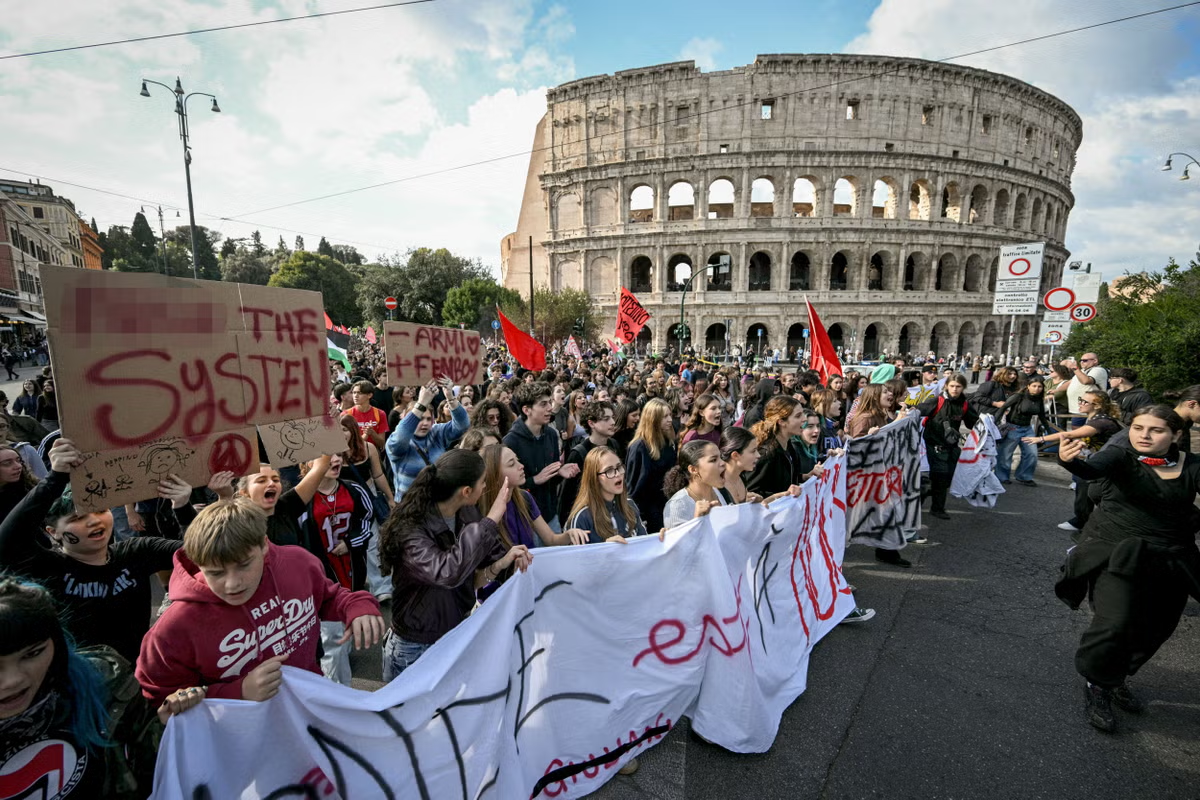
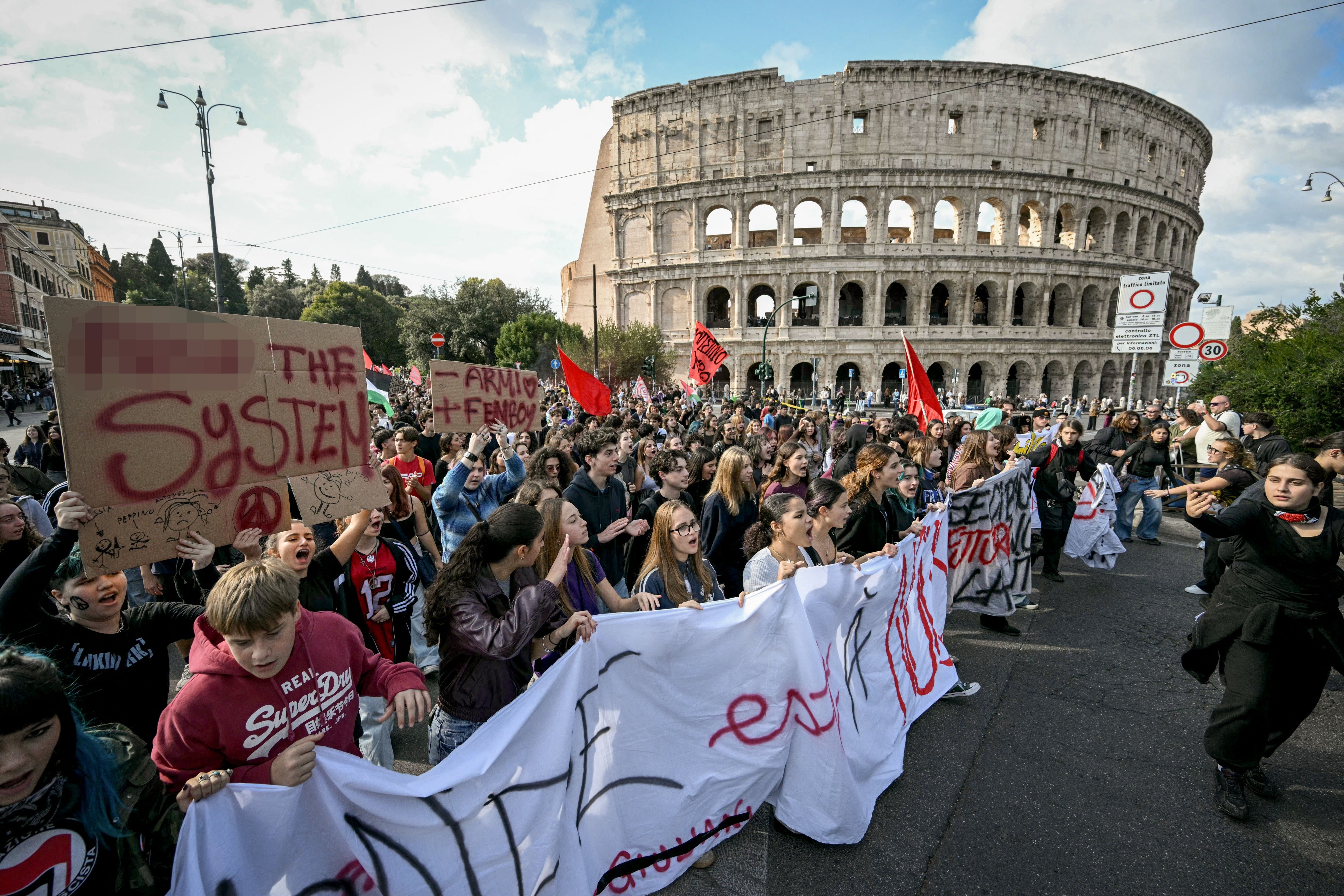
Armoured vehicles were deployed near the Colosseum in Rome on Friday as major protests swept Italy.
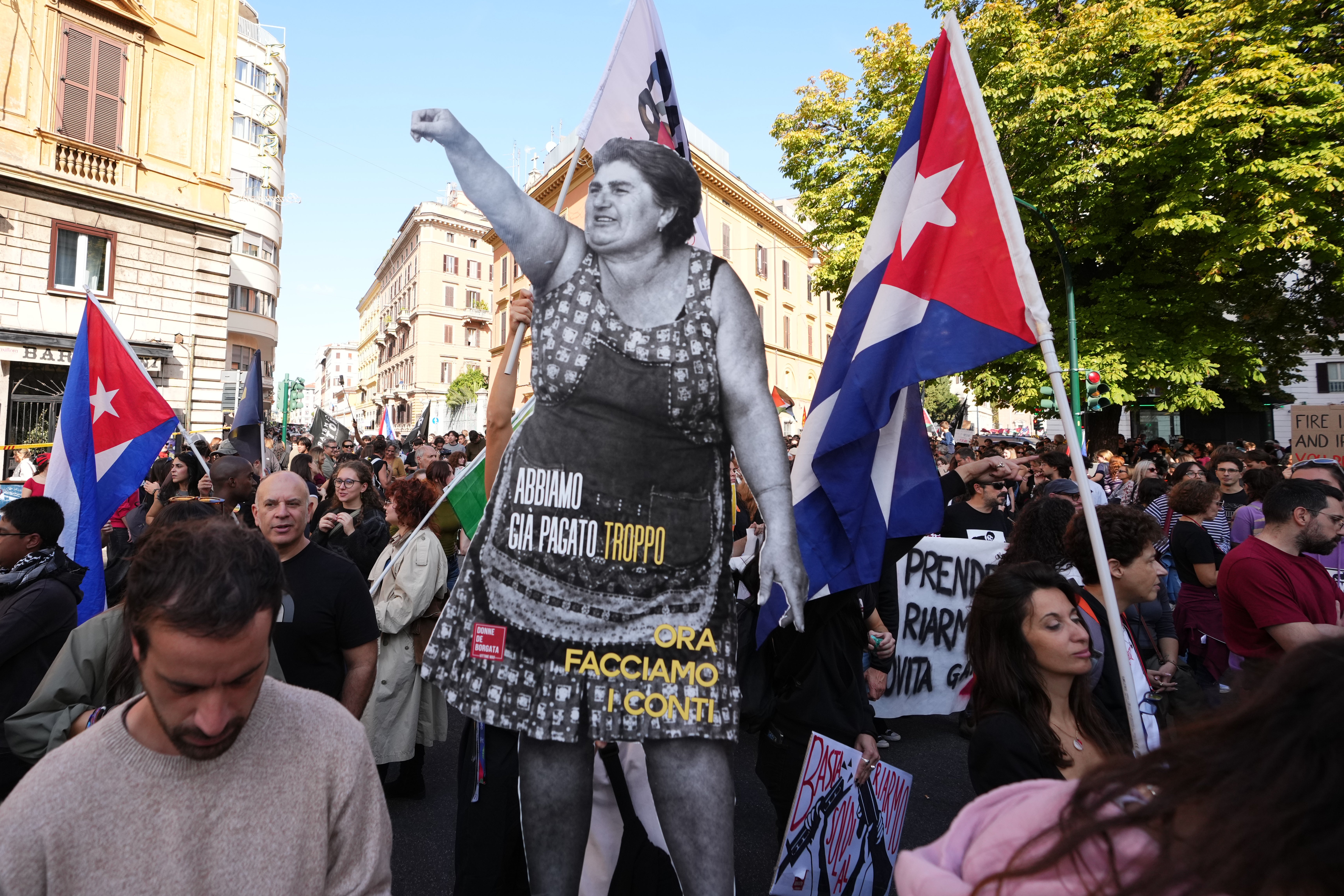
Some 20,000 protesters were expected to march in the Italian capital on Friday morning, as part of wider demonstrations scheduled in more than 50 cities over war and the rising cost of living.
Heavy police trucks rallied to protect a military exhibition taking place at the Circus Maximus, while the nearby Roman amphitheatre was placed under lockdown after some protesters entered last Saturday.
University students were joined by high schoolers and farmers in marches through the historic city centre, with students heard in the crowds chanting: “Every school will be an occupation, every square will be a revolution.”
Hundreds of people also gathered outside Milan Polytechnic to demonstrate over the right to education, the cost of living and concerns over rearmament, compounding major unrest over the last two weeks.
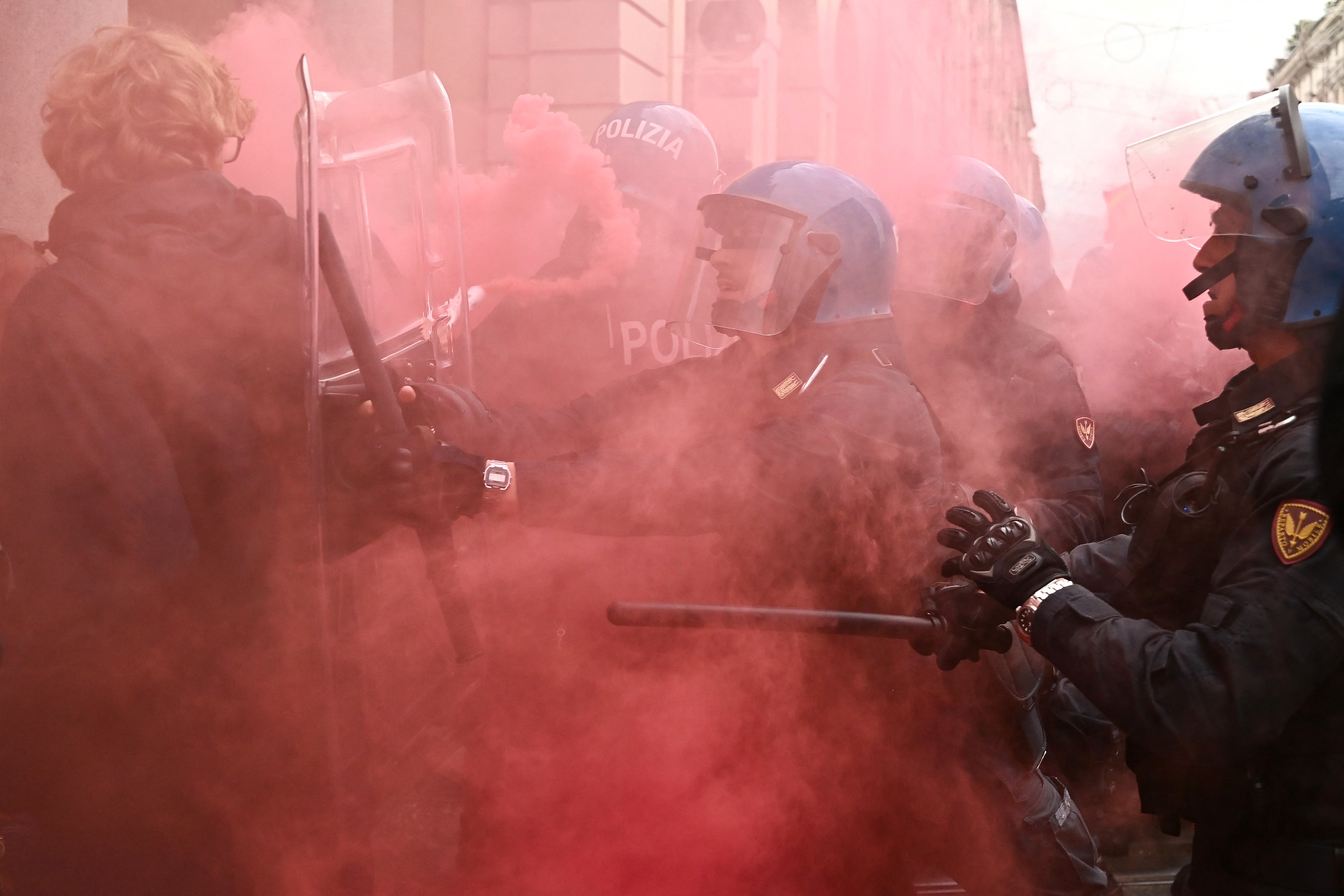
In Turin, manure bins were overturned in front of the city hall before a general strike began. Protesters clashed with police and managed to force their way through a blockade on the Via Rossini, forcing officers into a retreat.
Three people in Vicenza, in the northeast, were injured in a march, news agency ANSA reported, including one person who was hit in the head by a tear gas canister during clashes with police.
Protesters apparently tried to force their way through a blockade before the march was blocked by water cannon.
A march in Naples deviated from its planned route and was heading for the central station with protesters heard chanting “let’s block everything”, according to La Stampa, as armoured vehicles guarded the main entrance.
Student groups in Bologna used dumpsters to block the entrances to several high schools, as shopkeepers in the city centre installed screens to protect their windows.
The protests drew a broad church, including medical students in Rome who told La Repubblica they were marching after years on temporary contracts and salaries worth just €1,300-1,500 per month (£1,080-1,250), while paying €900 in rent.
In Milan, one protester called out over a megaphone: “We’re taking back the city. Let’s make a mess. Let’s make our voices heard. Let’s take to the streets against the high cost of living.”
Protesters displayed banners with slogans including “the problem is not the foreigner but the lack of education” and “drink Peroni and hate Meloni”, referring to the country’s far-right prime minister.
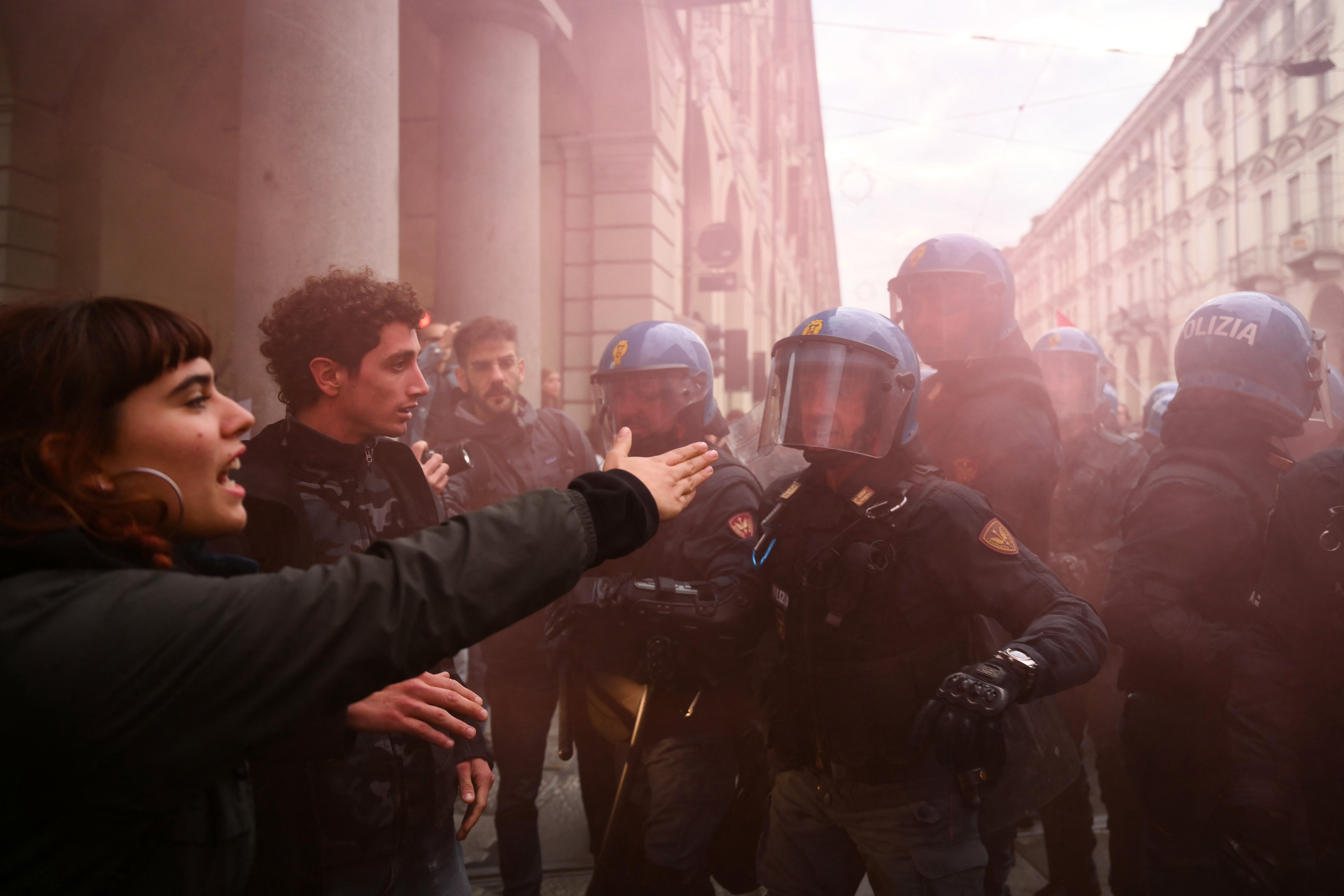
A banner held at a march in the Italian capital showed solidarity with other European nations hosting massive protest movements in recent weeks.
Referring to the historic widespread anti-war strikes and student unrest, it read: “Spain, France, Italy. A new ‘68 is coming.”
A protester in Milan carried a placard reading ‘Bismillah c’est la Meloni’, referring to the viral French phrase “Bismillah c’est les tenebres”, attributed to a purported French police officer mimicking high school students’ slang.
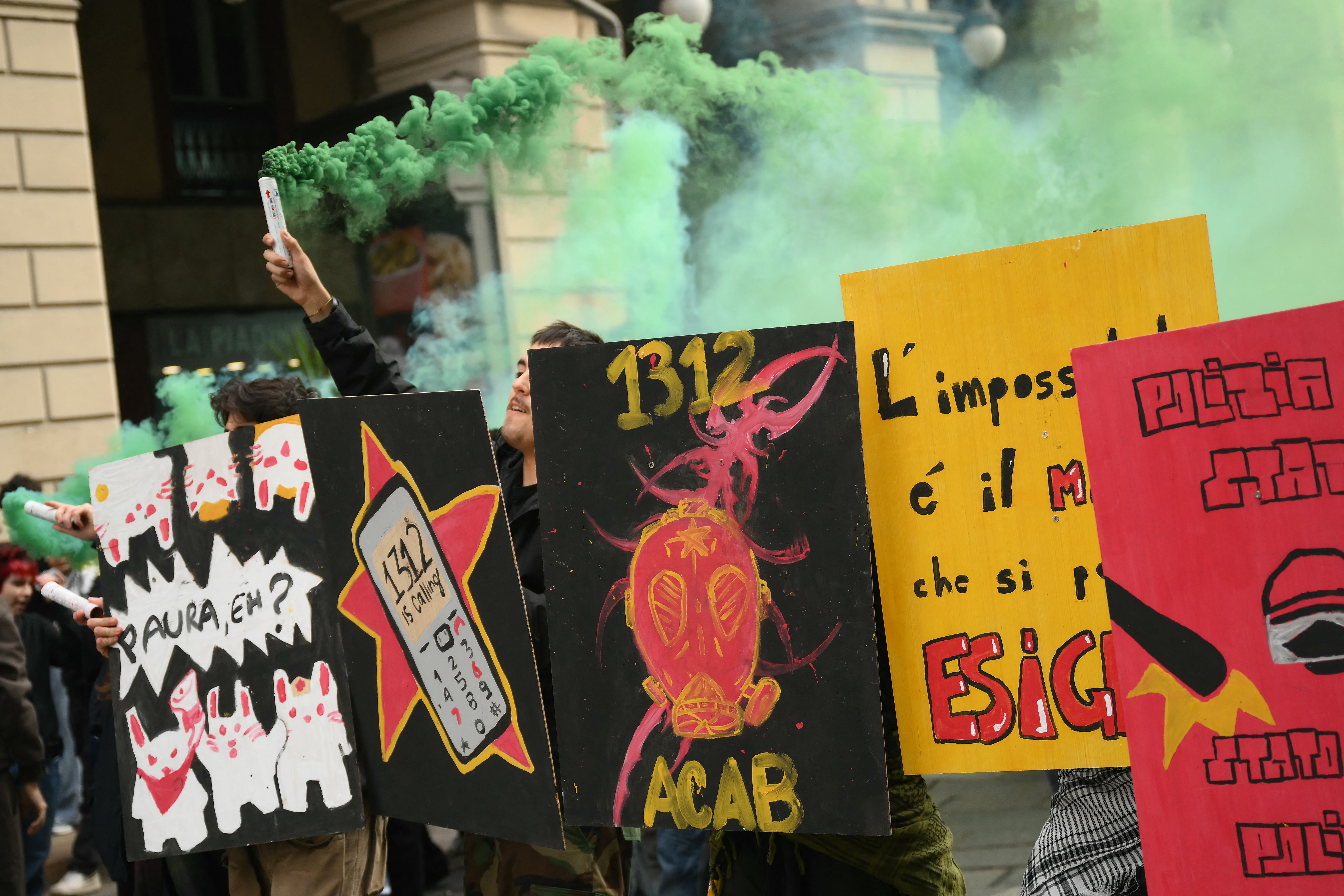
The Meloni government this month introduced a raft of emergency measures to quell the protests, including stretches of up to five years in prison and fines of €20,000 for joining a protest group that ‘endangers public safety’.
The new anti-riot laws also hold parents financially liable when their children take part in vandalism and looting, and increase penalties where faces are concealed or people are injured.
The new legislation was introduced after a wave of unrest swept northern cities earlier in October, including the financial capital Milan, where gangs smashed windows, robbed shops and attacked police.
It comes at a time of broader sensitivity across Europe, with hundreds of thousands of people having marched across France in recent weeks over the cost of living, education reforms and declining public services.
French interior minister Laurent Nuñez said this week that the coming Saturday was looking like a “very high risk” day for public order, and that he would again deploy 70,000 security forces to try to safeguard the country.
His ministry said that 410,000 people took part in marches last Saturday. Labour leaders and students have urged further protests on Saturday and a nationwide strike on November 5.
Dockworkers in 22 countries were additionally expected to strike on Friday, protesting against war and the use of ports for arms exports in action organisers said could disrupt over 40 per cent of Mediterranean cargo.
The strike, originally called by dockworkers’ unions in Italy, France, Greece, Spain’s Basque Country, Turkey and Morocco, is now backed by more than 25 unions in 113 ports.
The protest is expected to target major shipping hubs across Europe and beyond, including Hamburg, Valencia, Le Havre, Algeciras, Piraeus and Genoa, as well as Morocco’s Tangier Med and India’s Nhava Sheva.
However, it was unclear how many dockworkers would take part or how severe any disruption would be.
A spokesman for Italy’s Genoa port said it expected only a limited impact, while Piraeus warned of disruption to ferry services for the Greek islands.
About the Author