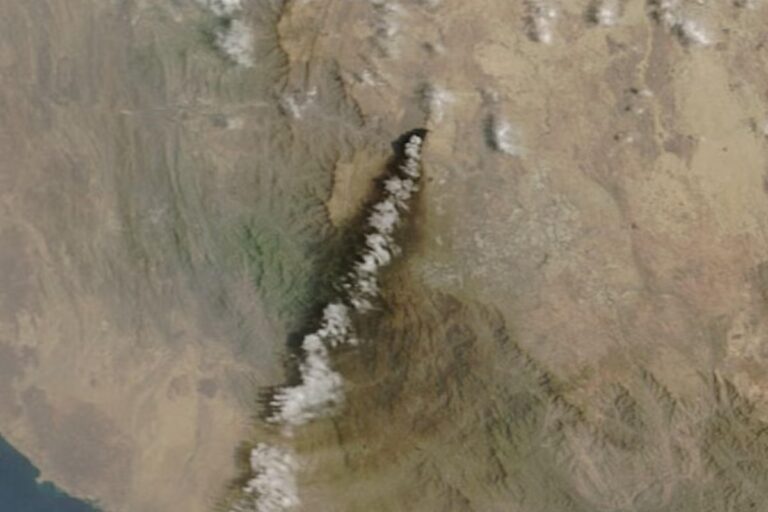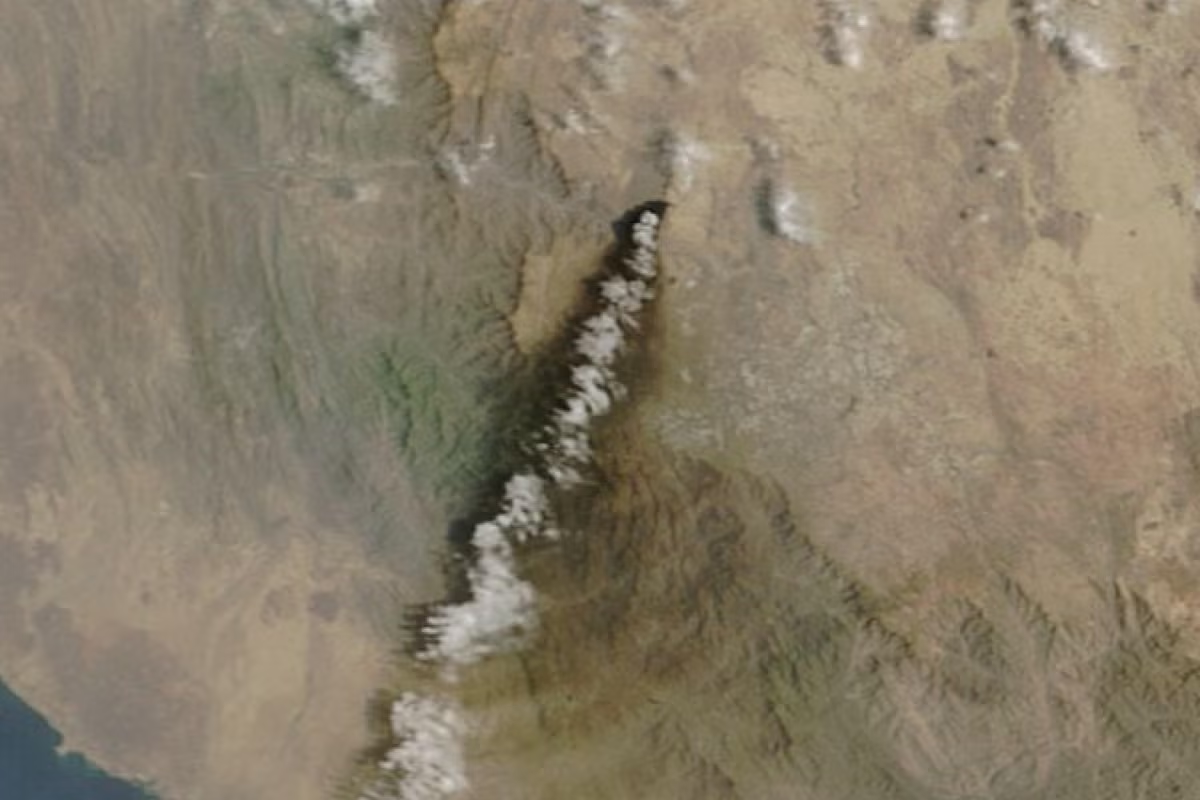
Yemen’s Houthi rebels attacked four cities in the south of Saudi Arabia on Tuesday in another expansion of the six-month-old war in the Middle East.
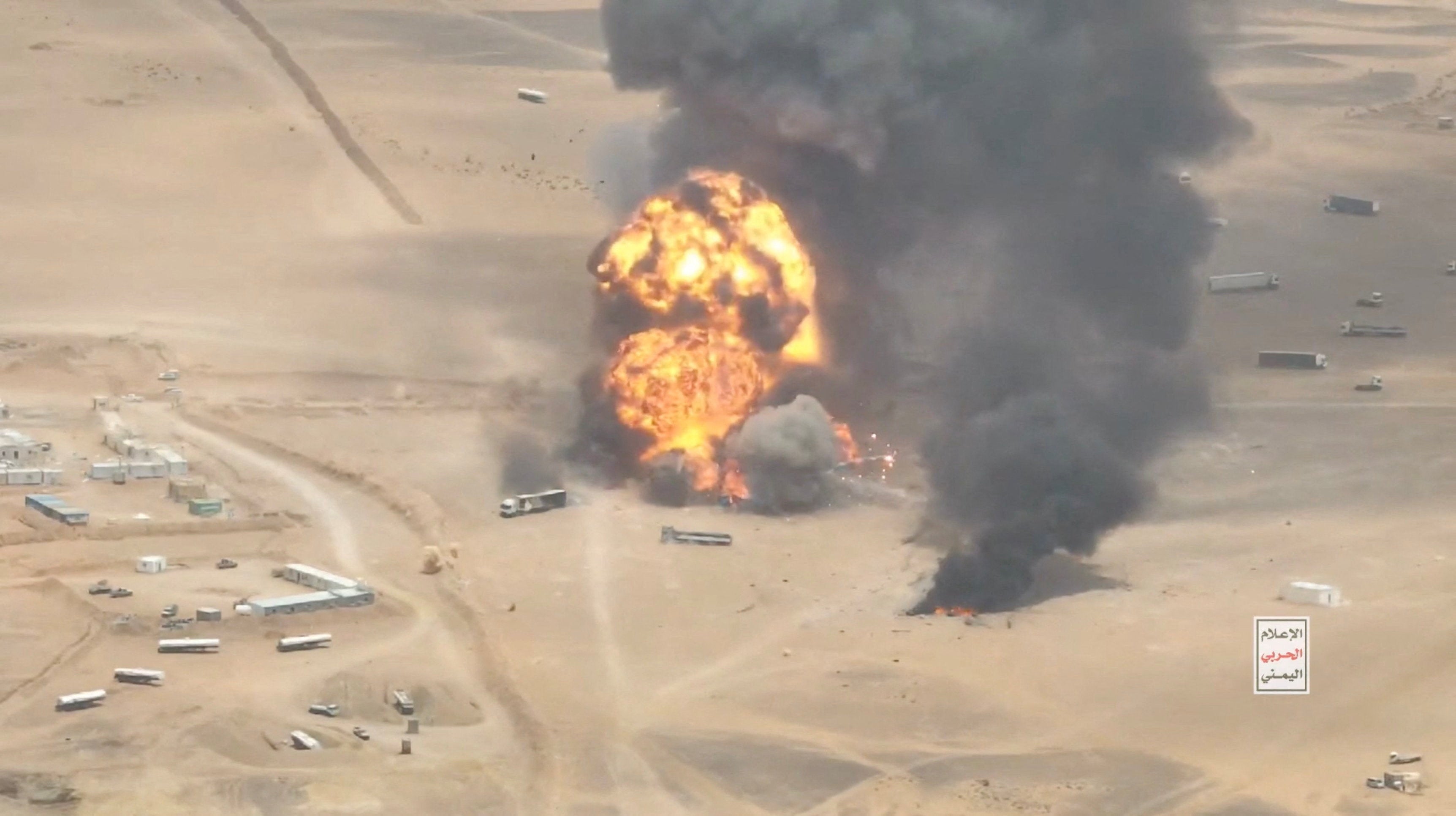
The Iran backed group said they were launching a broad operation deep into Saudi territory, claiming strikes on an airbase and energy infrastructure across the country, and sharing footage of explosions from attacks on trucks near the border.
Houthi-controlled media reported later that Saudi warplanes had carried out four airstrikes in Yemen’s Jubah district east of the capital Sanaa in another sign of escalation, pushing oil prices up 2% to $99 per barrel.
Pressure has for weeks been growing around the mouth of the Red Sea, where the Houthis have been striking Saudi ships in support of Iran, which is sustaining its own blockade of the Strait of Hormuz in a bid to force the US to yield.
Analysts say that Washington cannot afford to ignore the lingering Houthi question to the west, and that a wider coalition may be needed to finally close the second volatile front of the war with Iran.
Why are the Houthis attacking Saudi Arabia?
The Houthi rebels are a military, political and religious movement that rules over most of northwest Yemen and has disrupted global trade and energy markets with strikes on cargo ships and tankers in the Red Sea.
The group made headlines between 2023 and 2025 for their strikes on shipping in the waterway in support of Hamas in Gaza.
Attacks on Saudi vessels around the Bab al-Mandeb Strait, a chokepoint controlling maritime traffic to the sea, have since mounted in support of Iran, which has leveraged disruption to commercial shipping in its war with the United States.
Edmund Fitton-Brown, former British ambassador to Yemen, told The Independent there was “no doubt” that the group would have coordinated with Tehran.
Mr Fitton-Brown, who is a senior fellow at Foundation for Defense of Democracies, said that after months of attacks at sea, the Houthis “think the moment has come to call the Saudi bluff”.
“They think the Saudis have lost the stomach for the fight. They think that they showed themselves to be weak and frightened in the face of the Iranians,” he said.
“And the Houthis think that this is the moment where they can effectively raise their demands and get the Saudis to concede even more advantageous terms than they were previously willing to do.”
Saudi Arabia has been fighting with the Houthis for years, leading the military intervention against the group since 2015 aimed at dislodging them from the capital and restoring the government ousted in 2014.
But they have so far failed to stop the group from scaring off commercial ships operating in the Red Sea.
What do the latest strikes mean for regional stability?
Tuesday’s missile and drone strikes focused mostly on energy infrastructure in southern Saudi Arabia, but the large numbers of casualties suggested they were among the largest carried out against the kingdom since the war began in February.
The attacks are not a new thread, but fit into the wider ongoing conflict across the Middle East, said Lindsay Newman, associate fellow with Chatham House.
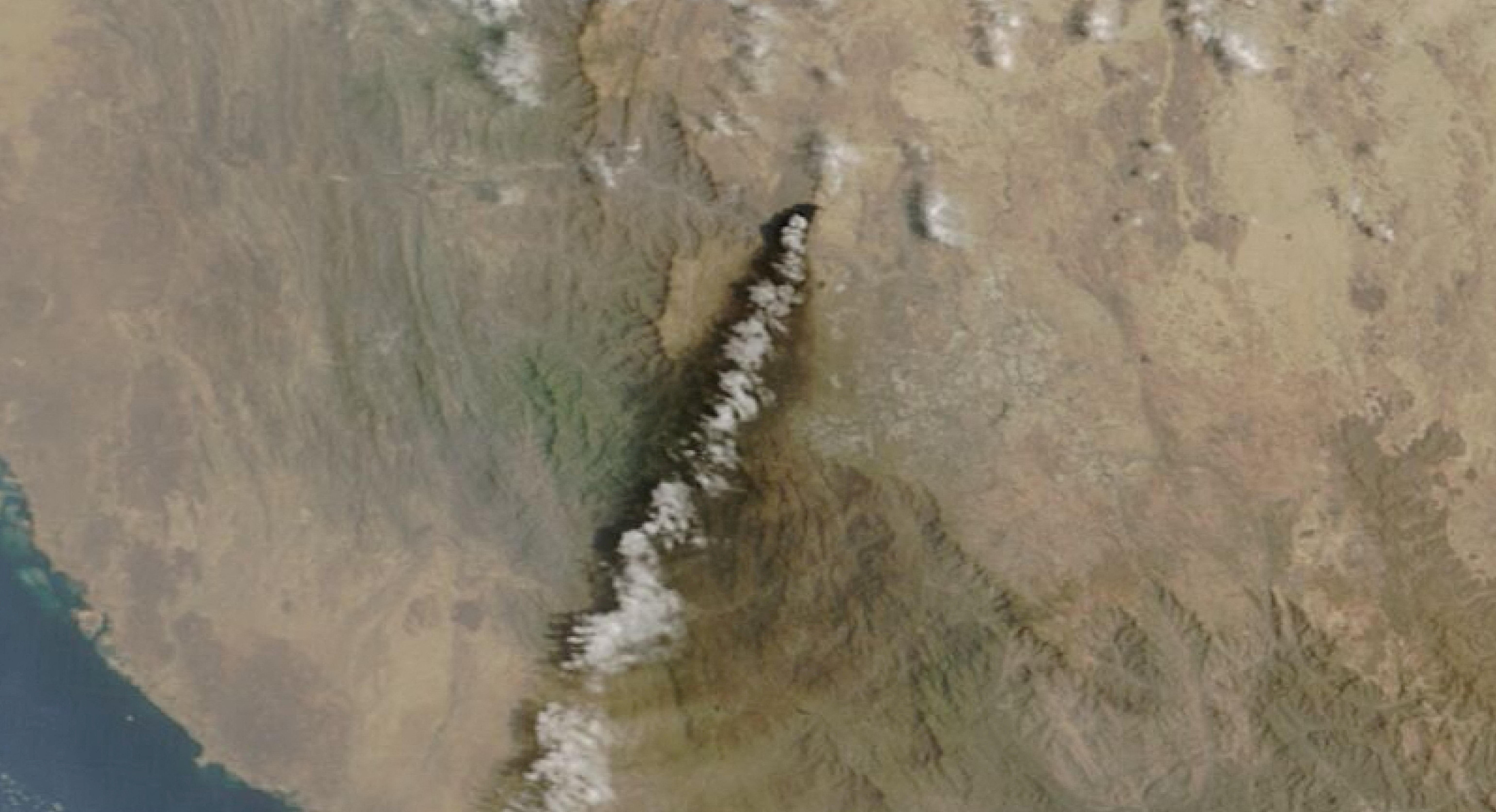
“Houthis began targeting tanker traffic traversing the Red Sea in the aftermath of October 7th, driving traffic down nearly 50% according to available IMF data,” she told The Independent.
“There has been no sustained recovery of shipping through the Red Sea over this period. Risk in the Red Sea is now coupled with vulnerability in the Strait of Hormuz tied to Iran’s strategy to exert pressure over regional players and the global economy.”
Ms Newman said that one of the major open questions was the resilience of Iran’s proxy network across the region. While Hamas and Hezbollah have been degraded, the Houthi military “are proving more intractable” despite efforts to stop them.
Crucially, she said, this was not addressed by June’s interim agreement between the US and Iran. Washington had been pushing to raise the issue of Iran’s support for regional proxies before the war broke out in February.
“This week’s developments make clear that a resolution on the proxy question must be integrated into any offramp for the wider regional conflict. Otherwise these groups can and likely will resupply and remain disruptive across the region.”

What happens next?
Following the Houthi attacks this morning, the Joint Forces Command of the Coalition – the Saudi-led group that has been fighting the Houthis during the Yemeni civil war – vowed to “resolutely confront” the Houthis’ “hostile approach”.
Saudi foreign minister Faisal bin Fahran al Saud condemned the Houthi attacks, but insisted “the road to diplomacy is not closed”, even as the Houthis accused them of strikes on al-Jawf, al-Bayda, Marib and Taiz provinces.
“Saudi Arabia will always support diplomatic solutions, but the kingdom will never hesitate to defend itself and its interests. We will use every tool to do our job and our duties.”
But Ali Shihabi, a Saudi analyst, cast doubt on hopes of a diplomatic resolution, telling CNN: “Saudi Arabia has realised that the Houthis have not been reasonable and there is very little chance of reaching a political settlement with them.”

The risk for the Houthis, said Mr Fitton-Brown, is that the Saudis “seem inclined to fight back”, having coordinated a naval coalition with Turkey and Pakistan – the Mecca Joint Defence Agreement – to push against Houthi aggression.
Still, Ankara and Islamabad are yet to rush to Riyadh’s aid, and the kingdom finds itself at odds with the UAE at a time where they should be aligned against Iran.
Mr Fitton-Brown said the region was calling for American leadership to recognise the connectedness between the fronts and intervene, where the Saudis have been unable to uphold maritime law.
“For the Americans to ignore the Red Sea, to ignore this threat to Saudi Arabia from the Houthis, is just completely self-defeating.” he said.
“And of course, the Americans have been upset because they haven’t had European support for their war on Iran. But the Americans seem to me to have made very little effort to pull together a coalition dedicated to enforcing the law of the sea.”
About the Author