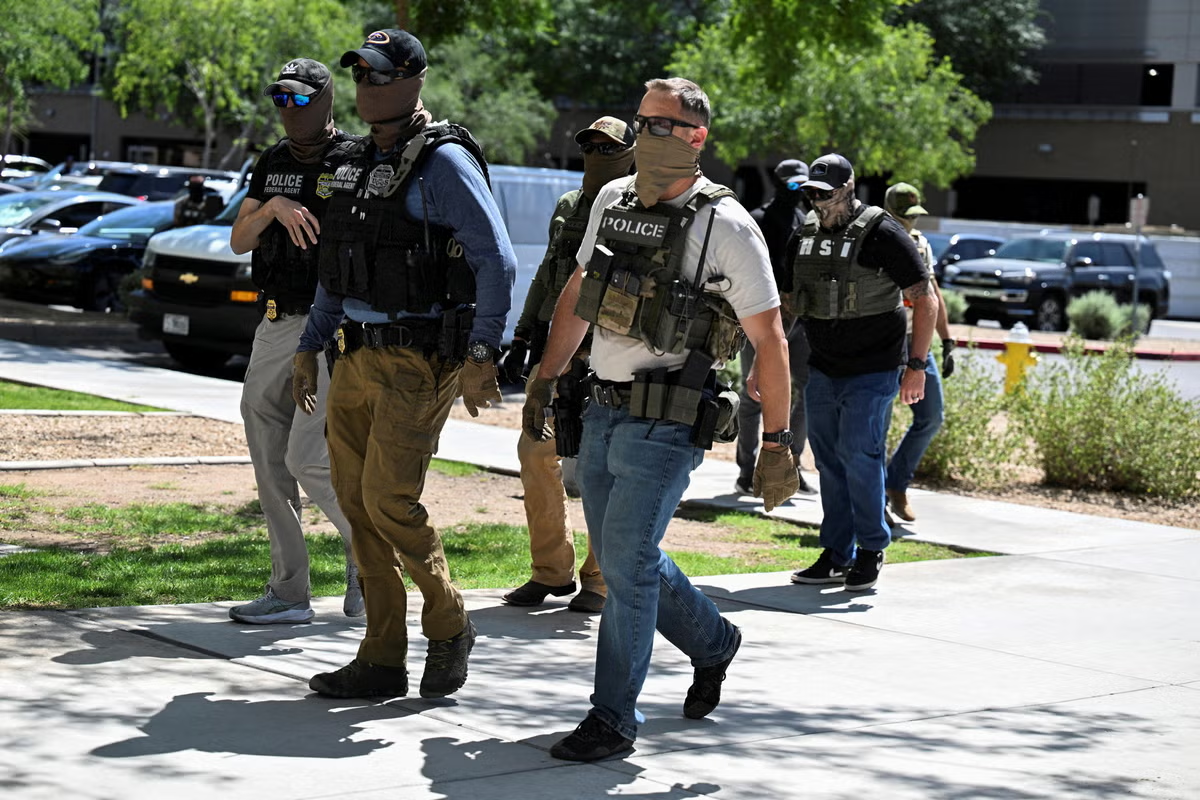
In May, a senior probation officer in southwestern Idaho alerted immigration authorities about a man scheduled to attend a routine check-in the next day.
“His meeting has not changed and he is expected to be here tomorrow morning at 7:30 am,” wrote Norma Naranjo, a senior probation officer for Canyon County’s misdemeanor probation department, in a May 13 email sent to six Immigration and Customs Enforcement agents.
The next morning, when the individual arrived early for his appointment, Naranjo sent another message to the agents.
“He is here are you guys on your way?” she wrote.
Records obtained through public disclosure requests are heavily redacted, making it unclear whether ICE agents ultimately detained the man at the probation office.
The messages from Naranjo are part of more than 140 emails exchanged between Canyon County probation officers and federal immigration agents between May and July 2026, obtained by InvestigateWest.
The correspondence reveals how the local probation department has collaborated with ICE’s Boise field office, including sifting through internal files to compile a roster of foreign-born individuals on probation without verifying whether those individuals are in the United States illegally.
The category of foreign-born individuals includes naturalized U.S. citizens, green card holders, and individuals with pending asylum applications.
Although law enforcement agencies in Idaho have long worked alongside federal immigration authorities to hold undocumented individuals serving jail sentences or probation terms, legal advocates and immigration attorneys express concern that Canyon County’s compilation of a “foreign born list” could lead to the detention of people holding lawful status.
This comes at a time when federal agents have arrested U.S. citizens, individuals with pending green card applications, and people awaiting asylum determinations.
Jeff Breach, the director of the county’s Misdemeanor Probation Department, declined an interview request for this story.
In a written email response, he stated that the list encompasses “individuals whose place of birth is a foreign country — and can also include individuals that have been previously flagged with an immigration hold.”
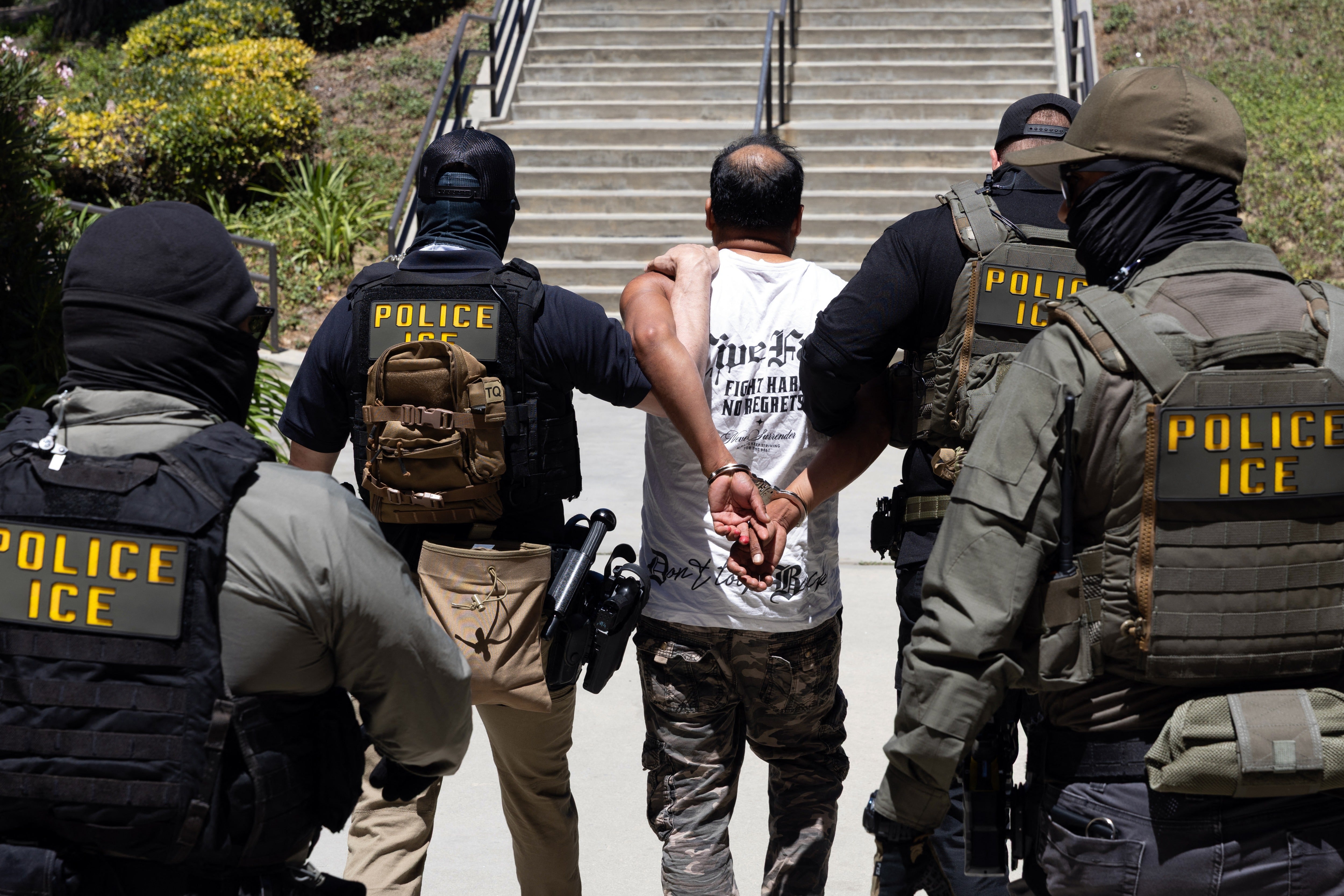
“Verifying and determining legal presence/status, along with any related enforcement, is within the purview of federal authorities,” Breach added.
According to Breach, ICE requests lists of individuals who might lack legal authorization “typically on an annual basis and across administrations.”
Steve Cushman, director of constituent services for Canyon County, stated he was uncertain when “those lists were first requested and provided, but it is my understanding that it goes back as far as the Obama administration.”
Breach explained that the probation department, which oversees misdemeanor offenders across the county, assists ICE in the same manner as any state or local law enforcement partner, providing “information to carry out their lawful duties.”
Canyon County has faced previous public scrutiny regarding its cooperation with immigration officials. In 2019, the local newspaper Idaho Press reported that the Canyon County Sheriff’s Office followed a policy directing staff to notify immigration officers of “all foreign born inmates” booked into the local facility.
According to the reporting, several individuals flagged under the policy were U.S. citizens. Additionally, the ACLU of Idaho has filed a lawsuit against the sheriff’s office and other participating agencies, alleging racial profiling of Latinos during an October 2025 ICE raid at a horse racing track where individuals were detained regardless of their immigration status.
Nikki Ramirez-Smith, an immigration attorney with Ramirez-Smith Law in Nampa, Idaho, characterized the county’s effort to create and distribute a list of foreign-born probationers as “an invasion of privacy.”
“It’s one thing to know that someone is undocumented, it’s another thing to just start targeting every single person who was born in another country,” she stated.
On June 3, Naranjo notified five ICE officers via email that she intended to speak with Breach regarding “the foreign born list.”
“We are working on a procedure to keep a list current for your agency,” Naranjo wrote, adding, “I will get back to you on this as soon as we figure something out.”
Two days later, Breach sent an instruction to his department staff: “ICE has requested a list of offenders who are in the country illegally,” he wrote.
“I need you to go through your caseload this month and send me a list of names of offenders who you believe are in the country illegally. I’ll review the names and put together a list that can be sent to ICE so that they can look into if the person is in the country illegally and if they want to take any action.”
Although most of the 400-plus pages of email correspondence acquired by InvestigateWest covering May 1 to July 10 are heavily redacted, with communications originating from federal immigration authorities redacted completely, they demonstrate how local officers drew upon case files to assemble the list.
“That’s everyone in my cabinet that filled out (an) intake form and stated not born in US,” Brandon Black, a Canyon County probation officer, wrote in a June 8 reply to Breach.
Another officer, Justin Donovan, informed Breach that he had identified just one individual under his supervision who “may be here illegally,” noting that the man “only had an ID from Mexico during his last arrest.”
Naranjo, Black, and Donovan did not immediately respond to requests seeking comment.
Canyon County provided InvestigateWest with a redacted copy of the document, which lists details for 82 individuals on probation in the county.
The record shows the specific offenses leading to probation while redacting names, home addresses, and dates of birth.
More than half, or 54%, of those listed were on probation for driving under the influence. Five were on probation for drug offenses and nine for disturbing the peace.
Only seven individuals were marked as having an active ICE hold, signifying previous identification by federal authorities for potential deportation.
Email exchanges from May through July reveal probation officers regularly provided ICE agents with the exact dates and times specific probationers were scheduled to be present at the office. In several instances, officers asked whether individuals who missed appointments were currently in federal custody.
On two occasions, probation officers emailed agents shortly before and during appointments to confirm agents were coming to apprehend a probationer.
One probation officer provided federal agents with a probationer’s home address, along with the make, model, and license plate number of the person’s vehicle.
Breach estimated that ICE agents have “been present” at one or two probation appointments per month over the past three months.
“All the law enforcement agencies we work with prefer to meet with offenders up in the office due to it being a controlled environment, which means it is safer for the offender, the officer, and the public,” he wrote.
“There is an expectation from law enforcement agencies and the public that probation officers work cooperatively with law enforcement to ensure the safety of all parties involved.”
Asked if the department harbored concern that citizens or people with lawful status might be placed on the roster, Breach reiterated that verifying legal status “is within the purview of federal authorities.”
Alycia Moss, an immigration attorney with Fennemore Law in Coeur d’Alene, observed that while ICE agents should know whether an individual is subject to deportation, she remains concerned about potential mistargeting based on the probation list.
“ICE may still target someone if they think the conviction is a deportable or removal offense even if they (have legal) status,” Moss said. “Sometimes, ICE doesn’t get that right.”
Federal authorities have previously arrested individuals with lawful status in the region. In Oregon, ICE agents arrested Juanita Avila, a 47-year-old lawful permanent resident, last November. Last July, agents arrested Mahdi Khanbabazadeh, a 38-year-old father married to a U.S. citizen with a pending green card application, while he was dropping his child off at a Portland-area preschool.
The U.S. Department of Homeland Security recently formed a new division dedicated to reviewing immigrants holding green cards, according to reporting by the New York Times.
Ramirez-Smith, whose practice is located in Nampa, Canyon County’s largest city, was not surprised by the level of cooperation between county probation officers and ICE. In previous years, Ramirez-Smith noted she could frequently negotiate release for detained clients, but ICE is now rapidly transferring detainees out of state, leaving minimal time to secure release.
“I’m getting a lot of people picked up from probation to the point now where if they have probation, I just prepare a habeas (petition) just to get ready,” Ramirez-Smith said, describing the legal challenge to detention validity.
Canyon County is Idaho’s second-most populous county, where Latino residents account for approximately 27% of the population. The region serves as an agricultural hub and is among the top five seed-producing areas globally, depending heavily on an immigrant workforce.
The county was also the site of a high-profile raid in Wilder last October, where more than 100 people were detained at a local horse racetrack, a common meeting venue for Latino families in the area.
Eyewitnesses reported local police and Canyon County sheriff’s deputies assisted ICE by zip-tying children and detaining participants without inquiring about immigration status.
The enforcement action unsettled the local community, resulting in diminished attendance across the Wilder School District the following day, according to the Idaho Statesman.
The ACLU of Idaho subsequently filed a lawsuit on behalf of three Latino families and their children—who are U.S. citizens and lawful permanent residents detained for four hours—alleging federal and local law enforcement engaged in racial profiling.
Beyond the racetrack operation, Canyon County law enforcement agencies have long assisted ICE by agreeing to hold individuals in jail for up to 48 hours beyond their scheduled release dates. In 2019, the Idaho Press reported that Canyon County jail staff routinely emailed ICE agents when booking individuals suspected of being undocumented, in several cases flagging U.S. citizens and holding them after bond was posted. Jail staff were instructed to notify immigration authorities whenever inmates served time and posted bond, according to the report.
That year, the county faced three lawsuits from individuals alleging illegal detention following posted bond due to holds placed over immigration status. Canyon County settled with at least one individual for $13,000.
In his email, Breach stated that the probation department does not maintain a written policy governing interactions with ICE, relying instead on a “long-standing practice” of federal law enforcement cooperation dating back to at least 2008.
Nationwide, ICE relies on county and state probation departments to coordinate arrests of undocumented individuals, according to the Immigrant Legal Resource Center. Several states, including Colorado and New Mexico, have passed laws banning such collaboration after probation departments were discovered notifying ICE agents about scheduled check-in times.
By contrast, Idaho Gov. Brad Little issued an executive order last year encouraging local and state law enforcement agencies to cooperate with federal immigration officials. Eleven Idaho law enforcement agencies have signed up for the federal 287(g) program to assist in immigration enforcement, with some departments receiving tens of thousands of dollars in financial incentives for participating.
In neighboring Washington and Oregon, immigration attorneys say the degree of coordination present in Canyon County would be prohibited under sanctuary laws that bar local and state law enforcement from assisting federal authorities with detention and deportation.
“In Washington, this would never be allowed because the state has protections in place to prevent this kind of information sharing,” Aaron Korthuis, an attorney with the Northwest Immigrant Rights Project, wrote in an email. “In Idaho, it’s permitted (and likely even encouraged). I think it is simply another tactic ICE has developed to identify easy and low-risk environments for the agency to detain people.”
About the Author