
Want to bookmark your favourite articles and stories to read or reference later? Start your Independent Membership today.
Already a member?
Log in
A British-German startup developing hypersonic long-range cruise missiles that could strike deep inside Russia has received significant funding, the company has said.
Hypersonica has raised €100 million (£83.5m) in its efforts to develop the deep-strike missiles to strengthen Europe’s defence against a growing Russian threat, the Financial Times reported, coming at a crucial moment as Washington urges the continent to be more responsible for its own security.
“The debate over whether Europe needs these kinds of deterrence capabilities is over. It’s absolutely clear we need them,” Philipp Kerth, the chief executive of the company, told the outlet.
“It’s now really a question about who can deliver those systems and that’s what the [funding round] is positioning us to do.”
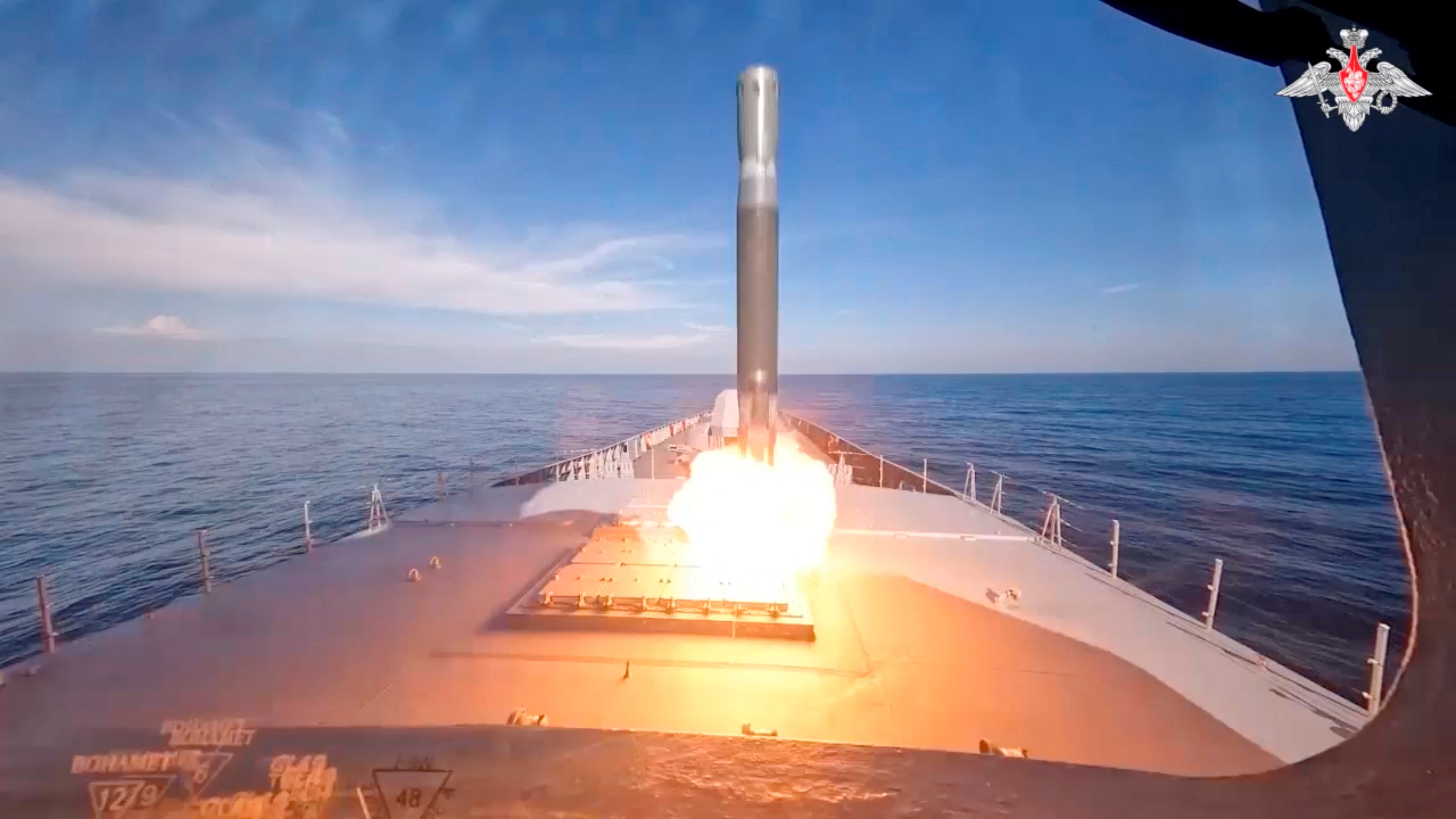
European countries have been working on several initiatives to boost their long-range strike capabilities in recent months.
Earlier this summer, the UK tested new long-range strike weapons, with the government hoping for delivery to Ukraine within months as part of an initiative aiming to produce munitions more quickly and affordably than existing systems, like Storm Shadow missiles.
Hypersonica is part of an Anglo-German defence co-operation agreement, in which London and Berlin agreed to produce advanced ground-launched missiles with a range of more than 2,000 kilometres.
Among other things, the agreement sought the development of new strike missiles, including an advanced cruise missile and a hypersonic glide vehicle, which is a warhead travelling more than five times the speed of sound and follows an unpredictable path, making interception difficult.
It comes at a time of high tension between the UK and Russia, with Russian warships operating around UK waters and experts warning The Independent that Moscow is scaling up its disinformation war against the UK.

MPs recently warned that critical flaws in Britain’s High North military posture leave the public, subsea pipelines and the nuclear deterrent exposed to Russian aggression, highlighting “glaring gaps” in defence capabilities.
The Commons Defence Committee stated that “dramatic progress” must be achieved to strengthen UK armed forces and naval vessels in the strategically vital region before 2030 – the year former prime minister Sir Keir Starmer suggested Moscow could launch an attack on Nato.
New Hypersonica missiles, which have been injected with cash as part of a deal led by venture capital firms Lightspeed and General Catalyst, will therefore be a welcome development for UK and European defense.
Mr Kerth said that the new technology would give Europe a boost because it will “turn the needle on deterrence”.
Hypersonica, which says it aims to “equip Europe and its allies with a first-of-kind, sovereign, cost effective hypersonic strike capability”, has also been supported by the German Federal Agency for Breakthrough Innovation.
It says it is the first private European defence company to successfully carry out a hypersonic test flight, with Alexander Schmitt of Lightspeed saying the programme was vital because it has done “real testing, not only simulations”.
About the Author