
Want to bookmark your favourite articles and stories to read or reference later? Start your Independent Membership today.
Already a member?
Log in
House Democrats will take back the majority in January and have the power to impeach President Donald Trump for a third time. What they do not have, by their own accounts, is any agreement on whether to try.
A growing number of members say they are open to using their new majority to move against Trump, but many also warn that a rushed effort would backfire, according to Politico, which interviewed 14 House Democrats across the party’s ideological range about how to handle the next two years in power.
Democrats have accused Trump of a sweeping range of misconduct across his second term — self-enrichment, accepting foreign gifts, granting pay-for-play pardons, abusing his power to target enemies and launching what they call an illegal war in Iran — but there is no consensus on which issue a Democratic House would turn into articles of impeachment, or what investigation would come first.
The caution is being led, in part, by the members who ran the last two impeachments. Maryland’s Jamie Raskin, who is poised to chair the Judiciary Committee and who managed the 2021 trial over the January 6 attack on the Capitol, said a third attempt could play directly into the hands of a president badly weakened by this month’s midterm rout.
“I think Donald Trump would love us to organize a campaign of impeachment against him right now because he thinks that’s his last hope for rallying the dwindling MAGA base at this point,“ Raskin told Politico.
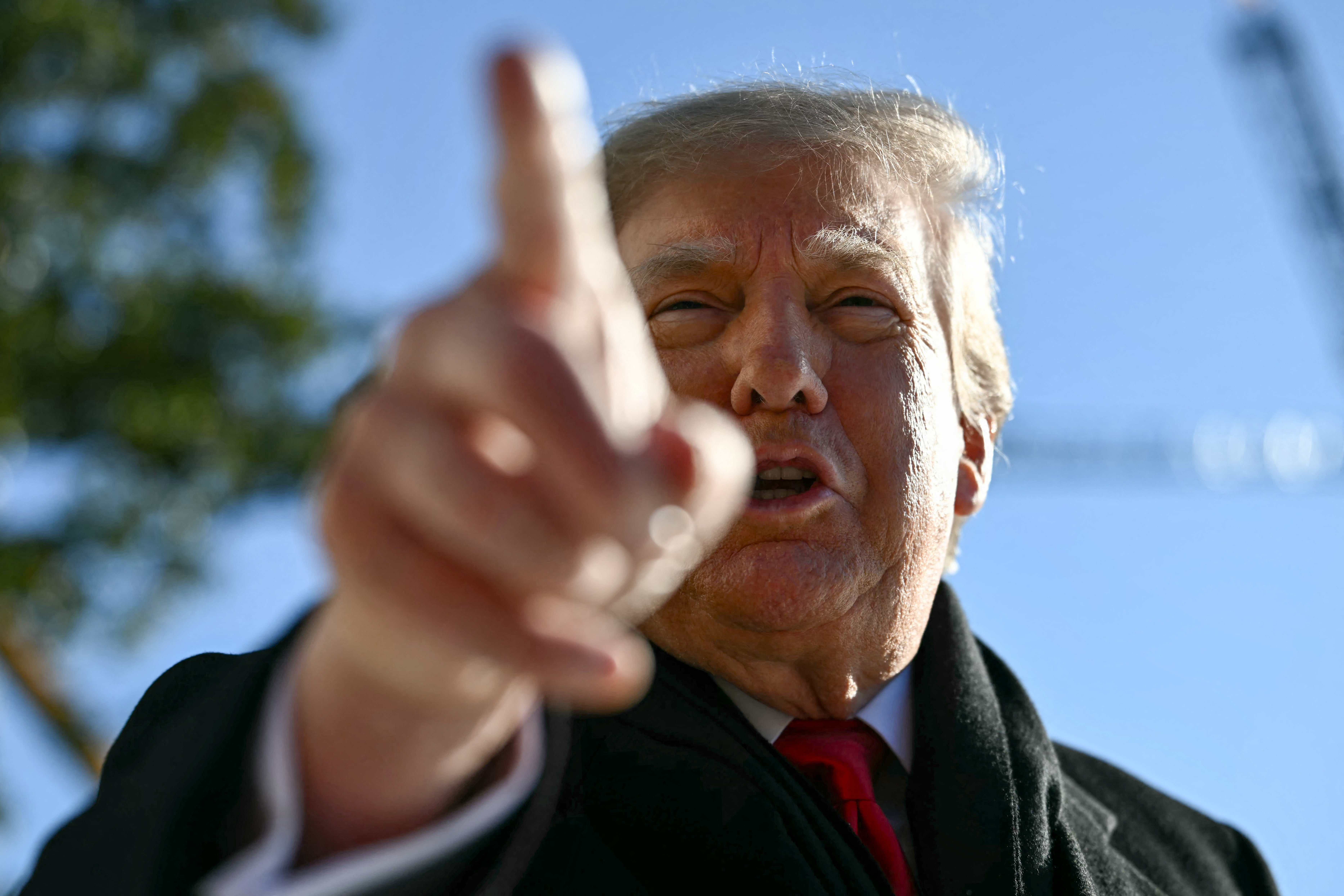
Trump has said as much himself. He has long claimed his first two impeachments helped him politically. He told reporters a day after his party’s midterm defeat that he would welcome a third.
“I think it would destroy the Democrat Party if they did that, because it would be impeachment for no reason,” he said. “For what? For having a successful country?”
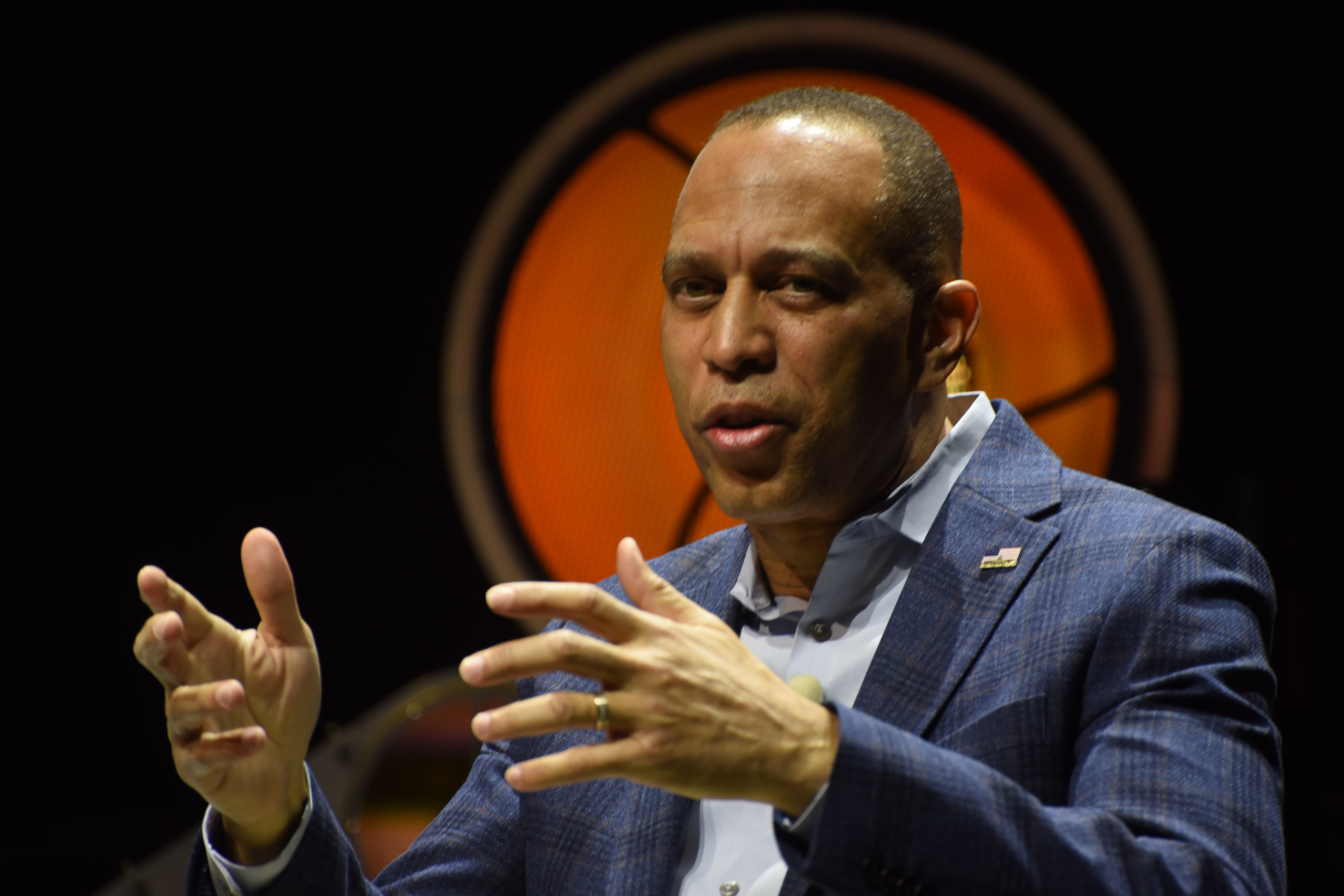
Democrats won back the House this month in a wave that cost Republicans close to 50 seats, handing the gavel to Hakeem Jeffries, who is expected to become speaker in January with the largest majority for any party in decades.
The dilemma now facing that incoming majority will be not only whether to impeach, but on what grounds to do so if they do.
Some of the party’s most senior figures are urging restraint. Bennie Thompson, who led the now-defunct January 6 committee that concluded Trump posed a unique danger to the republic, told the outlet that impeachment “is not a priority for me,” though he would vote for a resolution if one reached the floor.
Hanging over the entire debate is a problem no amount of House unity can solve. Convicting a president requires the votes of 67 senators, meaning the 56 Democrats in the upper chamber would need at least 11 Republicans to join them — a bar they failed to clear even in the days after the Capitol riot.
“Is the Senate going to convict? You need to weigh that in and whether to proceed,” Zoe Lofgren, who served on the January 6 committee and was a manager in the 2020 Ukraine impeachment, told Politico. “I think we need a national conversation.”
Gregory Meeks of New York put it more bluntly. “No,” he said when asked whether the House should impeach. “I’m a former prosecutor. You don’t indict somebody if you don’t think you can convict.”
Jeffries has kept his distance from the question, an approach that echoes the one taken by former House Speaker Nancy Pelosi, who spent much of the 116th Congress pressure to rush toward impeachment until mid 2019, when a whistleblower complaint about Trump’s dealings with Ukraine gave her a case she judged the public would accept.
“I haven’t had a single member of the House Democratic Caucus talk to me about impeachment,” he said a day after the midterms, adding that the caucus had been “relentlessly focused on affordability and on accountability.”
Asked whether Trump had committed impeachable offenses, he declined to say: “We haven’t ruled anything in. We haven’t ruled anything out.”
But not everyone in the caucus wants to wait. Michigan’s Rashida Tlaib, who declared her intent to “impeach the motherf*****” days into her first term in 2019, told Politico that treating the matter as a distraction “is setting a dangerous precedent.”
Similarly, Rep. Suhas Subramanyam said Democrats should act “even if it’s bad politics.” And Vermont’s Becca Balint, who said she would vote for an impeachment resolution, described a base split between those who “want revenge and vengeance” and those who simply “want to make sure that the Constitution will hold.”
The pressure is likely to grow regardless of leadership’s preference. The incoming majority is already weighing the fate of Defense Secretary Pete Hegseth, who last week publicly pleaded with lawmakers not to impeach him, only to see that effort fail when 11 Democrats missed a key vote on the measure that would’ve subjected him to a Senate trial.
“We’ll see what the next two years bring in terms of what Trump does,” Yassamin Ansari of Arizona told the outlet, warning that the president could “get more and more desperate and more and more volatile.”
Colorado’s Jason Crow, who served as a manager in Trump’s first trial, urged his colleagues to keep the question in proportion.
“Impeachment has taken on this almost mythical place in American culture because people know about it. But it’s a tool. It’s not an end in and of itself,“ he said. “I’ve done it before … and if I thought that was appropriate, I would do it again. But right now, we have to see what type of coalition we can put together.”
About the Author