Two people who returned to the UK from the cruise ship that was hit by a hantavirus outbreak have been told to self-isolate, the UK Health Security Agency said.
The organisation added that “the risk to general public remains very low” after they returned from the MV Hondius.
It is now believed that a Dutch couple who visited a landfill during a bird-watching tour in Argentina may be the source of the outbreak.
Two Argentine officials said the government’s leading hypothesis was that the couple could have been exposed to rodents on the trip in Ushuaia.
Eight suspected cases of hantavirus have now been linked to the boat, the World Health Organisation said, with five of the cases confirmed.
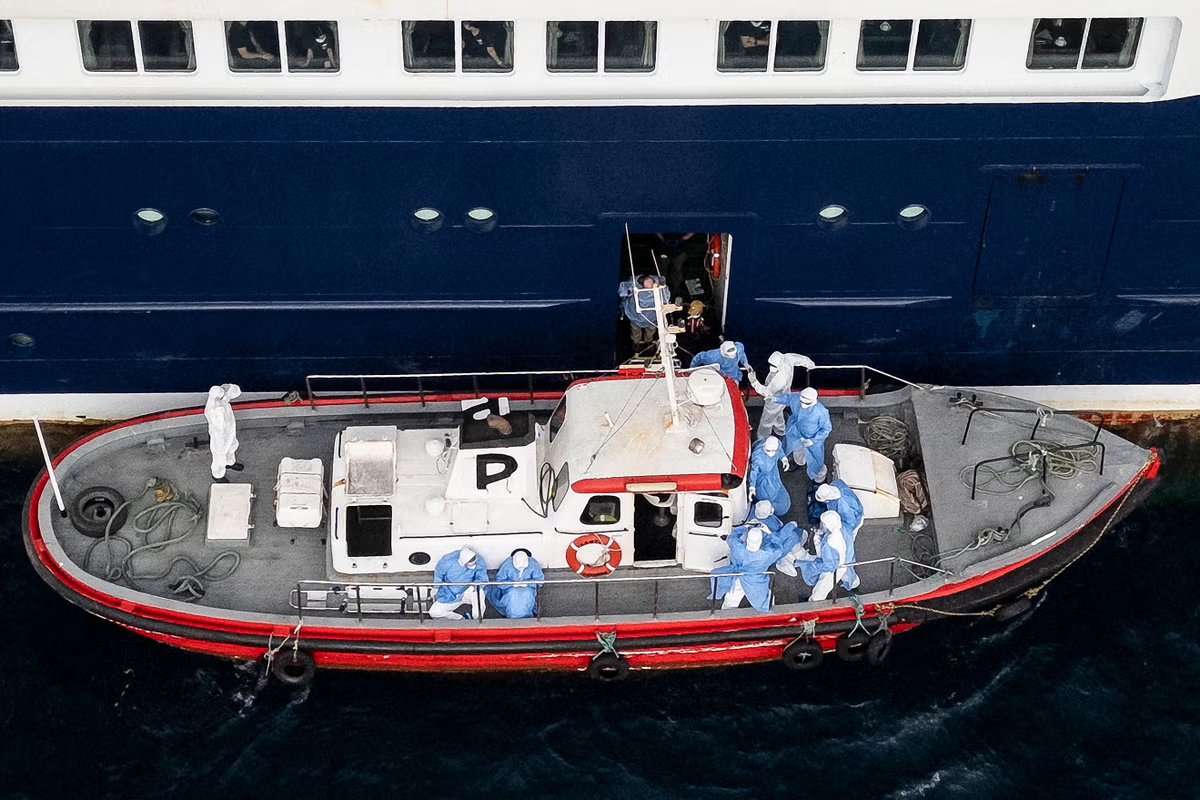
On Wednesday, three patients were medically evacuated from the boat to receive treatment in the Netherlands.
Spain’s health minister said that a British doctor who was evacuated from the boat is no longer in a critical condition.
Oceanwide, the cruise ship operator, said the planned destination for the ship was still the Canary Islands, despite its leader, Fernando Clavijo, blocking the vessel from docking in Tenerife.
Recap: Two people told to self-isolate in the UK after returning from cruise
Two people who returned independently to the UK from the cruise ship that was hit by a hantavirus outbreak have been told to self-isolate, the UK Health Security Agency said.
In an update issued on Wednesday evening, the UKHSA said “the risk to general public remains very low”, adding that neither of the two individuals who have been asked to self-isolate had reported symptoms.
The organisation said: “They are receiving advice and support from UKHSA and have been advised to self-isolate.
“UKHSA are supporting a small number of individuals identified as close contacts of those on the boat. They are being offered support and are also self-isolating. None are reporting any symptoms. The risk to the general public remains very low.”
The statement continued: “UKHSA is working closely with the FCDO, the Home Office, and Border Force to trace further individuals who may have been on the same flight as a confirmed case, in order to carry out public health risk assessments and ensure appropriate precautionary measures are in place.”
Dr Meera Chand, deputy director for epidemic and emerging infections at UKHSA, said:
“It’s important to reassure people that the risk to the general public remains very low.
“We are standing up arrangements to support, isolate and monitor British nationals from the ship on their return to the UK and we are contact tracing anyone who may have been in contact with the ship or the hantavirus cases to limit the risk of onward transmission.
“UKHSA will continue to work closely with government partners to offer all necessary support.”
Harriette Boucher7 May 2026 06:00
UK preparing to bring British passengers home
The UK government is preparing to bring British passengers on board the cruise ship MV Hondius home, as long as they stay symptom-free.
The UK Health Security Agency (UKHSA) said that none of UK citizens onboard the cruise ship currently have symptoms, but that they’ll be monitored, tested, and asked to isolate after returning to the country.
Two people who already returned to the UK from the ship independently are also symptom-free and self-isolating, along with a small number of close contacts.
UK health officials say the risk to the general public is very low.
One British passenger and two others with suspected infections were evacuated to the Netherlands for treatment on Wednesday.
The ship is on its way to the Canary Islands now with almost 150 people onboard.
Maroosha Muzaffar7 May 2026 05:30
All cruise ship passengers are ‘close contacts’, says European health agency
Everyone on board the cruise ship heading to the Canary Islands should be considered a “close contact”, the European Centre for Disease Prevention and Control (ECDC) has said.
A threat assessment brief from the European health agency states: “We consider everyone on the ship to be close contacts, due to the closed setting and shared social areas and activities, aligned with the precautionary principle.”
But it said that the strain of the virus “does not transmit easily so it is unlikely that it would cause many cases or a widespread outbreak in the community, if infection prevention and control measures are applied”.
People with symptoms should be medically evacuated while passengers without symptoms should receive a test when they disembark, the brief added.
It also said a negative test “may not exclude infection”.
“Disembarking passengers should be provided with clear instructions and recommendations until their diagnosis is confirmed or ruled out.”
Harriette Boucher7 May 2026 05:00
MV Hondius heading to Canary Islands after three people suspected of hantavirus infections evacuated
The cruise ship MV Hondius is now heading to the Canary Islands from Cape Verde after three people suspected of having hantavirus infections were evacuated from the ship on Wednesday.
The three passengers are from Britain, the Netherlands and Germany. Earlier reports said the British person was a doctor, but that now appears to be incorrect.
Two other British passengers had already left the ship earlier and are currently self-isolating at home after possible exposure.
The ship is still heading to the Canary Islands with 145 people on board, all reportedly symptom-free according to the operator, Oceanwide Expeditions.
Spanish authorities say there is “no risk” to local residents, but the Canary Islands’ president says he is concerned and was not properly consulted.
Maroosha Muzaffar7 May 2026 04:25
Passenger stuck on ship at centre of hantavirus outbreak says atmosphere ‘relatively good’
Harriette Boucher7 May 2026 04:00
What is hantavirus? Symptoms you need to know after deadly cruise ship outbreak
Hantaviruses, which have been present for centuries, have a documented history of outbreaks across Asia and Europe.
In the Eastern Hemisphere, these viruses have been associated with severe conditions such as haemorrhagic fever and kidney failure.
A distinct group of hantaviruses emerged in the early 1990s in the southwestern United States, leading to the acute respiratory disease now known as hantavirus pulmonary syndrome.
Hantavirus is mainly spread by contact with rodents or their urine, saliva or droppings, particularly when the material is disturbed and becomes airborne, posing a risk of inhalation.
People are typically exposed to hantavirus around their homes, cabins or sheds, especially when cleaning out enclosed spaces with little ventilation or going into areas where there are mouse droppings.
The WHO says that while rare, hantaviruses may spread between people.
The US Centers for Disease Control and Prevention began tracking the virus after a 1993 outbreak in the Four Corners region – the area where Arizona, Colorado, New Mexico and Utah meet.
It was a doctor with the Indian Health Service who first noticed a pattern of deaths among young patients, said Michelle Harkins, a pulmonologist with the University of New Mexico Health Sciences Center who for years has been studying the disease and helping patients.
Most US cases are in Western states. New Mexico and Arizona are hotspots, Dr Harkins said, likely because the odds are greater for mouse-human encounters in rural areas.
Harriette Boucher7 May 2026 03:00
Pictured: The MV Hondius cruise ship, where 150 passengers are isolated in their cabins
Harriette Boucher7 May 2026 02:00
Airline says Dutch national who died from hantavirus was briefly on board aircraft
Dutch airline KLM has confirmed that a Dutch passenger who died from hantavirus was briefly on board one of its aircraft in Johannesburg.
The airline’s crew decided to not allow the passenger to travel on the flight due to their medical condition.
The flight concerned was KL592, which departed Johannesburg for Amsterdam on 25 April.
In a statement, the airline said: “Yesterday evening, the Dutch public health authority RIVM informed KLM that one of the Dutch nationals who died from hantavirus had briefly been on board a KLM aircraft in Johannesburg on April 25, 2026.
“Due to the passenger’s medical condition at the time, the crew decided not to allow the passenger to travel on the flight. The passenger sadly later passed away in Johannesburg. KLM extends its condolences to the next of kin and wishes them much strength during this difficult time.”
Harriette Bouche7 May 2026 01:00
US travel blogger comes to defence of hantavirus-struck cruise ship and says vessel is clean with strong biosecurity
Travel blogger Jake Rosmarin has been documenting his time aboard the illness-stricken ship, telling The Independent in a statement that aside from the two confirmed cases, the other passengers on board are “doing well” and remain “in good spirits”.
Mr Rosmarin noted that the MV Hondius is an expedition vessel, not an average cruise ship, and is held to a higher standard of cleanliness due to the types of trips it takes
“These ships operate with strict protocols and a strong emphasis on cleanliness, especially given the remote and environmentally sensitive regions they visit, which require high levels of biosecurity,” he said.
“The vessel is maintained to a very high standard, and suggestions that it is unclear are not accurate,” he added.
Harriette Boucher7 May 2026 00:00
Why the Andes virus is a concerning member of the hantavirus family
The word hantavirus refers to a broad family of viruses, with different versions in different countries.
Almost none of them have been found to spread from person to person — with the possible exception of the Andes virus, which has been confirmed in the current outbreak.
Still, transmission between people does not happen easily, and would require “close and prolonged” contact, according to the World Health Organisation.
“We haven’t had huge person-to-person spreads of hantavirus infection ever before, and there’s no reason to suspect a huge outbreak from this case at this point,” said Steven Bradfute, an associate professor and associate director of the Center for Global Health at the University of New Mexico Health Sciences Center, which specialises in hantavirus research.
South African tests first confirmed the Andes virus when health authorities said they identified the strain of hantavirus in two passengers who were on the ship.
WHO said the Andes virus is found in South America, primarily in Argentina and Chile.
Harriette Boucher6 May 2026 23:40
About the Author