“Hearst Magazines and Yahoo may earn commission or revenue on some items through these links.”
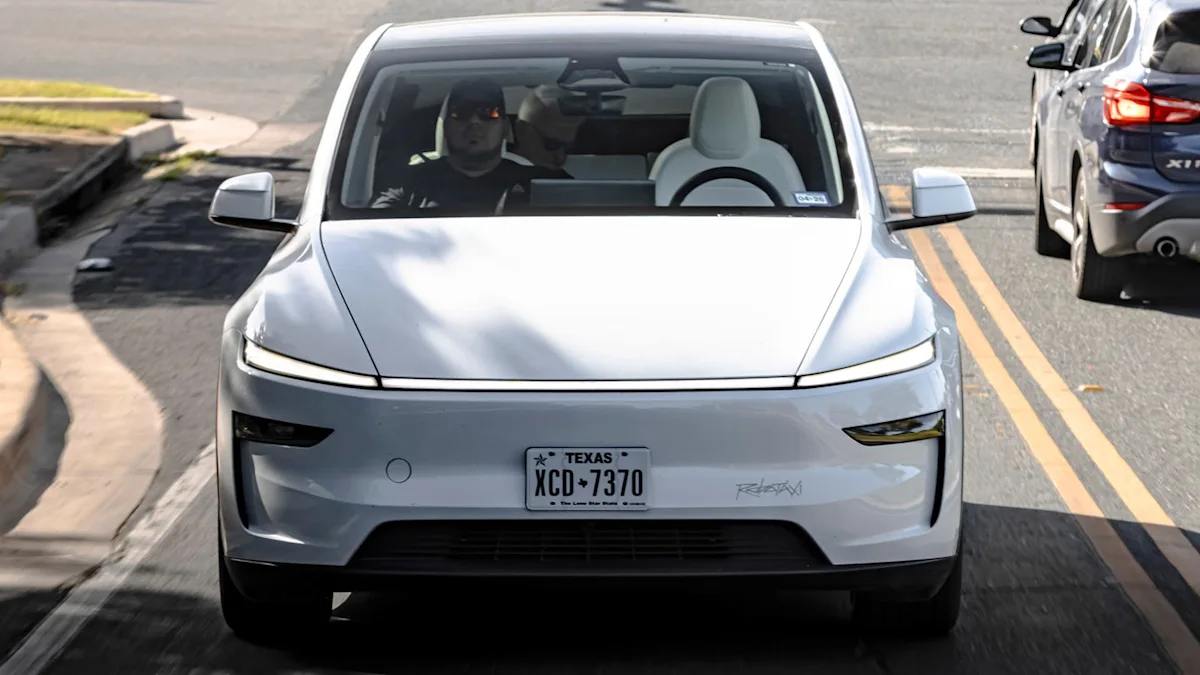
A fully self-driving car without human supervision has been Elon Musk’s dream since taking over Tesla, his all-electric car company. Unfortunately, that reality is still a little way off from reaching the masses (despite Musk pushing out its robotaxi service in select areas), and Tesla’s Full Self-Driving (Supervised) still relies on humans. But there may be a flaw in how FSD (Supervised) checks whether drivers are paying attention. Tesla owners in China have discovered that a doll head mounted to a suction cup or magnet can fool the system into thinking someone alert is behind the wheel.
Tesla’s FSD relies primarily on a camera located above the rearview mirror to check whether drivers are awake and attentive. It is supposed to monitor whether the driver is paying attention to the road, so it looks for a head facing forward. It does not necessarily require the driver’s eyes to be visible. As Tesla’s owner’s manual states, “The cabin camera does not require full visibility of the driver’s eyes to monitor attentiveness. The system is still active, for example, if the driver is wearing sunglasses.”
It turns out you may be able to fool FSD into believing a driver is facing forward by using a doll head positioned to look like it is attached to a body. Tesla drivers in China have reportedly done exactly that by attaching one to a suction cup or magnet in front of the driver-monitoring camera and lining it up with their body. To make positioning easier, drivers can use the interior Camera Preview in the Service menu.
Advertisement
Advertisement
These and other driver-monitoring-defeating devices have become an entire industry in China. And you are not limited to using your own head. Wired found Chinese sites selling celebrity replica heads, blinking screens, and a host of other products designed to fool FSD (Supervised) and Autopilot.
Although there is a second layer of monitoring through the torque sensor in the steering column, it appears to step in only when the camera determines the driver’s hands and arms are not close to the steering wheel. But even that can be fooled by placing a weight on the wheel to simulate a hand tugging at it.
Photo credit: William Walker – MotorTrend
Photo credit: William Walker – MotorTrend
Photo credit: William Walker – MotorTrend
Photo credit: William Walker – MotorTrend
Advertisement
Advertisement
Photo credit: William Walker – MotorTrend
Photo credit: William Walker – MotorTrend
Photo credit: William Walker – MotorTrend
Photo credit: William Walker – MotorTrend
Advertisement
Advertisement
Photo credit: William Walker – MotorTrend
Photo credit: William Walker – MotorTrend
Photo credit: William Walker – MotorTrend
Photo credit: William Walker – MotorTrend
Advertisement
Advertisement
Photo credit: William Walker – MotorTrend
Photo credit: William Walker – MotorTrend
Photo credit: William Walker – MotorTrend
Photo credit: William Walker – MotorTrend
Advertisement
Advertisement
Photo credit: William Walker – MotorTrend
Photo credit: William Walker – MotorTrend
Photo credit: William Walker – MotorTrend
Photo credit: William Walker – MotorTrend
Advertisement
Advertisement
Photo credit: William Walker – MotorTrend
Photo credit: William Walker – MotorTrend
Photo credit: William Walker – MotorTrend
Photo credit: William Walker – MotorTrend
Advertisement
Advertisement
Photo credit: William Walker – MotorTrend
Photo credit: William Walker – MotorTrend
Photo credit: William Walker – MotorTrend
Photo credit: William Walker – MotorTrend
Advertisement
Advertisement
Photo credit: William Walker – MotorTrend
Photo credit: William Walker – MotorTrend
Photo credit: William Walker – MotorTrend
Photo credit: William Walker – MotorTrend
Advertisement
Advertisement
Most other automakers do not rely solely on a single vision camera to monitor head, eye, and hand position. Many use infrared cameras along with other systems, such as steering wheel torque sensors or additional cabin-monitoring cameras. Even if Tesla pioneered a mass-market self-driving system, supervised or otherwise, the ease of defeating it with a doll head is more evidence that relying primarily on vision cameras for driver monitoring still leaves major vulnerabilities.
About the Author