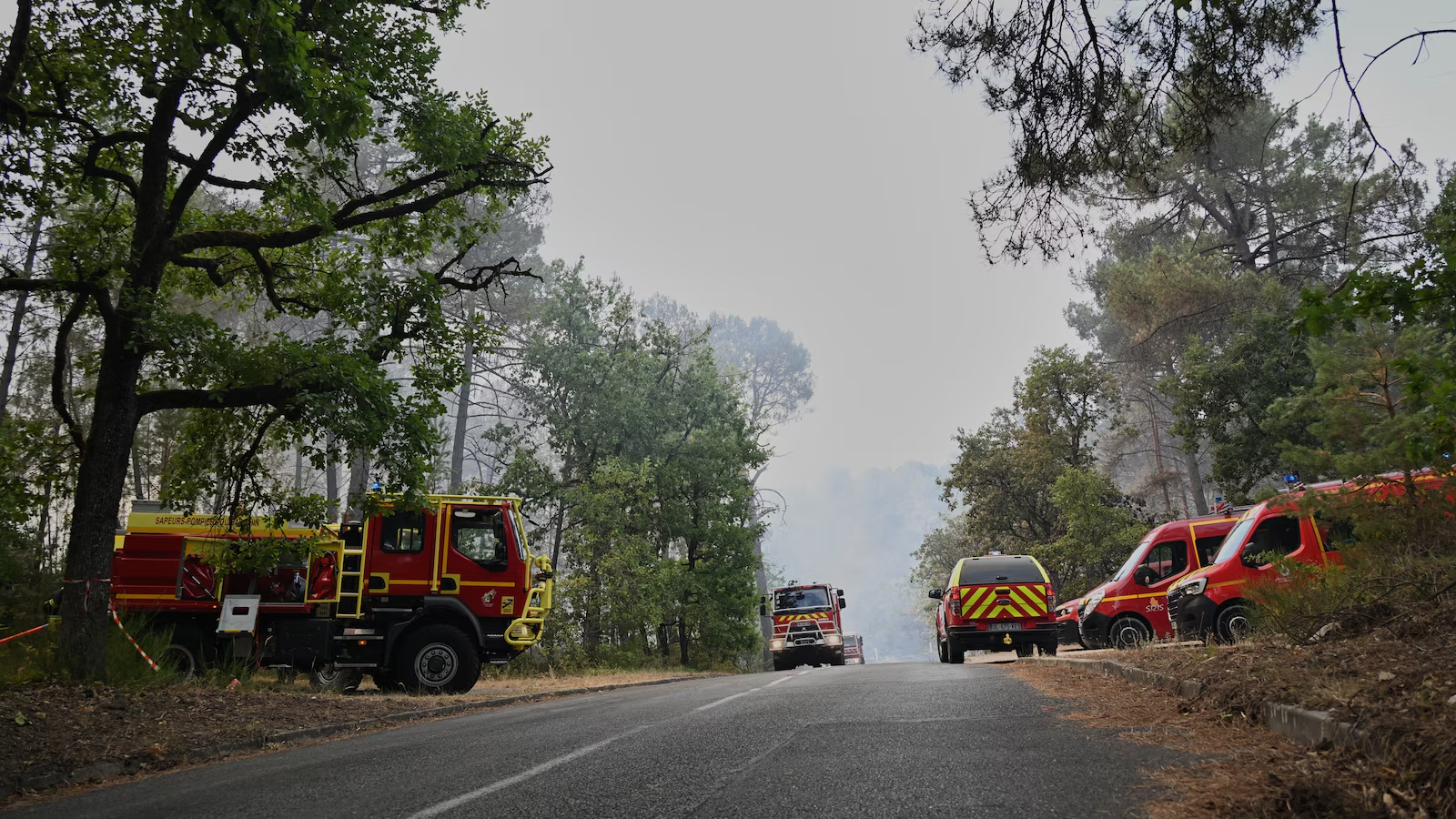
FONTAINEBLEAU, France — A fire raging in the historic and much-visited Fontainebleau forest south of Paris on Monday prompted evacuations of some residential neighborhoods and disrupted train and highway traffic.
It was among several wildfires in western Europe as the region bakes under its third red-alert heat wave this year.
In Spain, 10 people were still unaccounted for Monday from a fire that ripped through a remote southern expatriate community last week, killing 13 people in one of the country’s deadliest blazes.
The Fontainebleau forest fire is unusual for its proximity to the French capital — about 70 kilometers (42 miles). The region hosts the Fontainebleau Chateau favored by Napoleon and is popular with visitors from Paris and beyond.
French President Emmanuel Macron said all necessary means were being deployed to fight the fire of ″exceptional scale.”
Two water-dumping planes were deployed over the area along with hundreds of firefighters, regional fire service spokesperson Paul Laurain told public broadcaster France-Info.
The head of the regional administration, Pierre Ory, told French media that an investigation is under way and that arson was being considered a possibility.
A new fire has broken out in another section of the forest, Ory said. The initial fire is still not contained and was continuing to spread at a moderate rate.
“Winds are turning, which is significantly complicating the work of the firefighters,” he said.
Trains to and from the bustling Gare de Lyon train station were disrupted late Sunday but were returning to normal Monday morning. A section of the busy A6 highway leading southeast of Paris was shut down because of fire risk.
Large fires in southern France have already scorched thousands of hectares (acres) since last week, disrupting the Tour de France cycling race and stretching firefighting resources.
France is experiencing the peak of its third heat wave of the summer, with temperatures surpassing 40 degrees Celsius (104 degrees Fahrenheit ) across western and central areas and around 37 C (98 F) in Paris.
A 93-year-old British national died Sunday in a hospital from injuries sustained in the Los Gallardos wildfire, elevating the death toll to 13.
Spanish Prime Minister Pedro Sánchez was expected to visit the site of the fire on Monday. Regional authorities said the blaze was contained Sunday after affecting some 70 square kilometers (27 square miles) of forest and farmland — larger than the size of Manhattan.
Spain is experiencing extreme heat, which combined with wind and little rainfall is creating the ideal conditions for small wildfires to grow unchecked.
Europe is the world’s fastest-warming continent, with temperatures increasing twice as fast as the global average since the 1980s, according to the European Union’s Copernicus Climate Change Service.
In the U.K., people were evacuated from several dozen rural homes in north Wales after a wildfire broke out across a mountainside on Sunday, British media reported.
Wildfires also burned in several locations across England as another heat wave — the third this year — brought hot, sunny and dry conditions.
The Met Office said record heat waves since May have led to 2026 becoming the first year to record temperatures of 35 C (95 F) or higher on six separate days. That broke the previous record set in 1976 and 2020, when five days were recorded with such temperatures.
Natural England’s fire severity index has put much of England at “very high” risk of wildfires, with some areas in southern England and the Midlands at “exceptional” risk.
___
Naishadham reported from Madrid. Sylvia Hui reported from London.
___
A previous version corrected the age of a British national who died Sunday.
About the Author