As the world prepares for FIFA World Cup 2026, the spotlight often falls on superstars and big-money transfers. This special feature series goes deeper – telling the human stories behind the players who refused to quit.
From struggles and adversities, to chaotic youth careers and identity-defining choices, these athletes turned struggle into fuel. Each journey proves that the World Cup is not only a stage for talent, but a celebration of unbreakable resilience, sacrifice, and quiet determination. In a tournament full of stars, these are the hearts that beat the loudest. Welcome to their stories.
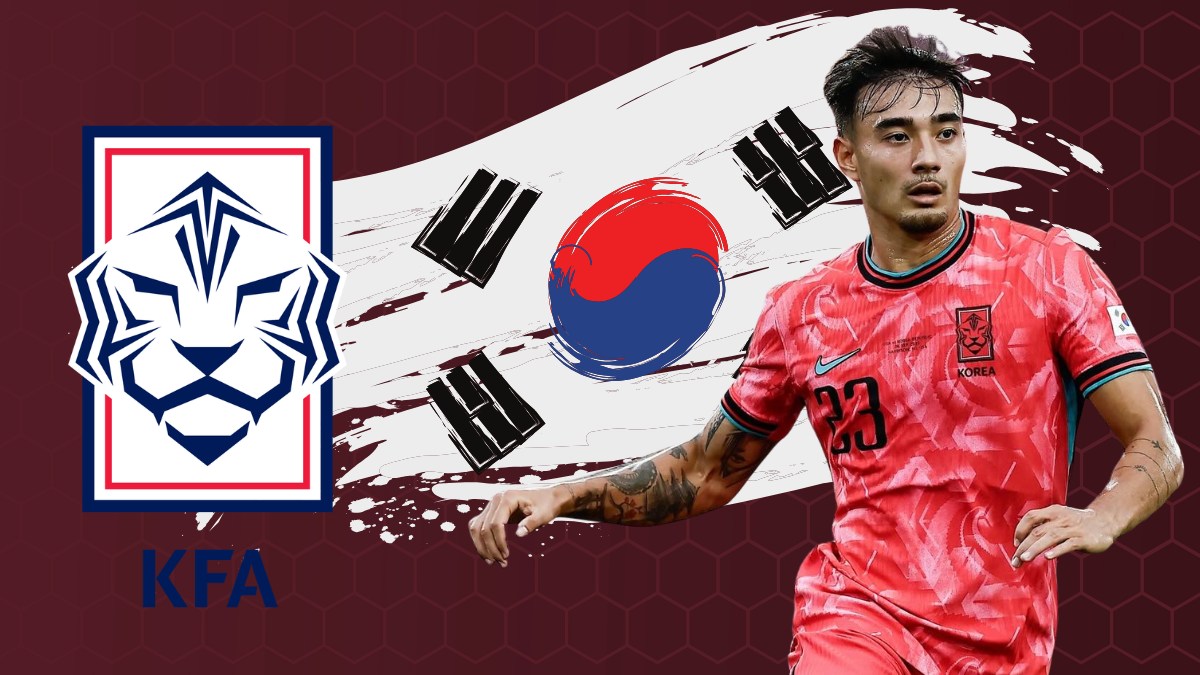
Jens Castrop is a 22-year-old professional footballer who plays as a central midfielder, attacking midfielder, or wing-back for Bundesliga side Borussia Mönchengladbach. And it may sound astonishing, but he is going to the FIFA World Cup, with South Korea.
Born and raised in Germany, he made history in September 2025 by becoming the first foreign-born, mixed-heritage player to represent the South Korea men’s national team. His journey from local Düsseldorf youth pitches to the Bundesliga and the red of the Taegeuk Warriors – is not just a tale of talent and perseverance, but one of identity, heart, and breaking barriers in a sport still navigating multiculturalism.
His father is a German, but his mother hails from South Korea. And Castrop was chosen to wear his maternal colours at the World Cup.
Early Life: A Dual Heritage in Düsseldorf
Born on 29 July 2003 in Düsseldorf, Germany, Castrop grew up in a bicultural household. His father is German; his mother, Su Yeon-ahn, is South Korean. He was raised with influences from both cultures. As a child, he kicked a ball around local clubs like Lohausener SV and Fortuna Düsseldorf before joining rivals 1. FC Köln’s academy in 2015 at age 12.
His mother has been a constant source of quiet strength. In interviews, she described her son as deeply disciplined:
“My son’s heart is in Korea. It is Korean, no matter what. He does not spare himself; he has a strong sense of discipline… When he has free time, he walks his dog or goes fishing instead of going to parties. He focuses on football.” Castrop has a younger brother, L. Castrop, who plays youth football at SC St. Tönis 1911/20 U19. The family’s support proved pivotal when the biggest decision of his life arrived.
Club Career: Grinding Through the German Pyramid to the Bundesliga
Castrop’s professional path began at Köln. He signed a long-term deal in 2020 and featured for the reserve side (1. FC Köln II) in the Regionalliga West, making 20 appearances and scoring 2 goals. He never broke into Köln’s senior Bundesliga team.
His breakthrough came on loan at 1. FC Nürnberg in January 2022 (2. Bundesliga). The move was extended, then made permanent in summer 2023 for a €450,000 transfer fee (plus a sell-on clause). At Nürnberg, he evolved from a wide player into a versatile central midfielder. Over two full seasons he made 52 league appearances and scored 5 goals, impressing with tenacity, ball-carrying, and box-to-box energy. In 2024-25 alone, he contributed 3 goals and 3 assists in 25 matches.
In February 2025, Borussia Mönchengladbach pounced, signing him to a four-year deal until June 2029. The 2025-26 season marked his Bundesliga debut. By late April 2026, he had 26 league appearances and 3 goals for Gladbach, including his first top-flight strike on 27 September 2025 against Eintracht Frankfurt and a brace as a left wing-back in a March 2026 draw with former club Köln. He earned September 2025 Player of the Month honors but also picked up his first Bundesliga red card. Versatile and combative, Castrop has featured across midfield and flanks, blending physicality with technical neatness.
Career Stats Snapshot (as of late April 2026, league only)
• Köln II: 20 apps, 2 goals
• Nürnberg (loan + permanent): 86 apps, 7 goals
• Borussia Mönchengladbach: 26 apps, 3 goals
The Switch: “50 Percent German, But My Heart Is Korean”
Castrop represented Germany at every youth level from U16 to U21 (26 caps total, 2 goals), including recent U21 appearances. Yet he always felt a pull toward his mother’s homeland. In August 2025, FIFA approved his one-time change of association. South Korea coach Hong Myung-bo called him up immediately for friendlies against the USA and Mexico.
He debuted as a substitute in a 2-0 win over the United States on 6 September 2025, becoming the first foreign-born, mixed-race male player in South Korea’s senior men’s history.
The decision was emotional. “It was a very tough decision,” Castrop told media.
“You have to listen to your heart, and my heart said I want to play for Korea… I’m very proud that I’m here now.” He later added: “I’ve always valued my roots and identity… My blood is 50 percent Korean and 50 percent German, but my heart is Korean.”
His father was “very shocked,” but his mother was elated. Castrop has spoken of military service (mandatory for Korean males) as secondary to football; the KFA and his path prioritize the pitch.
The move sparked debate in Korea about locker-room hierarchies and “kkondae” (outdated seniority culture) after Castrop’s candid Kicker interview comments, but it also symbolized progress for multiculturalism in Taegeuk Warriors football.
The Player: Style, Stats, and Achievements
Castrop is a modern midfielder, rugged yet technical, comfortable in central roles, on either flank, or even dropping into defence. Coaches praise his “fighter-like, rugged style,” strong will, and responsibility. In the Bundesliga, he has shown goal threat (3 goals and an assist early in 2025-26) and resilience.
Key achievements:
• First Bundesliga goal and Player of the Month (September 2025).
• Historic senior debut for South Korea.
• Consistent performer who rose from Regionalliga reserves to top-flight starter in under four years.
• Contracted to Gladbach until 2029, with growing market value and eyes on the 2026 World Cup.
The Person Behind the Player: Discipline, Family, and Quiet Ambition
Off the pitch, Castrop is the antithesis of the flashy footballer. He avoids parties, prefers solitary hobbies like fishing and dog walks, and maintains laser focus. His family remains central: his mother’s pride in his Korean identity, his father’s eventual support, and a close bond with his brother. He has described the switch as listening to his heart rather than chasing “honour or conditions.”
Looking Ahead: A Bridge Between Cultures
Jens Castrop’s rise is more than a transfer saga or eligibility switch. It is a story of belonging. As he battles for minutes at Gladbach and caps with South Korea alongside stars like Son Heung-min, he represents a new generation: talented, versatile, and unapologetically proud of mixed heritage.
As he will be helping the Taegeuk Warriors at the 2026 World Cup, Castrop’s heart has found its home on the pitch, wearing red, playing for Korea.
In a sport that increasingly rewards global talent, Jens Castrop reminds us that identity is not a passport stamp, it’s where the heart beats strongest.
About the Author