
Want to bookmark your favourite articles and stories to read or reference later? Start your Independent Membership today.
Already a member?
Log in
An Australian court has dismissed mushroom killer Erin Patterson’s appeal against her murder convictions and resentenced her to life in prison without the possibility of parole.
Patterson, 51, was convicted of murdering three relatives and attempting to murder another after serving them a meal containing death cap mushrooms at her home at Leongatha in Victoria in July 2023.
The victims were her former parents-in-law, Don and Gail Patterson, and Gail’s sister, Heather Wilkinson. Heather’s husband Ian Wilkinson survived after being hospitalised.
She was initially sentenced to life imprisonment, with the possibility of parole after 33 years.
On Friday, Victoria’s Court of Appeal rejected her challenge to the convictions and upheld prosecutors’ arguments that the original sentence was too lenient because it left open the possibility of her eventual release.
Justice Stephen McLeish set aside the 33-year non-parole period previously imposed on Patterson, ruling that the seriousness of her crimes meant she should never be eligible for release.
“The applicant’s intent to murder all four victims was sustained for nearly three weeks from when she invited them to lunch, through to preparing and serving the poisoned meal and then throughout the protracted suffering and ultimate deaths that resulted,” he said.
“The offending was carefully planned and deliberate.”
Mr McLeish said Patterson’s conduct was characterised by “an elaborate series of deceptions”, citing her false cancer claim, destruction of evidence, planning of the lunch and the “cruel breach of trust” involving her relatives.
He said her offences involved “shocking criminality” and deserved to be denounced in the strongest terms, adding that it was inappropriate for parole to be an option.
Patterson had appealed her convictions on seven grounds, arguing that several issues had compromised the fairness of her trial. These included a hotel booking error that placed jurors in the same accommodation as the prosecution, a key police witness and journalists, as well as the admission of allegedly prejudicial evidence, including mobile phone location data and Facebook posts criticising her in-laws.
On Friday, the appeal judges dismissed all seven grounds.
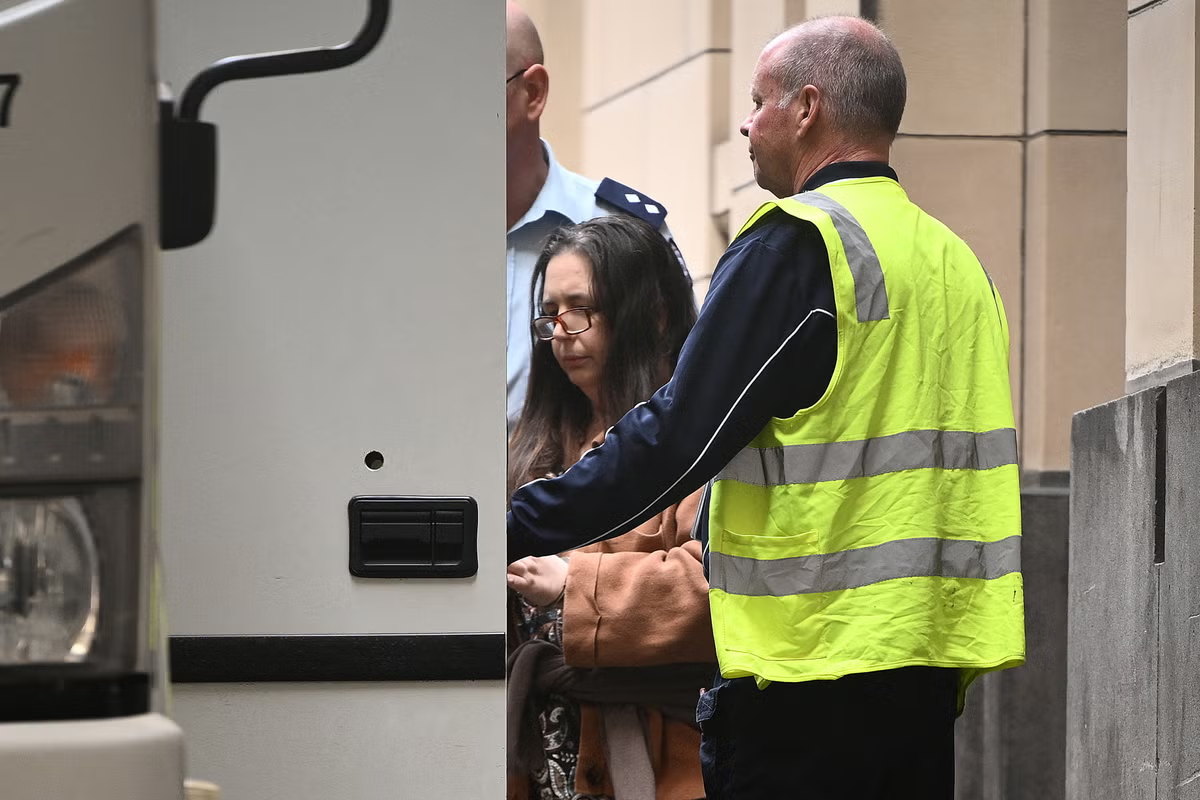
Patterson appeared via video link from the maximum security wing of Dame Phyllis Frost women’s prison, where she is serving her sentence. Local media said that she showed little reaction as the judgment was delivered.

The prosecution had argued that the original sentence did not adequately reflect the gravity of the crimes, citing the degree of planning, Patterson’s relationship with the victims and her lack of remorse.
The harsher sentence places Patterson among a small number of convicted murderers in Australia serving life sentences without parole.
Patterson has few legal avenues left. Former criminal barrister and legal researcher Christopher Corns told the Australian Broadcasting Corporation that the court’s decision meant there were very few options for Patterson.
“The general principle in Victoria is that an appellant can only have one appeal, at least under the section that Patterson has used to appeal the conviction,” Dr Corns said.
“However in 2019, reforms were introduced to permit a second appeal against conviction in very rare circumstances.”
He said a second appeal could also be possible if “fresh and compelling” evidence emerged that exonerated her, but such cases are rare.
About the Author