Key events
What areas are already officially in drought?
As we mentioned in the opening post, the whole of Wales and half of England has already been declared in drought. Here is a full list of the affected areas in England:
-
East Anglia
-
Hertfordshire and London
-
Thames Valley
-
Hampshire and the Isle of Wight
-
Devon and Cornwall
-
The West Midlands
-
Wessex (covering Dorset, Somerset, Wiltshire and south Gloucestershire)
More than 25 million people face restrictions on water use, according to the Environment Agency, with millions under hosepipe bans, including all South East Water and Thames Water customers.
Another record is likely to tumble this week after Sunday was the 34th day this year on which temperatures exceeded 30C somewhere in the UK, equalling the record set in 1995.
The extreme weather of summer 2026 has so far included two record-breaking heatwaves in May and June that were linked to more than 2,800 excess deaths.
Two further heatwaves in July, along with the driest July in England and Wales since records began in 1836, have fuelled drought and wildfires.
The EU’s Earth observation programme, Copernicus, said average temperatures across western Europe reached 21.61C for June-July, breaking the record set in 2022. Globally, this year is just behind 2024 and 2025 as the hottest on record.
Warning of likely impact to health service as amber heat alerts issued for swathes of England
Amber heat-health alerts have been issued for five regions of England from 9am on Tuesday until 6pm on Wednesday: the West Midlands, East Midlands, south-east, London, and the east of England.
Amber alerts mean an increased likelihood of health impacts for those aged 65 and older and people with pre-exisiting conditions, although there may also be impacts to younger people too. The weather impacts are likely to be felt across the whole health service under this category, which is below red, the most severe.
The UK Health Security Agency (UKHSA) has also issued a yellow heat-health alert for the north-east and north-west, which are under a yellow alert for the same period. The south-west of England and Yorkshire and the Humber regions are already under a yellow alert, which remains in place.
According to the UKHSA, yellow alerts are issued when most people are unlikely to be affected by the weather, but could impact those who are particularly vulnerable.
Dr Paul Coleman, consultant in public health at the UKHSA, said:
Temperatures are forecast to rise above 30°C across central and southern parts of the country over the next few days, and generally hot weather is expected across most regions of England.
These kind of temperatures can result in serious health outcomes across the population – particularly in those who are vulnerable, such as the elderly or those with serious health conditions – so it is important that everyone takes sensible precautions while enjoying the sun.
More parts of England expected to be declared in drought as fifth heatwave of summer looms
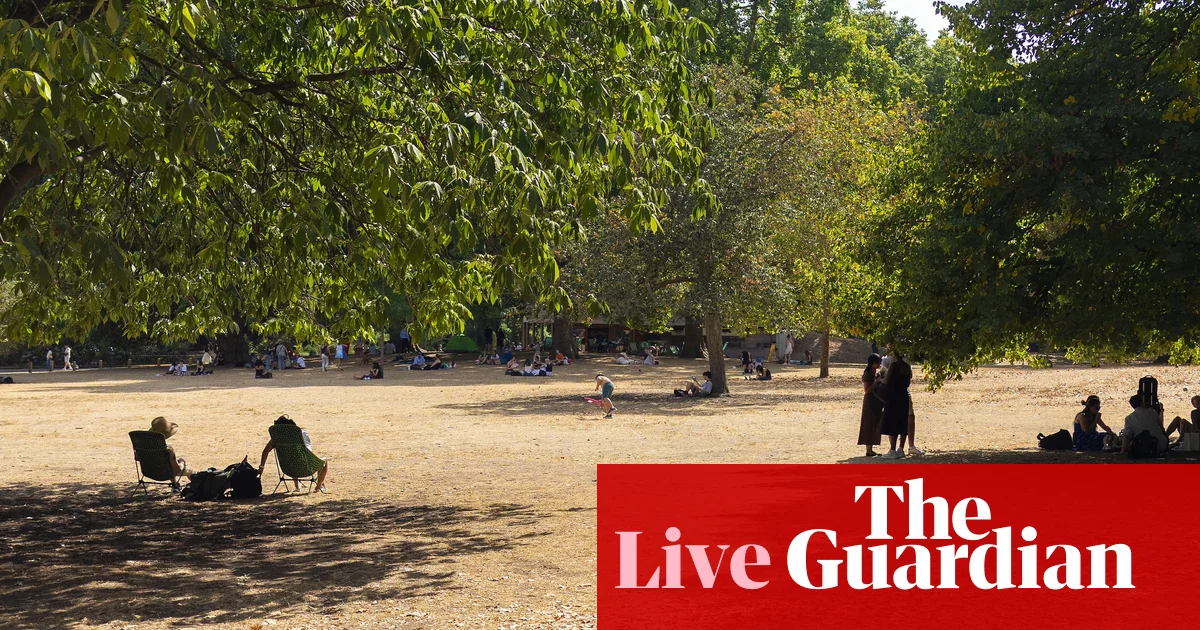
The National Drought Group (NDG) is expected to meet this afternoon and declare that more parts of England are officially in drought, as parts of the UK head into a potential fifth heatwave of the year this week.
All of Wales and more than half of England are already in drought after an unprecedented period of dry, hot weather over the summer.
The NDG includes the Met Office, the government, regulators, water companies, the National Farmers’ Union, the Canal & River Trust, anglers and conservation experts.
It reviews the impacts of droughts and helps draw up mitigation plans to respond to them as wildfire risks increase, rivers run dangerously low and food production/security is affected by long periods of little or no rainfall.
The lack of rainfall has seen millions of people be put under temporary hosepipe bans, with water supplies having been severely depleted, particularly in the south and south-east.
The heat and continuing drought conditions are being intensified by the worsening climate crisis, putting huge pressure on vulnerable people, critical infrastructure and wildlife across affected areas.
Temperatures could reach 36C (97F) or higher this week, forecasters have said. Monday will be slightly cooler before temperatures rise again on Tuesday.
About the Author