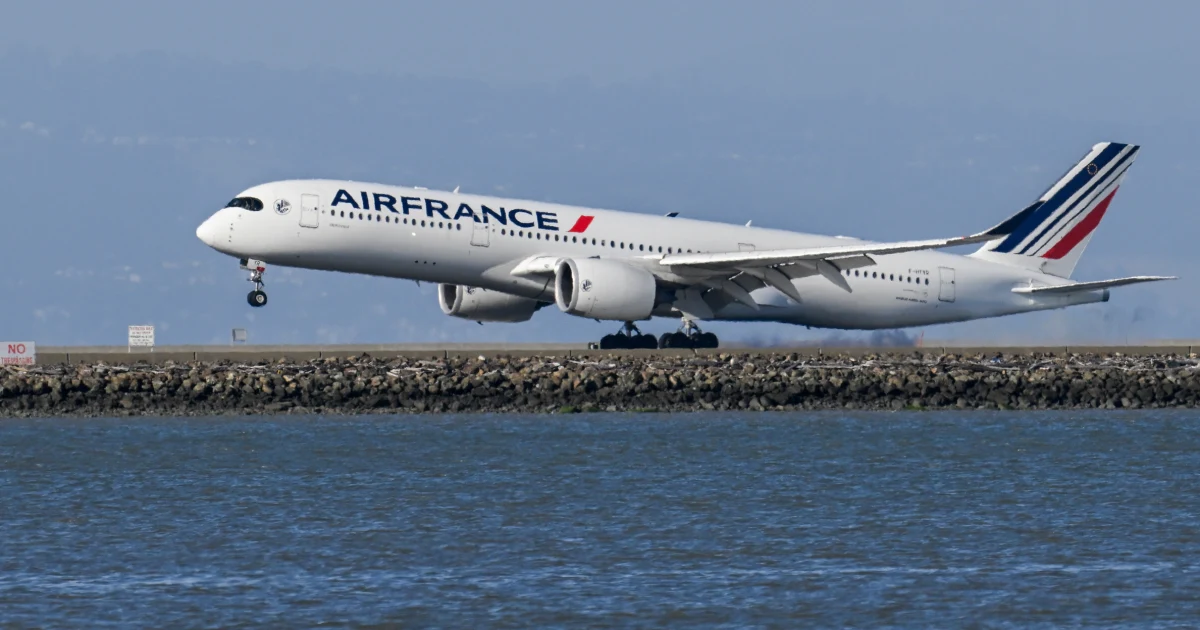
An Air France flight bound for Detroit was redirected to Canada after a passenger from Congo boarded “in error” amid the Ebola outbreak in central Africa, officials said Wednesday.
Subscribe to read this story ad-free
Get unlimited access to ad-free articles and exclusive content.

A U.S. Customs and Border Protection spokesperson said the agency took “decisive action” by prohibiting the flight from landing at Detroit Metropolitan Wayne County Airport.
The flight departed from Paris and landed in Montreal shortly after 5 p.m. ET Wednesday, according to data from the tracker FlightAware.
“Due to entry restrictions put in place to reduce the risk of the Ebola virus, the passenger should not have boarded the plane,” the CBP spokesperson said in a statement.
Montreal Trudeau International Airport directed requests for more information to Air France, which did not immediately respond to a request for comment.
The Centers for Disease Control and Prevention announced Monday that the U.S. will restrict entry for people without U.S. passports who were in Congo, South Sudan or Uganda in the last three weeks. The restriction is in effect for the next 30 days.
In a notice submitted to the Federal Register set to be published Thursday, CPB and the Department of Homeland Security announced new arrival restrictions directing all flights to the U.S. with passengers who have recently traveled to Congo, Uganda or South Sudan to land at Washington-Dulles International Airport in Virginia.
The restrictions begin Thursday and apply to any person who “has departed from, or was otherwise present within,” the three countries “within 21 days of the date of the person’s entry or attempted entry” into the U.S., according to the document.
Dulles was described as the airport “where the U.S. government is focusing public health resources to implement enhanced public health measures.”
DHS did not immediately respond to request for comment about the document.
The suspected death toll from the Ebola outbreak totals more than 139, with more than 600 suspected cases, most of them in Congo, according to the World Health Organization.
A vaccine for the Bundibugyo strain of the virus — which is driving the outbreak — is most likely months away from human trials, and there is no guarantee it would work, the WHO said Wednesday.
About the Author