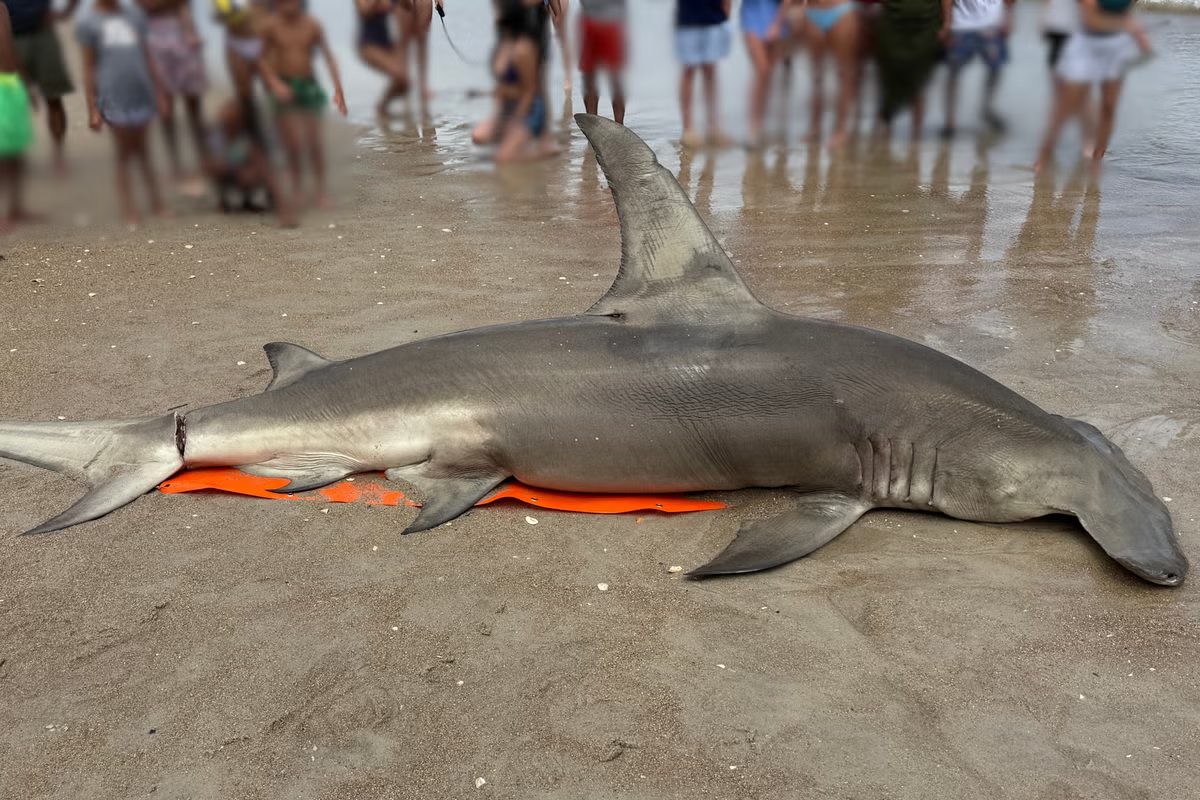
A great hammerhead shark has washed ashore on a North Carolina beach with a “deep laceration,” according to local experts.
The 14-foot female shark was first spotted at Carolina Beach, outside of Wilmington, at around 3 a.m. ET on Sunday, according to the North Carolina Shark Standing Hotline.
After being seen in the surf multiple times, it washed ashore at around 1:20 p.m., the North Carolina Shark Conservancy told The Independent.
Local officials disposed of the dead shark after the conservancy’s volunteers took samples from the animal.
“We did dispatch our volunteer team out to the shark to take measurements, photos and biological samples for genetics and educational purposes,” a spokesperson for the conservancy said. “We worked in collaboration with the local municipalities who were extremely responsive and helpful during the whole process.”
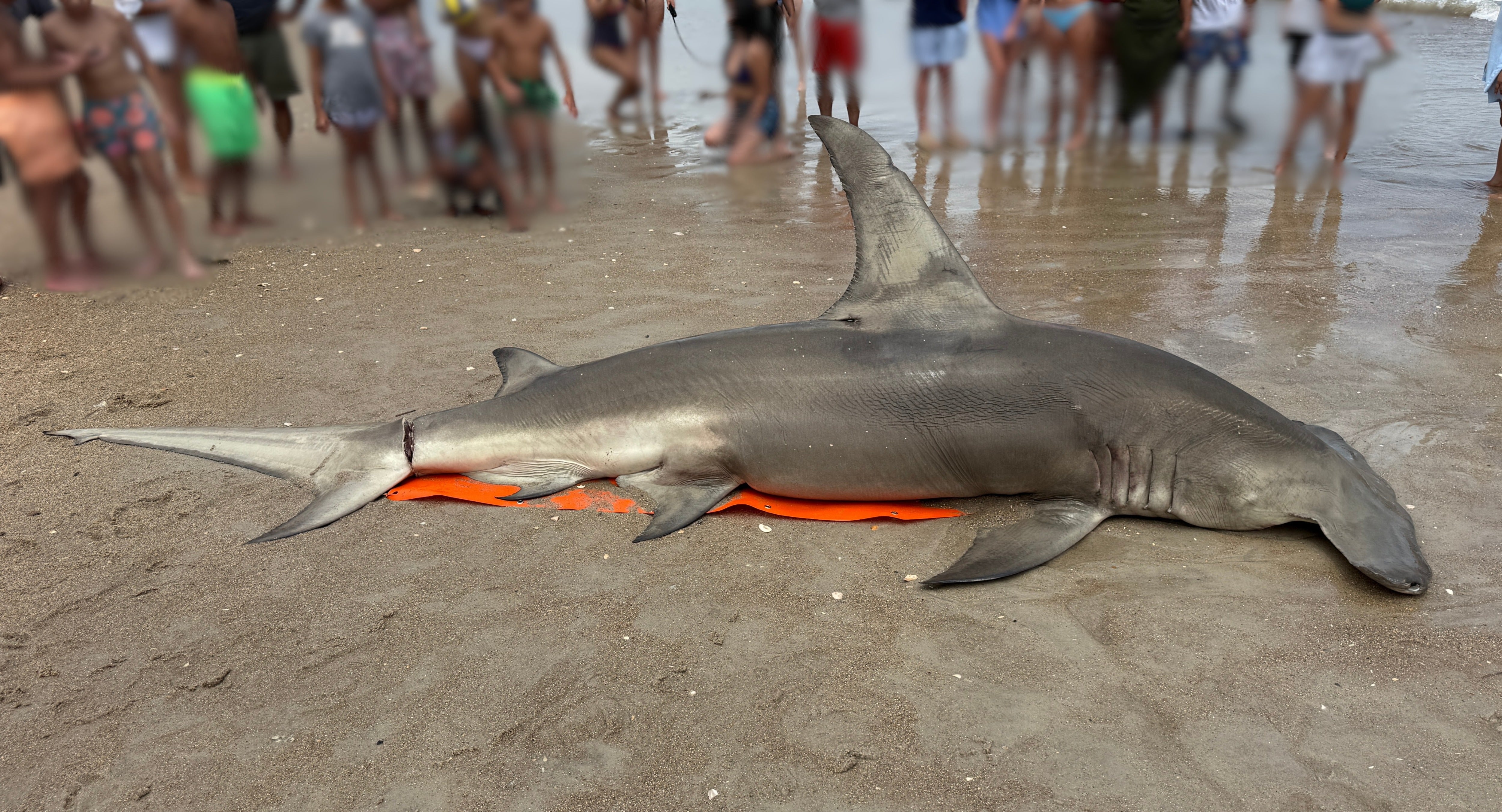
Beachgoer Paige Furr called the shark’s discovery a “once-in-a-lifetime thing.”
“I’ve never seen anything like it, so yeah, it was pretty cool but sad, you know, at the same time,” Furr told local outlet WECT.
The North Carolina Shark Conservancy was unable to determine the shark’s cause of death, but offered some clues about the animal’s condition.
“It had a very deep laceration through the base of the tail hindering its swimming capabilities as well as fresh puncture wounds in its mouth associated with fishing gear,” the conservancy’s spokesperson said.
While the shark was considered a large female, the species can grow up to 16 to 20 feet long, the spokesperson noted.

Great hammerheads can be found in coastal waters around the world, feeding on rays, small sharks, squid and bony fish, according to Oceana, the world’s largest ocean conservation group.
They grow the fastest and are the largest of all hammerhead species, the group says on its website.
A key feature that differentiates great hammerheads from other hammerheads is their broad, nearly straight cephalofoil — which is the flattened head of the shark that looks like the head of a hammer.
The animal’s cephalofoil gives them better vision and electroreception, allowing it to find prey hidden in the sand, according to the conservation group.
The great hammerhead shark is listed as “critically endangered” on the International Union for Conservation of Nature’s Red List of Threatened Species. But the animal is not on US federal officials’ endangered and threatened species list.
About the Author