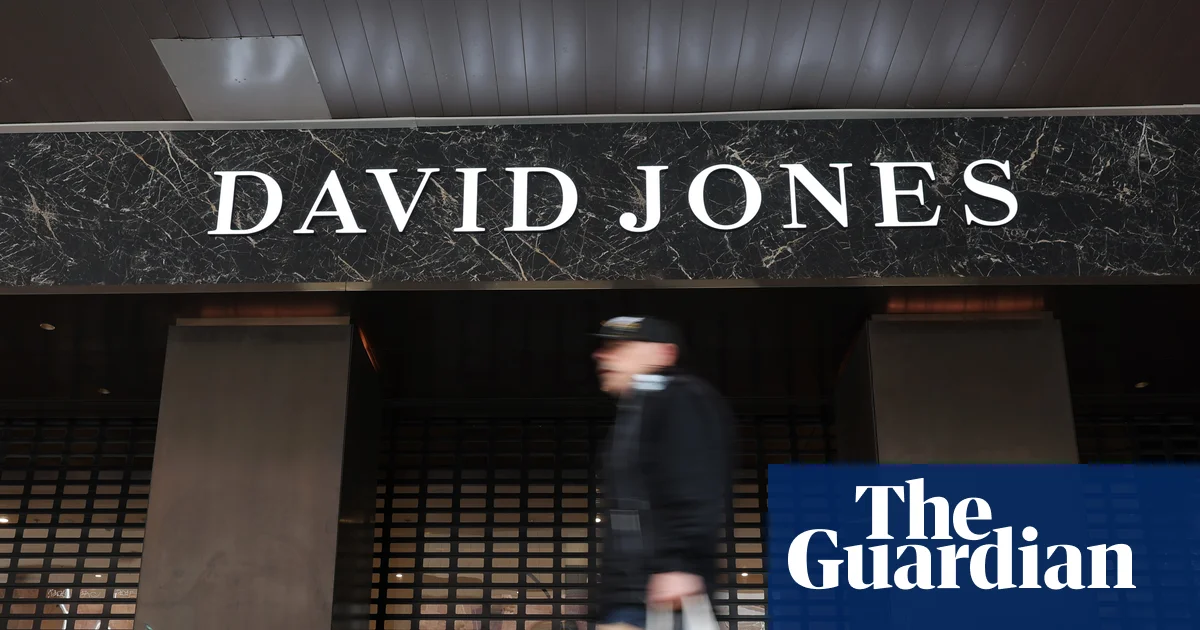
Upmarket retailer David Jones owed hundreds of millions of dollars when it collapsed into administration, after accelerating financial losses and reputational damage threatened its ability to stock shelves for Christmas.
About 500 creditors attended its first meeting on Tuesday, where administrators McGrathNicol started to break down who is owed what, when those left out of pocket will know where they stand, and what ultimately went wrong.
Here are five things we learned.
How much is owed?
David Jones collapsed early this month owing in excess of $400m to an assortment of creditors, including $180m of debts to trade creditors, mainly consisting of the brands that stocked its shelves.
There are also outstanding employee entitlements, such as annual and long service leave, worth about $11m, and about $33m in unredeemed gift cards, which the retailer is still accepting.
The rest is owed to large secured creditors, led by the retailer’s main financier, Hilco, which has a controlling hand over the current process and even has its own representatives in the 19 stores marked for closure.
Taken together, the debts are well over $400m, but that total is almost certain to climb as landlords tally up their losses.
On top of unpaid rent up to the appointment of administrators, shopping centre owners will also claim for broken leases after the chain’s receivers moved to close half of its 38-store network.
How much will creditors get back?
What, if any, money suppliers get back hinges on whether a buyer steps in and how much they are willing to pay, or whether the chain ends up liquidated, as well as how much cash David Jones can bring in through the crucial Christmas trading period.
Because product suppliers sit near the bottom of the creditor priority list, they won’t receive any money until secured lenders and employees are paid out.
Given the size of the outstanding debts, and poor financial state of the department chain, many suppliers are bracing for a near total loss of outstanding amounts.
Shaun Fraser, a founding partner at McGrathNicol, told creditors there were “too many variables” to indicate how much, if any, suppliers would receive.
“We haven’t yet got to a point where we’re engaged enough with bidders to have a sense of what value might be there,” Fraser said.
“We haven’t reached a point in the sale process where people are talking value or price.”
How are creditors feeling?
Out of pocket suppliers are particularly frustrated, though the modern practice of holding meetings online kept any real anger contained behind muted microphones.
There were questions over whether there had been preferential treatment to some suppliers, and if the retailer had been trading insolvent before the appointment of administrators.
McGrathNicol said it would investigate when the company might have been insolvent, and if preferential payments were made.
One brand representative said they had also repeatedly asked for stock lists and weekly sales figures without response.
after newsletter promotion
What went wrong?
The administrators provided updated financials at the meeting that showed the poor state of affairs at David Jones.
The 188-year-old retailer recorded a net loss of $228m in 2025-26, before losing a further $69m in the first four months of the new financial year leading up to the administration.
Creditors were told that the funding pressures it was facing, coupled with reputational damage, was affecting its ability to get stock for the Christmas trading period.
David Jones ultimately got tipped into administration when negotiations with its main landlord, Westfield owner Scentre Group, broke down.
The retailer’s private equity owner, Anchorage Capital, wanted to radically reduce store numbers – something that is now happening during receivership – to rid the network of underperforming suburban stores.
The directors of David Jones listed several causes of the retailer’s problems, including everything from cost-of-living pressures and soft luxury demand to fierce online competition.
Fraser said there was also “clearly a business model problem” with the retailer.
What happens next?
Under a dual appointment, receivers FTI Consulting have taken day-to-day control of the business while administrators McGrathNicol hunt for a buyer, having called for “non-binding indicative offers” for the retailer by the end of the month.
That will trigger a process that could see formal bids lodged either late this year or early in 2027, giving some clarity to employees and suppliers ahead of the next creditors’ meeting, due by March.
The road ahead is, however, complicated by the breakdown in relations between Anchorage and the Westfield owner, which is threatening the retailer’s ability to operate at any of its complexes.
The Scentre Group chief executive, Elliott Rusanow, told Guardian Australia the landlord now had a “unique opportunity to facilitate the entry and growth of businesses that are more relevant to customers today and into the future”.
“That is the opportunity we will pursue at each of the 17 destinations with a David Jones store,” Rusanow said.
About the Author