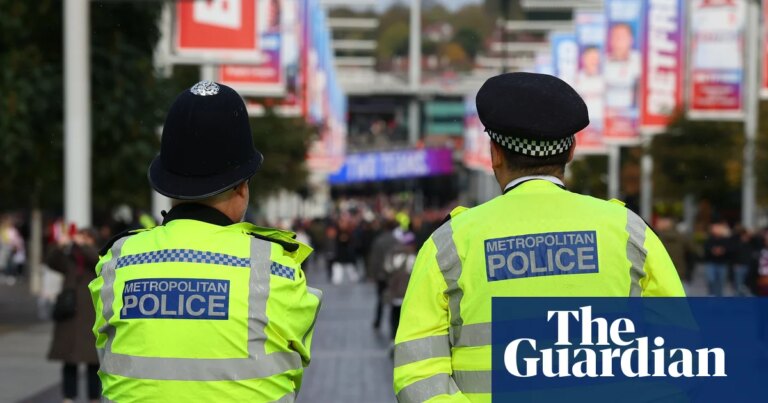
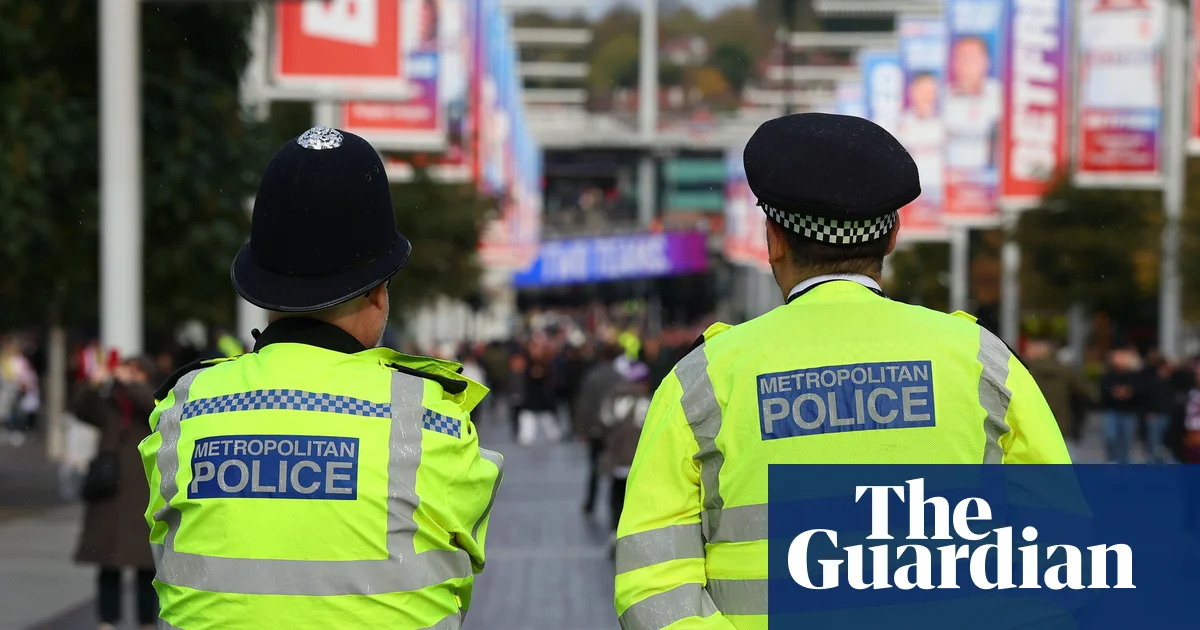
The number of police forces in England should be cut from 39 to as few as nine super forces, an official review ordered by the government has concluded.
The review, carried out by the former Met police commissioner Bernard Hogan-Howe, is yet to be published. Doubts are growing among some chief constables about the radical plans contained in Lord Hogan-Howe’s review.
Multiple sources say that under consideration is the establishment of nine regional forces, plus a single force for Wales, which would sit above more than 150 local policing units that would deliver most neighbourhood crime-fighting activities.
The axing of most of the 43 forces in England and Wales is seen as essential by the Hogan-Howe review and some police chiefs. Those chiefs, including the current Met commissioner, Mark Rowley, are concerned that the government may delay the most radical change to policing in seven decades.
Hogan-Howe’s review was completed in September and sent to the home secretary, Shabana Mahmood. Government sources will only say it will be published before Christmas, with a white paper due in the new year.
The delay is understood to be because of Andy Burnham’s devolution agenda and desire to “rewire” the British state and reform local government, including adding more mayors.
Some of the new forces will be covered by and accountable to mayors, while others will have mayors covering only some or even none of their area.
One police source said: “There are some concerns Andy Burnham may want to align the new police structures with mayors, which could mean 20 or more forces. That is not a radical enough change.”
Rowley is scheduled to meet Burnham on Friday at No 10 North in Manchester after an event where the Met commissioner and some other chiefs including the Greater Manchester chief constable, Stephen Watson, will press for a huge reduction of forces.
The event’s title is “The cost of standing still is that criminals will win”, and some other chief constables have told the Guardian they are annoyed by the Met-organised event and are sceptical or do not support the big reduction down to nine forces.
Cutting the number of forces in England and Wales is the centrepiece of Mahmood’s radical changes to policing. Hogan-Howe’s report, multiple sources say, gives a range of how many larger forces there should be in the new policing landscape, ranging from nine to 18.
Hogan-Howe believes the changes would free up policing to rapidly innovate as new crime types and threats emerge. The 43 forces model, overseen by 43 police and crime commissioners, is accused of being too slow and delivering a postcode lottery of varying service for crime victims.
None of the forces are likely to be bigger than the Met, which serves 9 million people in London.
Hogan-Howe came out publicly in favour of a reduction to nine forces 12 years ago.
The bigger forces would handle major crimes such as murders and serious sexual violence, public order, as well as expensive but essential back office functions such as human resources, currently done by each of the 43 forces individually.
Above the regional forces would sit a new nationwide force called the National Police Service, which the government wants to be the home of counter-terrorism policing and serious and organised crime. The advert for a commissioner for the national force is expected to be issued early in the new year.
There is division among police leaders about the big reduction in forces. Some favour voluntary mergers, and the new white paper will allow the mass abolition of forces and creation of new ones to be enforced.
The changes could lead to a vast south-east England force stretching from the London borders to the southern coast of England. A new north-west force would stretch from the Mersey to the Pennines, covering Greater Manchester, Merseyside and Lancashire, as well as swallowing up smaller forces such as Cheshire and Cumbria.
One chief constable told the Guardian: “Everyone knows 43 forces have to go. But the return on investment could take five or six years.”
Another chief constable said: “If I was the chief constable of the super force, it would be such a huge area, I wouldn’t know anybody. I worry about it being too big.”
Matthew Scott, the Conservative police and crime commissioner for Kent, said: “They will spend a great deal of time tearing up the fabric of policing for a suboptimal outcome.” The government plans to abolish PCCs as part of its changes.
Another police leader asked: “Where is the evidence bigger forces are better?” They cited the fact that in recent years the largest – such as the Met, Greater Manchester and West Midlands – had failed so badly they had been put into special measures and their chief constables or commissioners had been ousted.
Scotland and Northern Ireland are each already covered by a single force. The Hogan-Howe review studied the setting up of national forces in Scotland and the Netherlands. The governments believe it has avoided the potential errors of setting up national bodies before thinking about who would deliver local and neighbourhood policing, which is seen as the bedrock of British law enforcement.
About the Author